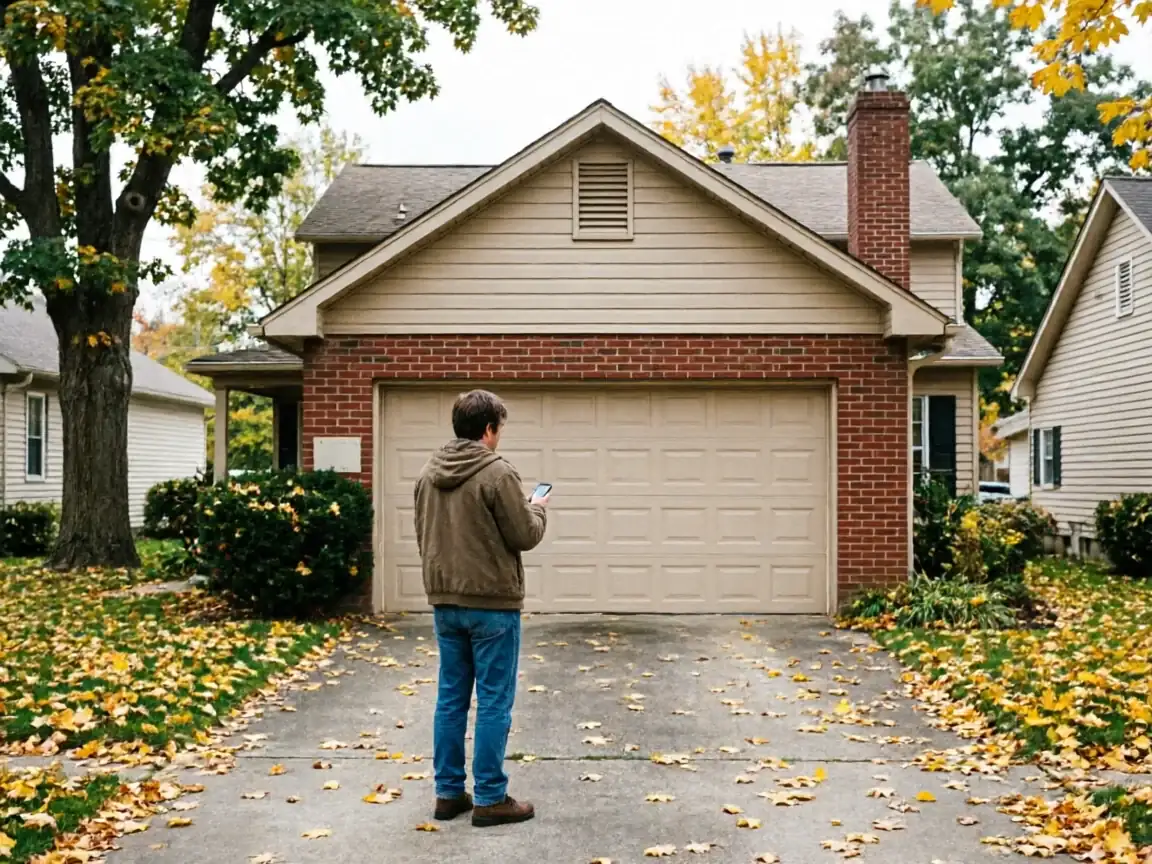
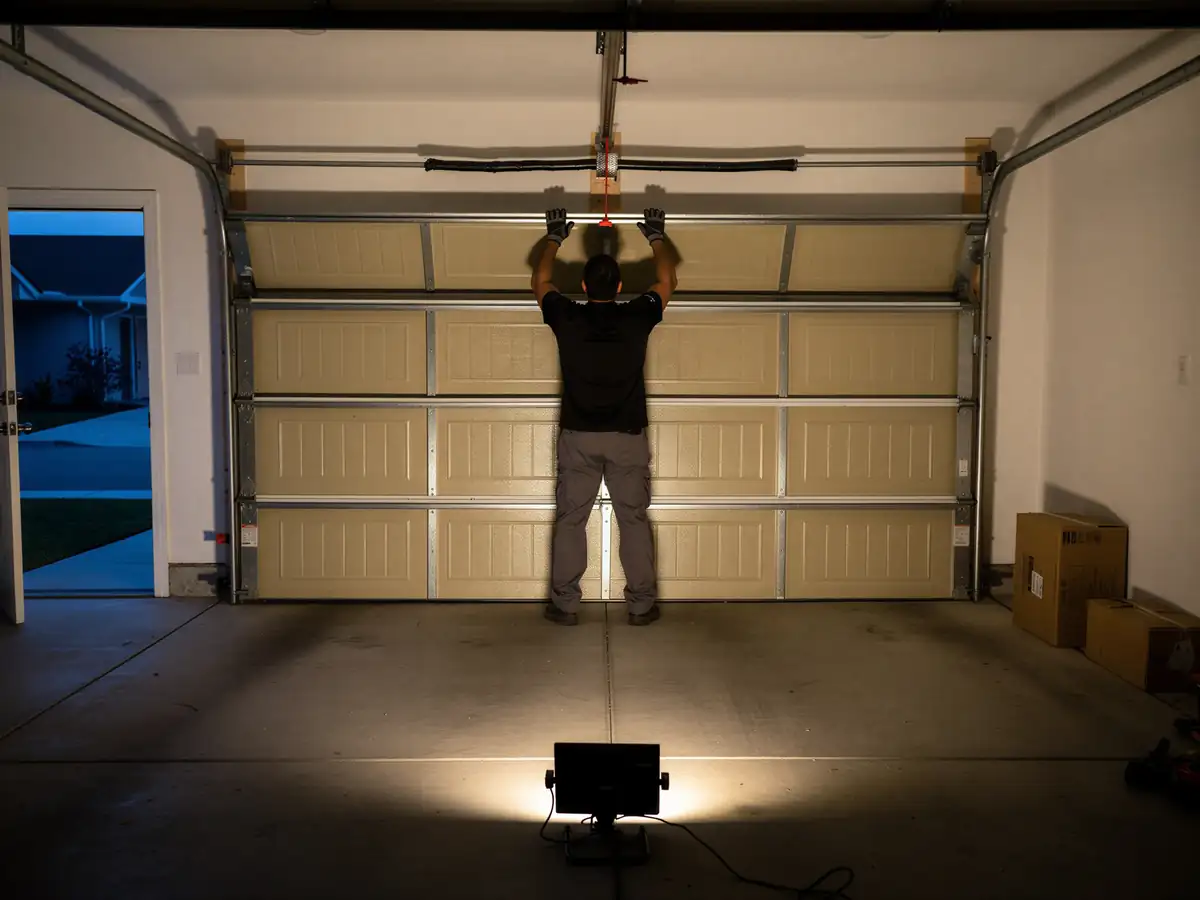
Homes near Indianapolis, Carmel, Fishers, Zionsville, and Westfield were mostly built 1997-2008. That builder-grade door is now aging through severe cold winters.
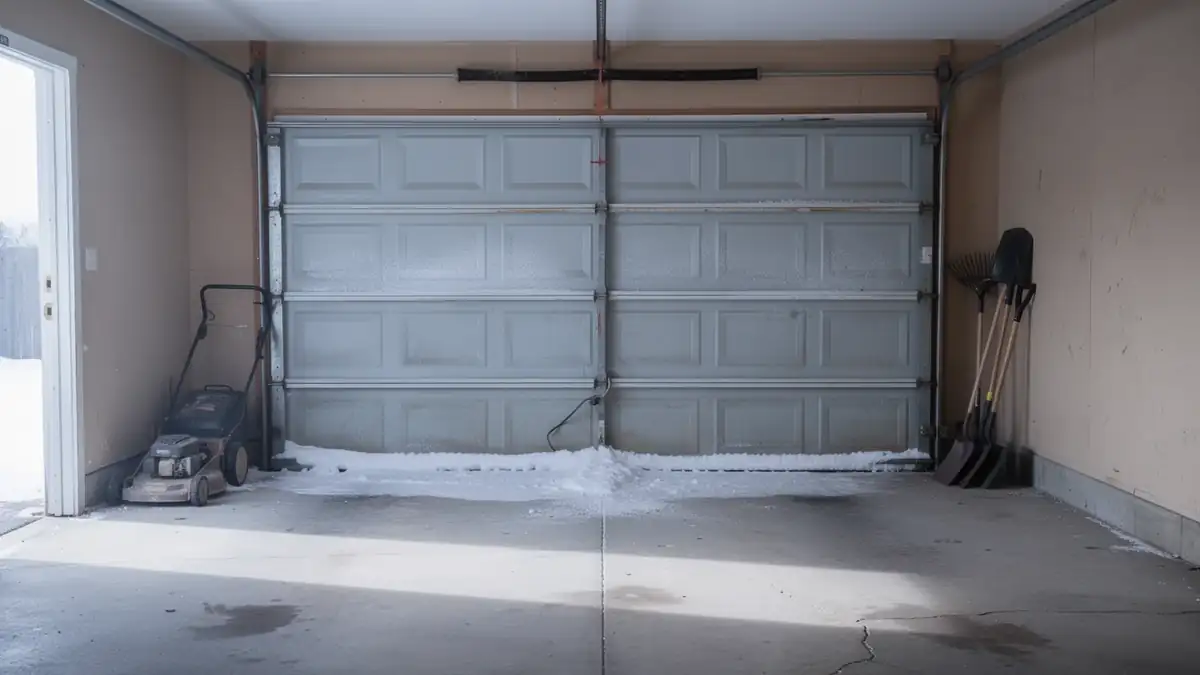
Most of the housing we work on went up between 1997 and 2008, with the median build year landing right around 2000. That stock sits inside a climate band rated cold and severe, which means the steel panel on your door and the torsion spring above it have been cycling through hard freezes and thaws every winter since the house was new. Cold does two things to a door that age. First, it stiffens the lubricant in the rollers and hinges, so the door works harder on the coldest mornings than it did in October. Second, it makes the spring steel less forgiving - a spring that's been flexing for two decades loses a little tensile give every winter, and a cold snap is when it finally lets go, usually on the coldest day of the year, because that's when the steel is tightest and least willing to bend. Builder-grade doors from this era weren't always insulated to a high standard, so the vinyl weatherstrip along the bottom and sides is often the original piece, and it hardens and cracks faster in sustained cold than people expect. None of this is damage you can see from the driveway. It shows up as a door that groans, drags, or won't seal flush once the temperature drops.
The Problem
A door installed when the house was built in, say, 2001 is now over twenty years old, and the hardware on it was sized for the house, not for a specific lifespan. Torsion springs are rated in cycles, and a cold-climate winter puts more stress on each cycle than a mild one does. By the time a homeowner in this area notices a spring is weak - the door feels heavier, the opener strains, there's a gap when it closes - the spring is usually close to the end, not at the start of a slow decline. The other quiet problem is the opener. Builder-grade garage door openers from the late 1990s and 2000s were standard equipment, not upgrades, and a chain or belt drive unit from that build wave is well past the point where parts are easy to source. Add in a repeated freeze-thaw cycle working on the track alignment and the bottom seal, and you get the two most common calls in a neighborhood built on this timeline: a spring that finally snaps and an opener that's been compensating for a door that no longer moves the way it did when it was new.
What to Look At First
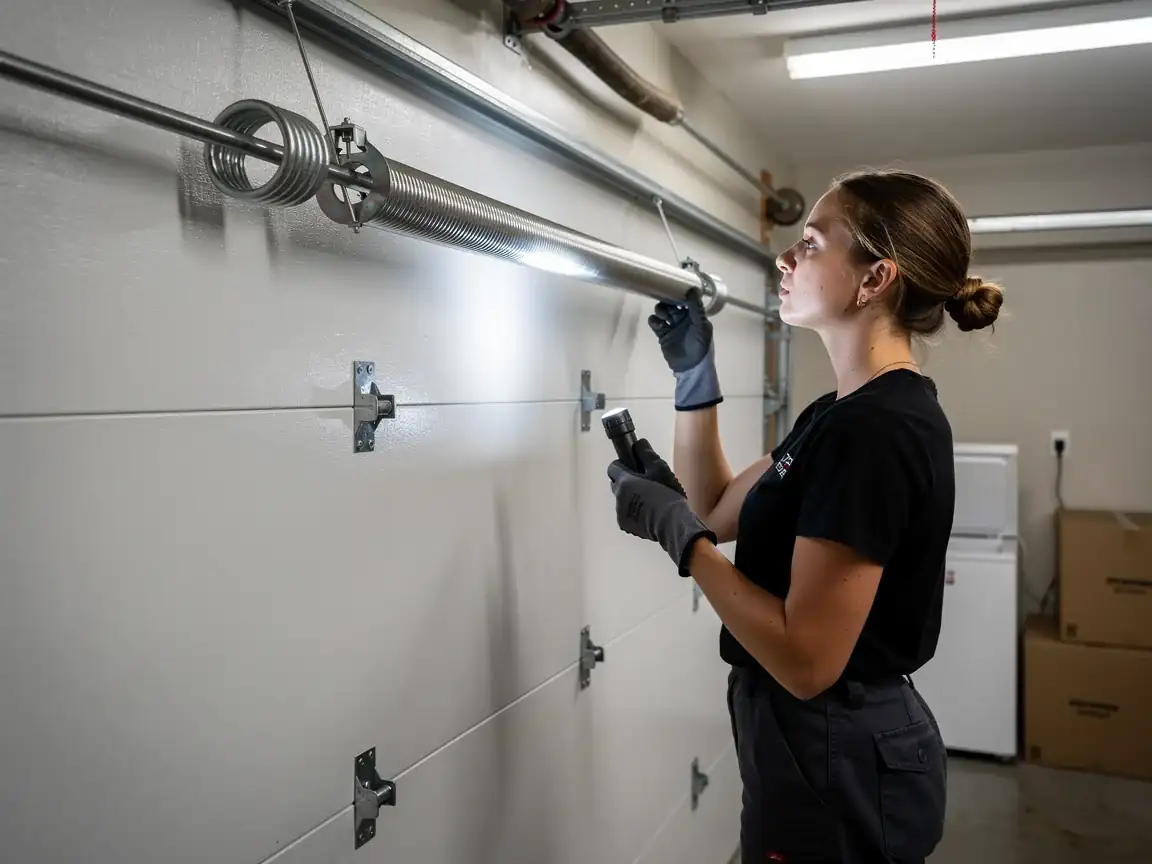
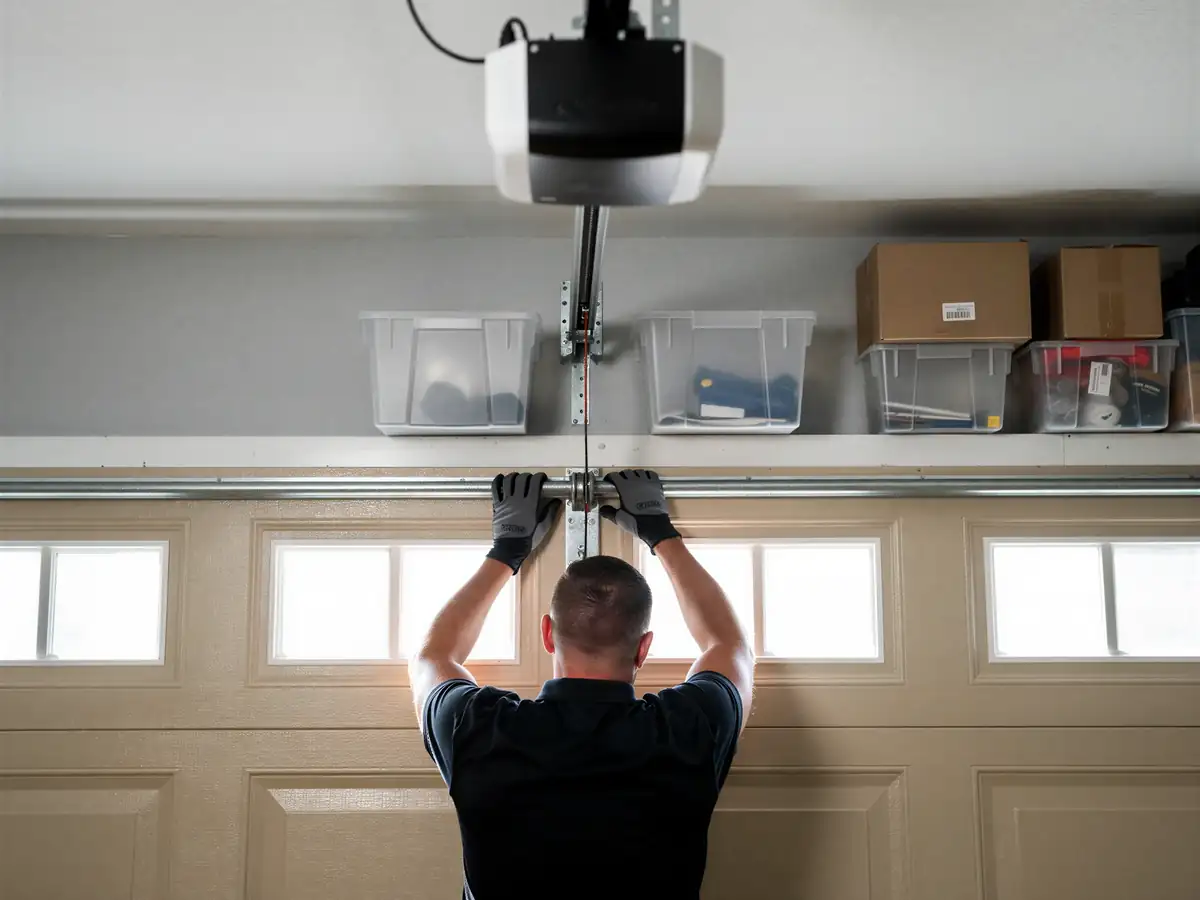
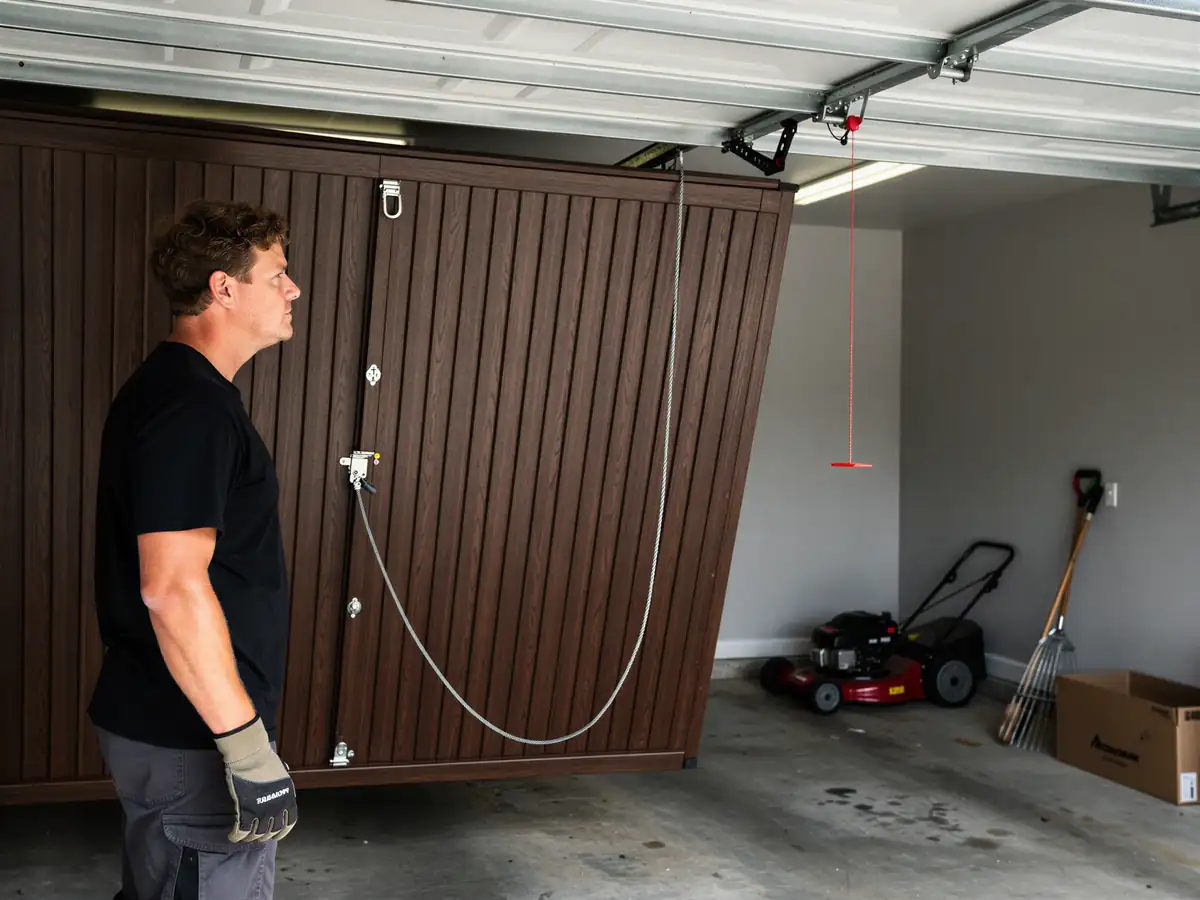
Start with the spring, since it's the part most likely to fail without warning and the one you should never try to adjust yourself. Look at the coil above the door - if it's visibly stretched, has a gap in it, or the door won't stay up when disconnected from the opener, that's the spring. Next, check the weatherstrip along the bottom edge. In a cold-severe climate, original vinyl from a 1997-2008 build is often cracked or shrunk by now, and that's an easy, low-cost fix that stops cold air and water from coming in under the door. Then look at the panels themselves for rust at the bottom corners - moisture that sits against an older non-insulated steel panel through repeated freeze cycles will eat through paint and primer faster than people expect. Last, listen to the opener. A grinding or straining sound on a cold morning usually means the drive is working harder than it should, which often traces back to the spring, not the motor. If you're not sure which of these you're looking at, that's a fair reason to have someone look rather than guess - misdiagnosing a spring problem as an opener problem is one of the more expensive mistakes a homeowner can make here.
When Waiting Is Fine
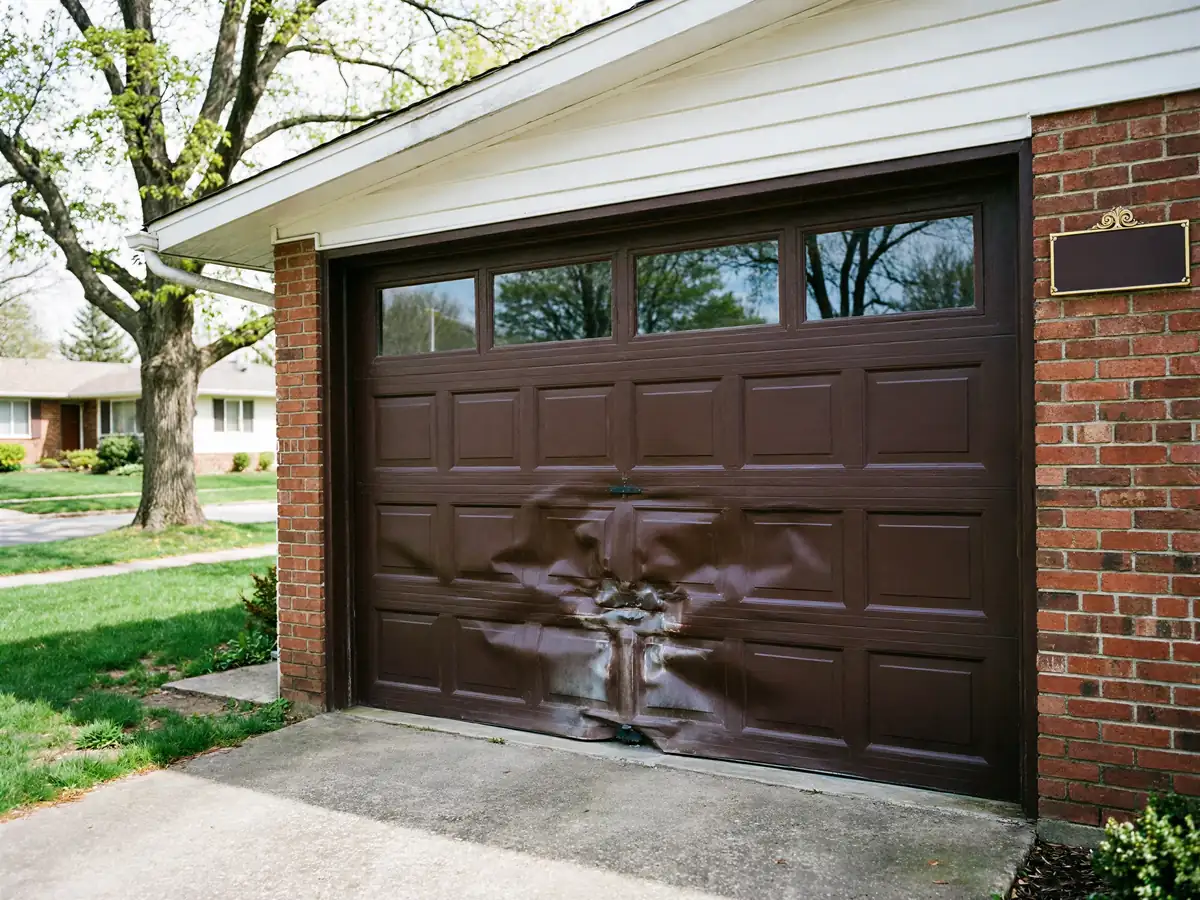
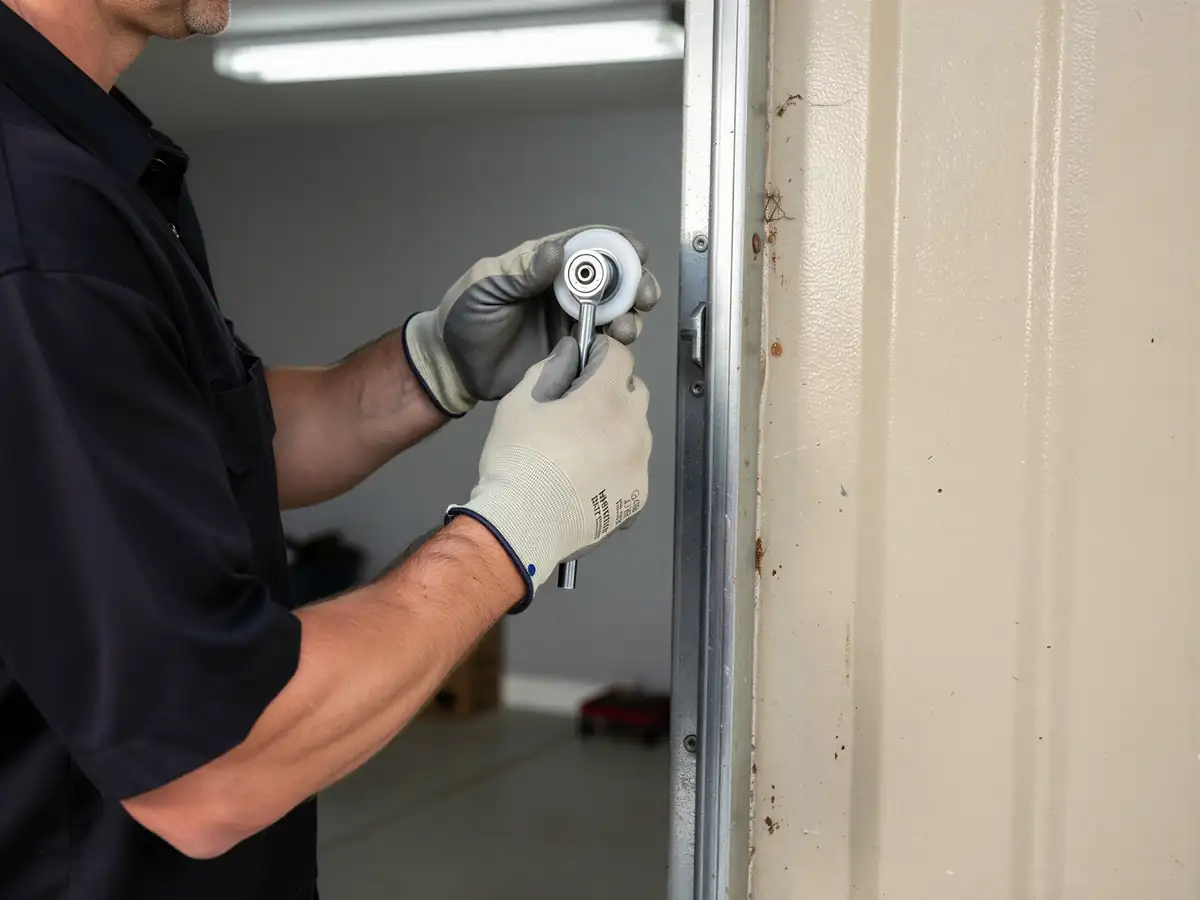
Not everything on a door this age needs attention right away, and it's worth saying plainly: a dent in a panel that doesn't affect the track, a little surface rust that hasn't reached the metal underneath, or a slightly noisy roller that isn't binding - those can wait for warmer weather without getting worse in any real sense. Cosmetic wear on a builder-grade door from this era is common and it doesn't threaten how the door operates. What doesn't fall into that category is a spring showing a gap, a cable that's frayed, or a door that's started reversing on its own mid-close - those get worse under cold stress, not better, and they're not jobs for spring. One honest limitation: if a part specific to an older opener model from this build era has been discontinued, replacing the whole opener is sometimes the realistic answer rather than hunting for a part that isn't made anymore. That's not upselling - it's just where the parts supply chain actually is for hardware this old.
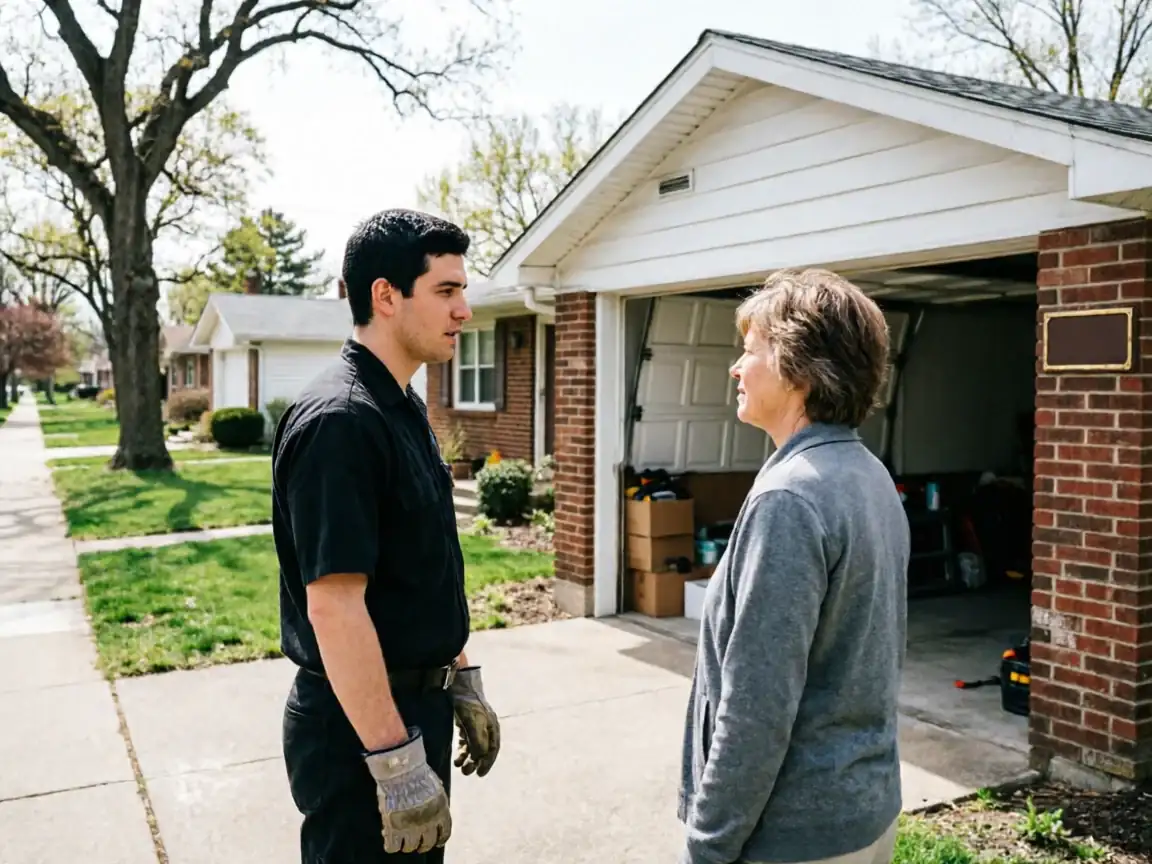
Straight answers about garage door repair in Indianapolis. Still unsure? Ask us directly.
How old is a typical garage door in this area?
Most houses in the service area were built between 1997 and 2008, with the median right around 2000, so a lot of original garage doors and openers are now in their late teens to mid-twenties. That's old enough for springs and weatherstripping to be near or past their working life, especially after repeated cold winters.
Why does my door act up specifically in cold weather?
The climate here is rated cold and severe, which puts real stress on torsion springs and vinyl seals through repeated freeze-thaw cycles. Lubricant stiffens, seals harden and crack, and a spring that's been weakening for years is most likely to finally break on the coldest days, not the mildest ones.
Is it worth fixing an old opener or should I replace it?
If the opener is original to a house built in the late 1990s or 2000s, parts for that specific model are often hard to find. In that case, replacing the whole unit is usually the more realistic option rather than waiting on a part that may not be manufactured anymore.
Can I just wait until spring to deal with a sticking door?
Cosmetic issues like minor rust or a dented panel can wait. A spring with a visible gap, a frayed cable, or a door that reverses on its own shouldn't - cold weather makes those worse, not better, and they carry real risk if ignored.