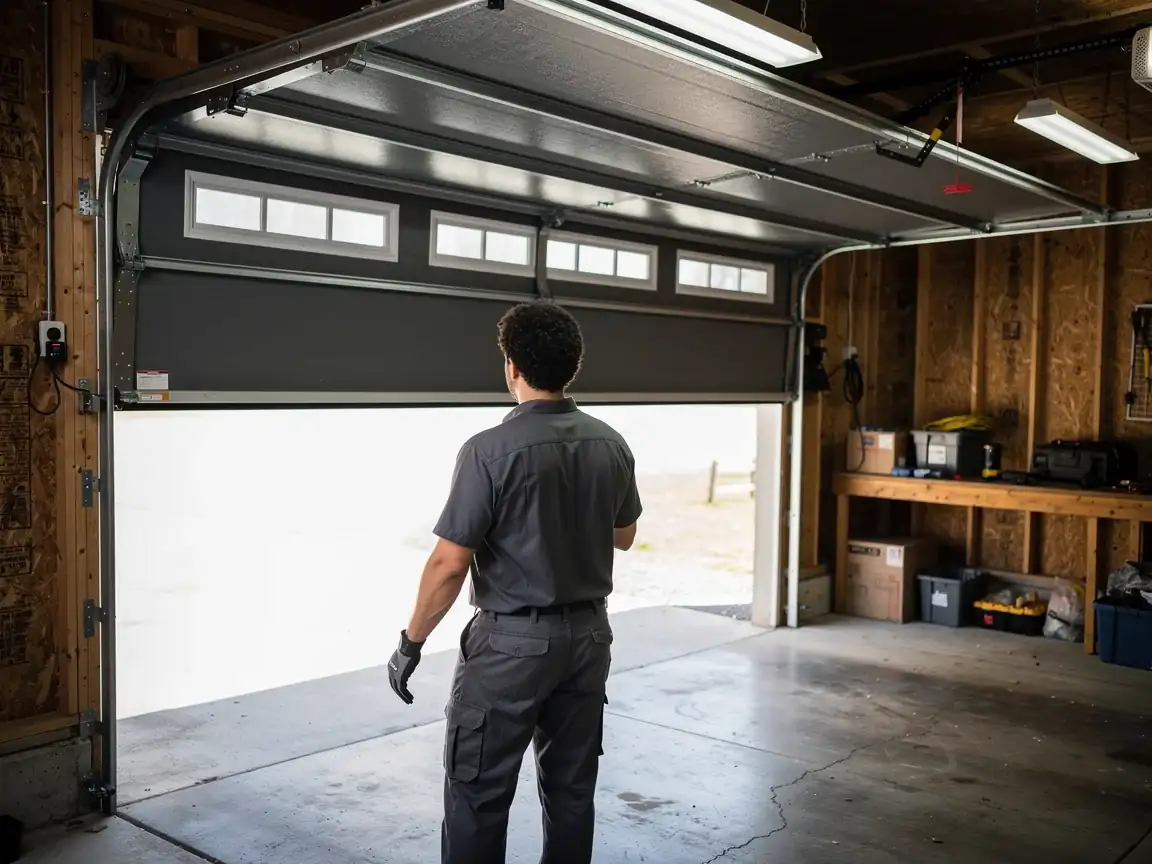
Garage door repair in Indianapolis for homes built mostly in the 2000s, where cold winters stress openers and torsion springs. Straight talk, no upsell.
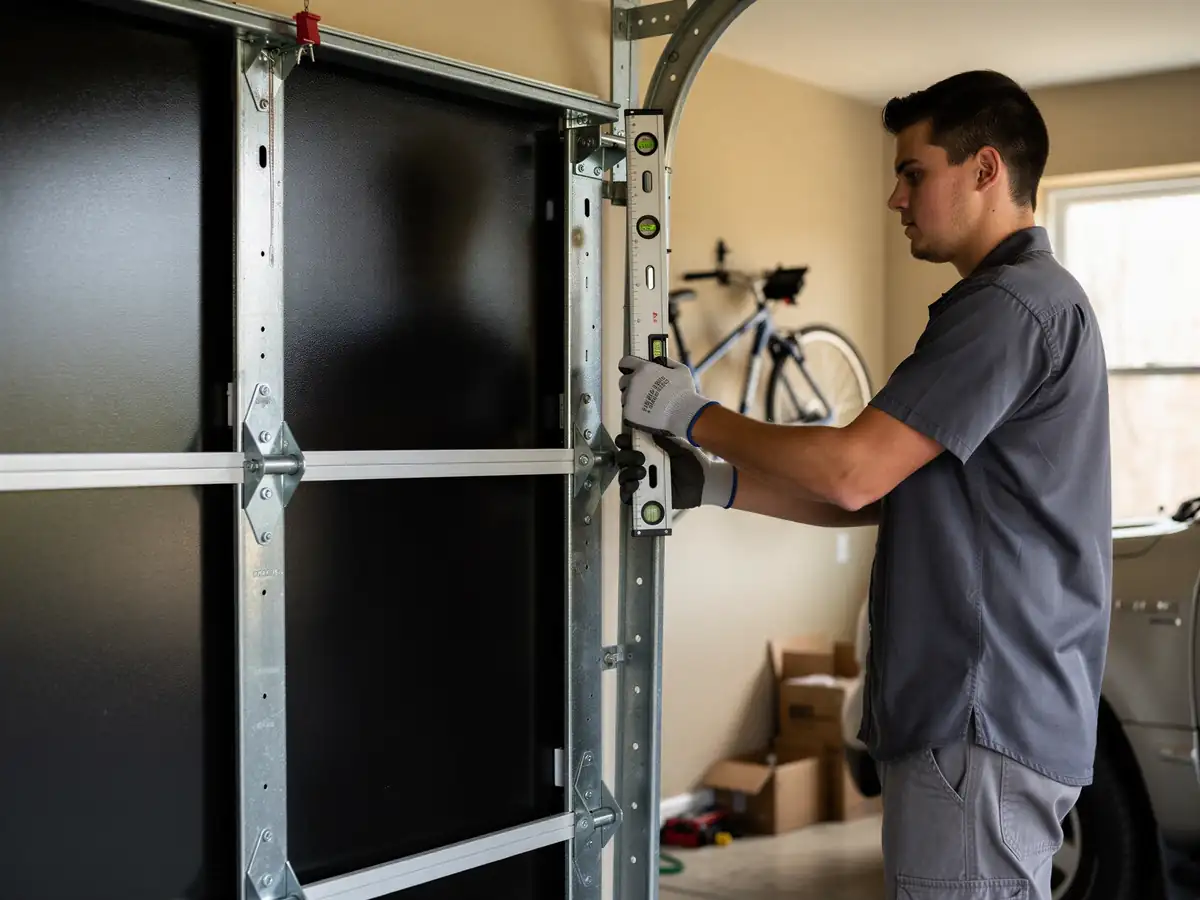
We can't quote a repair price without seeing the door, because a broken cable costs nothing like a broken torsion spring, and a bent track is a different job than a dead opener board. What we can tell you is what drives the number on a call like this: whether the spring is a single or a pair, whether the drums or cables came off with it, and whether the opener's logic board tripped as a side effect.
Most of the houses we work on here went up between 1997 and 2008, which puts the original springs at the end of their rated cycle life right now. That means a lot of calls that start as "my door won't open" turn out to be a torsion spring that simply ran out of cycles - a straightforward fix, not a system failure. We'll tell you flat out if a repair isn't worth it compared to replacing the whole operator, especially on a door that's been limping along on a failing opener for a while. We don't carry every obscure part on the truck for a door that's been discontinued; if yours falls into that category we'll say so before we start, not after.
Getting It Booked In
01
Call or request service through the site and tell us what the door is doing
Won't open, opens partway and reverses, makes a bang and stops. That one detail usually tells us which parts to bring so the first trip is the only trip.
02
We ask for the door's age and whether it's ever been serviced
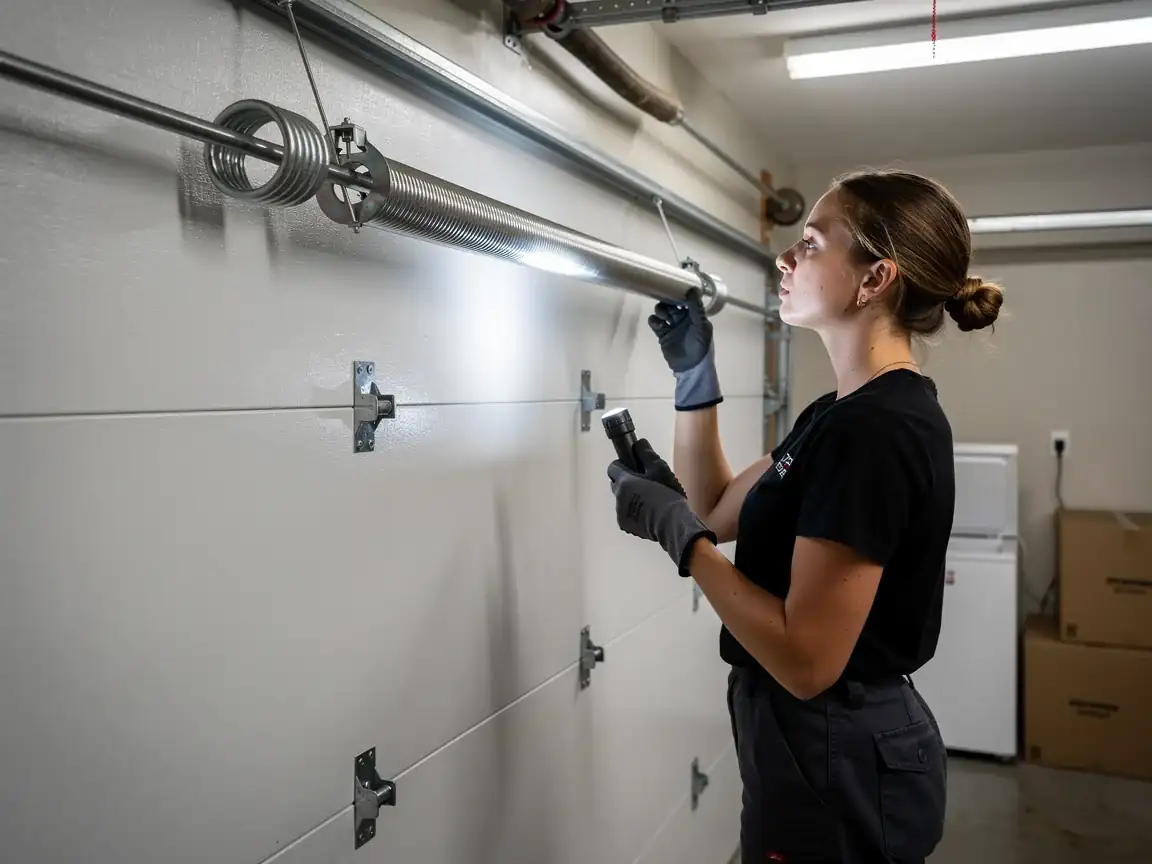
Since a door that's original to a house built in the late 90s or early 2000s is a different animal than one that had a spring swap five years ago. If you're not sure, a quick look at the spring coil or the sticker on the opener motor usually settles it, and we can walk you through finding that over the phone.
03
You can reach us at the link below to get a call scheduled
We work across the Indianapolis area, including the stretch out toward Carmel, Fishers, Zionsville, and Westfield, so tell us roughly where you are and we'll give you a realistic window instead of a vague promise.
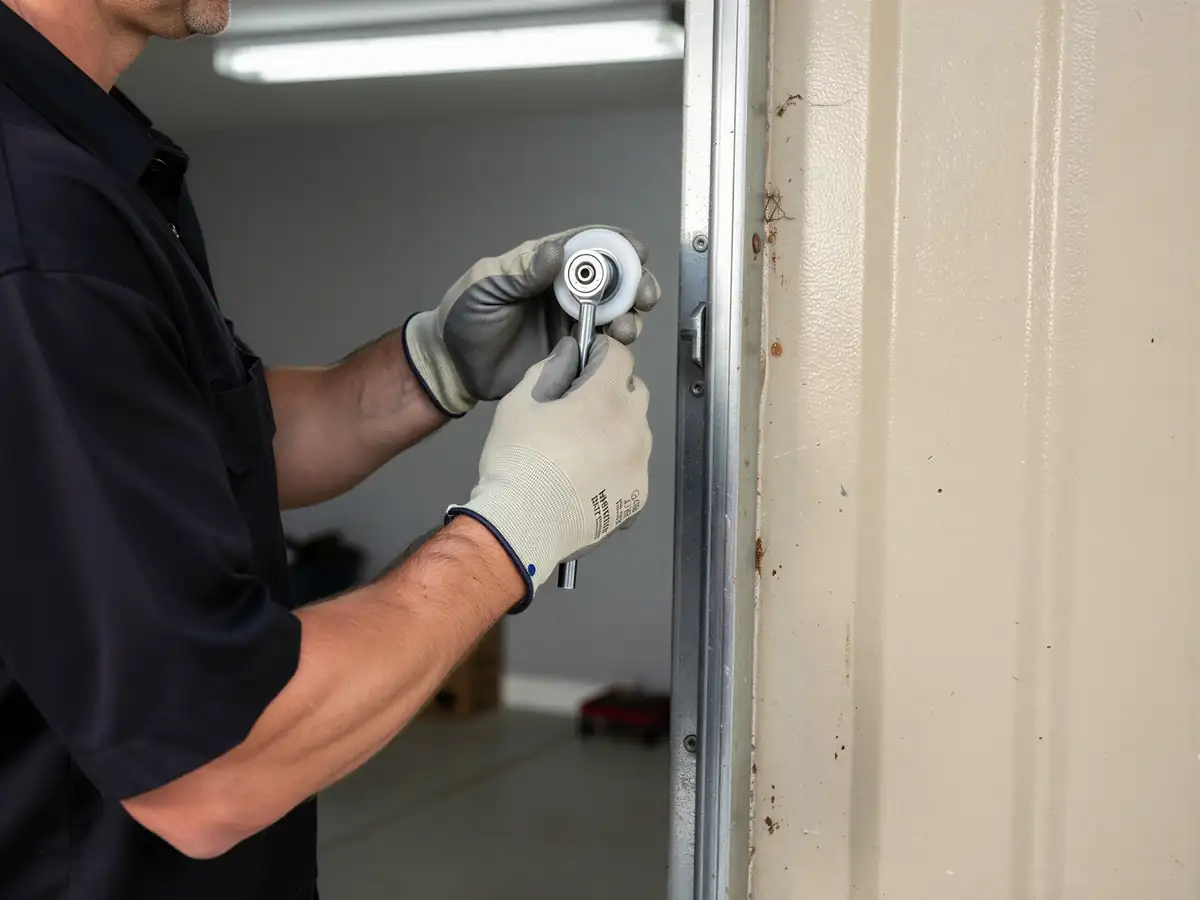
Indianapolis sits in a cold-climate band, and that steady freeze-thaw cycle is hard on torsion springs and nylon rollers alike. Steel contracts in the cold, lubricant thickens, and a spring that's already near the end of its cycle count is far more likely to let go on a January morning than a July afternoon. That's why so many of our broken-spring calls cluster in the coldest stretches of the year.
Pair that climate with the age of the housing stock. Across the four named areas we work in, the bulk of the homes were built in the 1997-2008 window, with the median landing right around 2000. Garage door openers and torsion springs from that era are now 15 to 28 years old, which is past the point most manufacturers rate the hardware for. The failure isn't random - it's the predictable end of a part's working life, arriving at roughly the same time across whole neighborhoods because the houses themselves all went up in the same few years.
Across the service area's 105,616 households, 79,903 are owner-occupied houses with an attached or detached garage door to maintain, and a good share of those doors are hitting this same age wall at close to the same time.
What You Are Seeing
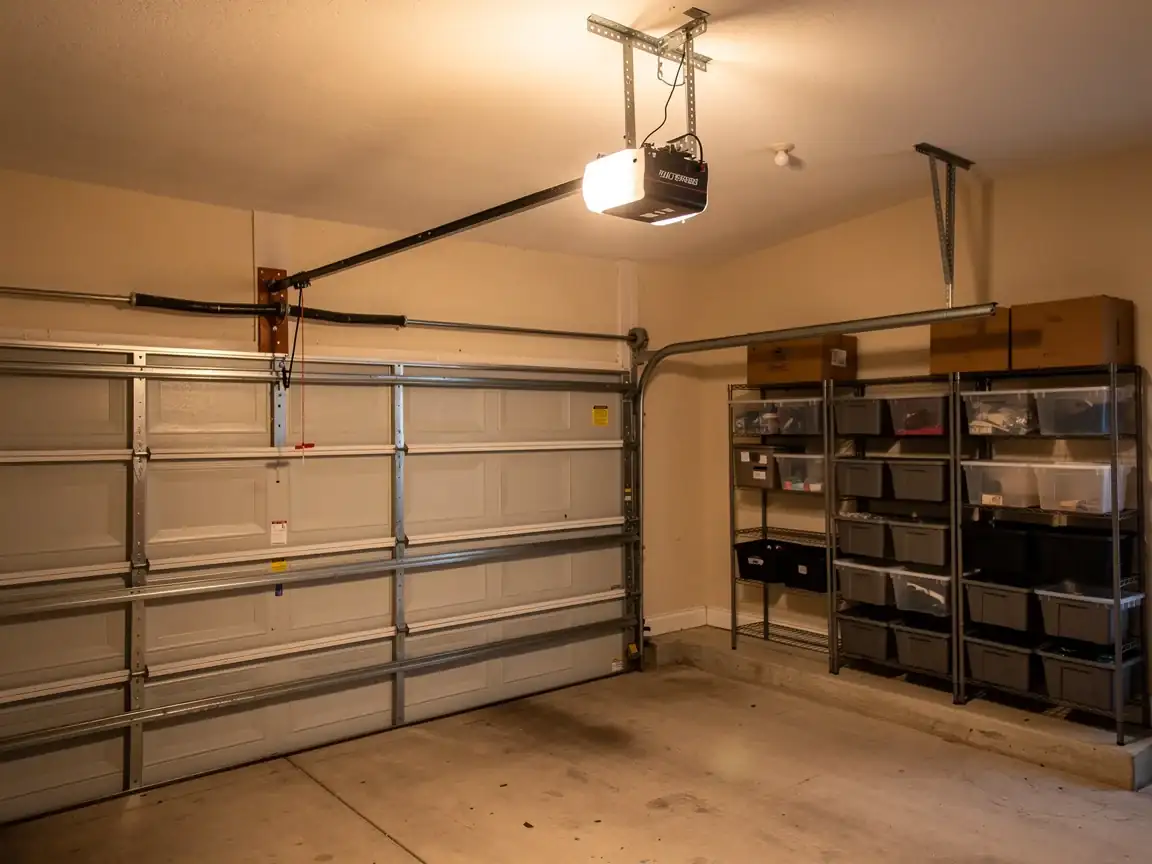
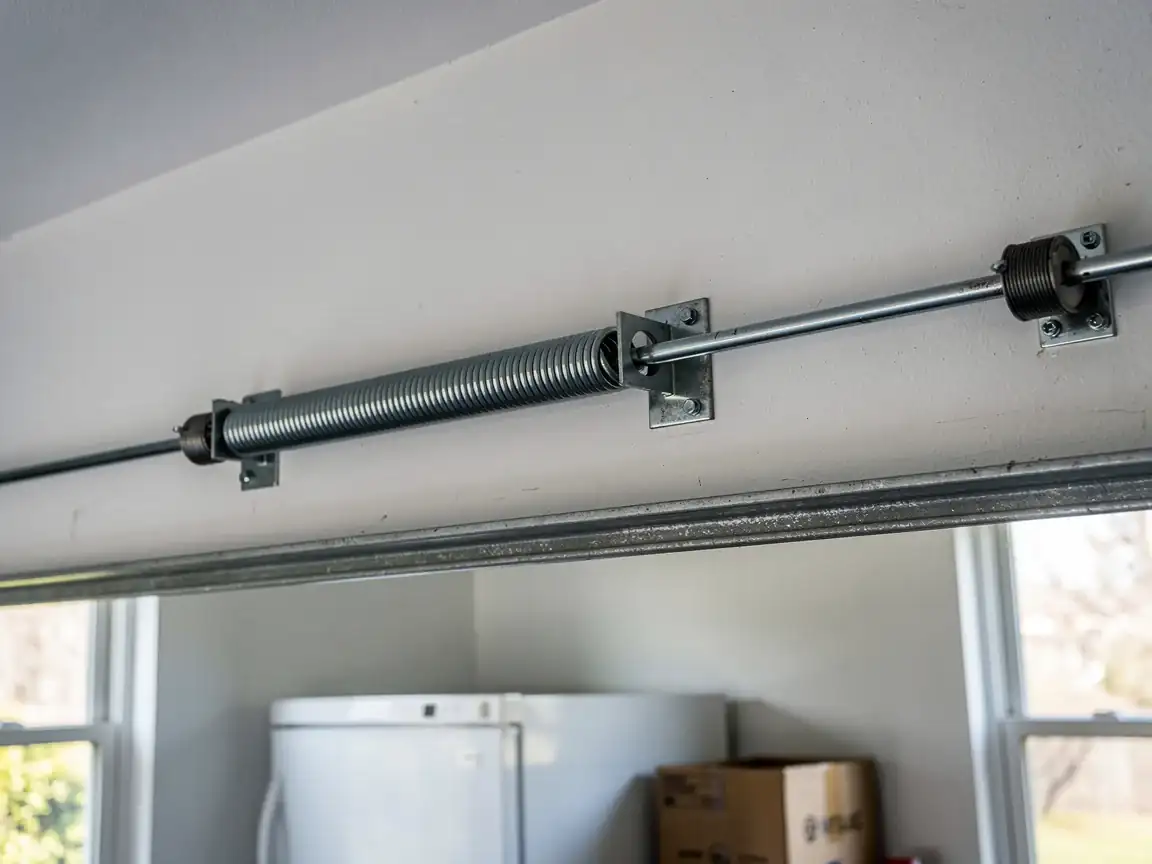
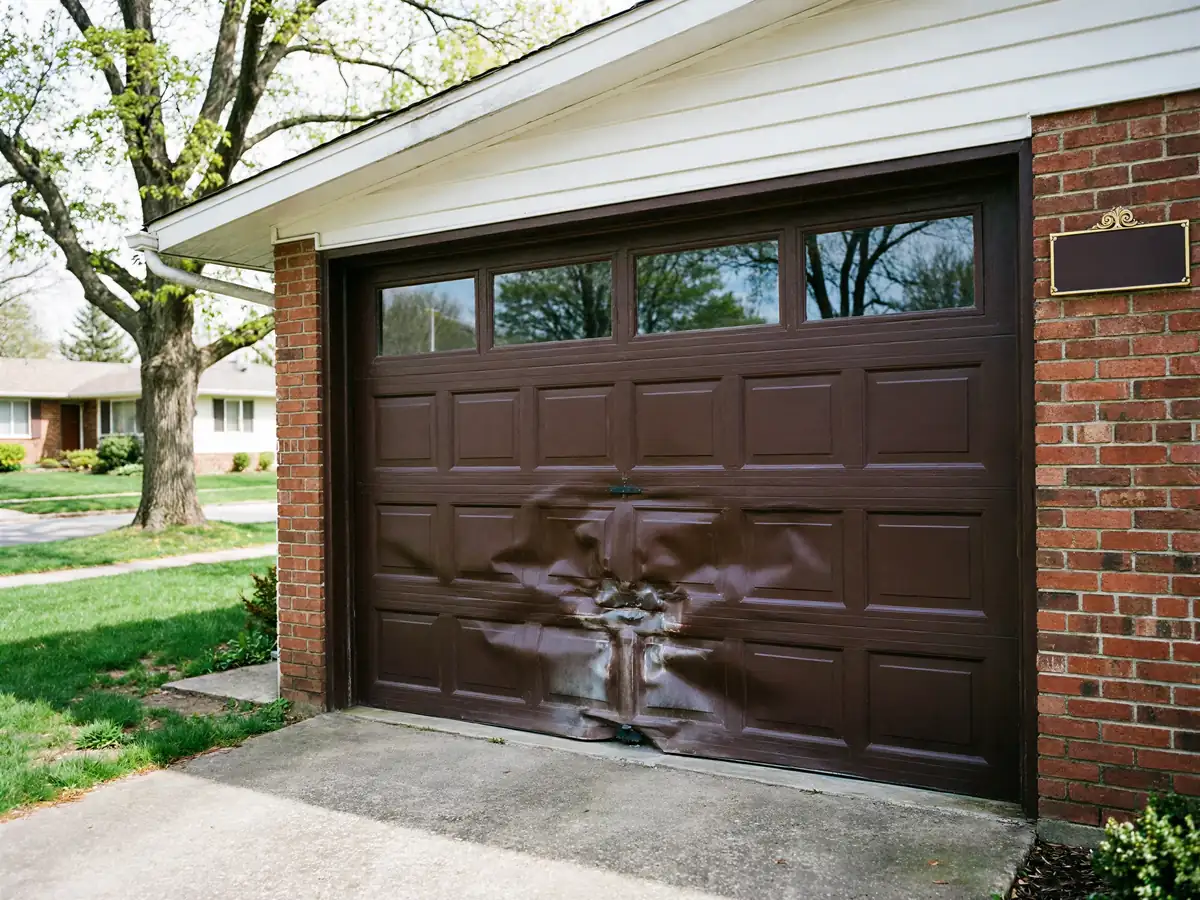
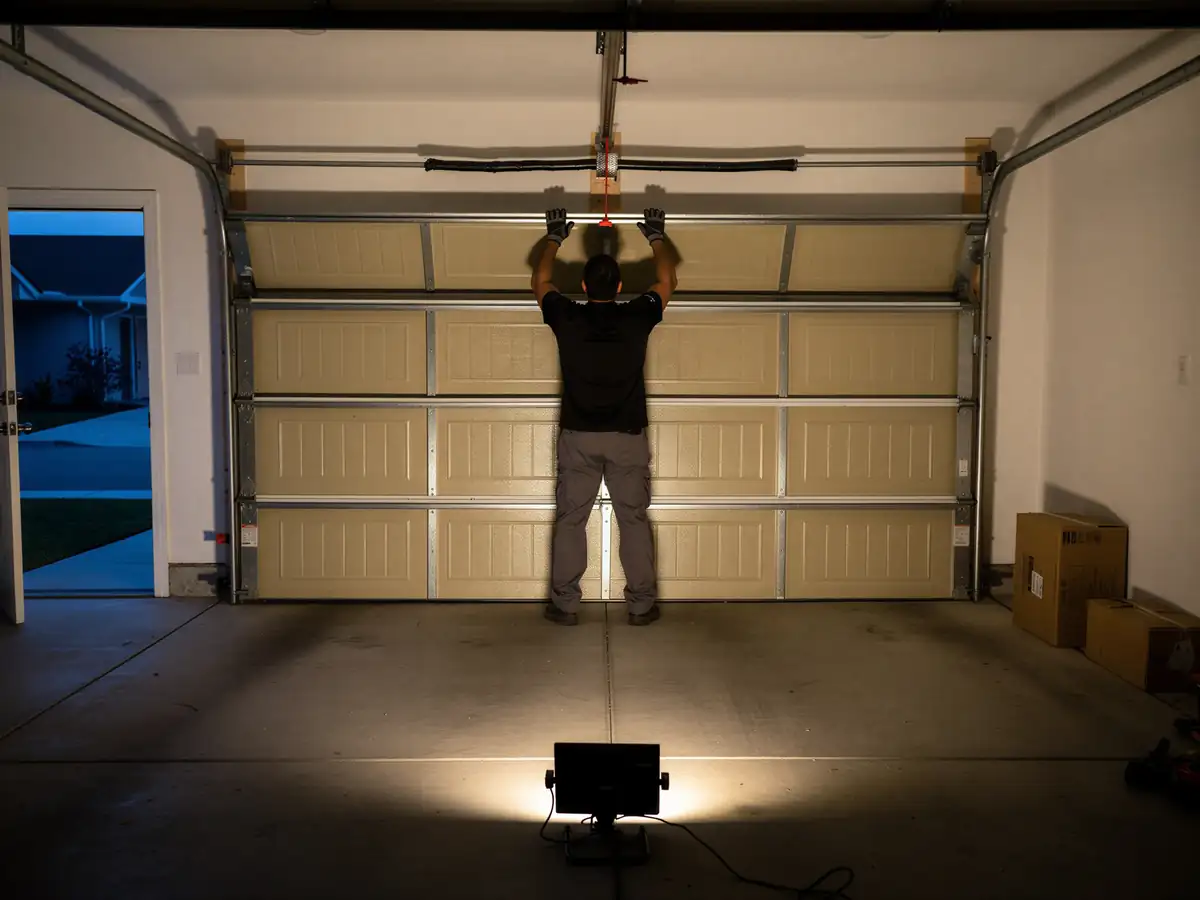
A door that won't budge and a spring with a visible gap in the coil is the classic one - the spring let go, and the opener doesn't have the muscle to lift the door without it. A door that opens but groans, sags on one side, or reverses itself partway up often points to one spring on a double-spring setup giving out while the other is still holding.
A loud bang from the garage, usually when no one's home, is almost always a torsion spring snapping under tension. It's startling but it's also diagnostic - that sound rules out the opener and points straight at the spring.
If the door opens fine on manual release but the opener motor hums and does nothing, that's usually the opener itself, not the door hardware - a separate problem from what's described above. With a median household income of $131,371 in this market, most owners here choose a full torsion spring replacement over a patch job once one spring has gone, rather than running mismatched springs. If you're closer to Carmel, Fishers, Zionsville, or Westfield, the drive time changes but the same 2000s-era hardware shows up in all four, so the symptoms you're seeing are likely the same ones we're fixing a few miles over.
How it works
From “it’s stuck” to “it’s fixed”
01
Tell us what’s wrong
Describe the symptom - won’t open, loud bang, opener runs but the door won’t move.
02
On-site diagnosis
A technician tests the door under power and by hand and finds what actually failed.
03
Clear, up-front plan
You get the fix that’s needed and what drives the cost - before any work starts.
04
Repaired & tested
The repair is done, the door is set true and tested, and the work area left clean.
Not sure which repair your door needs in Indianapolis, IN? Describe what it’s doing - every job starts with a diagnosis.
Straight answers about garage door repair in Indianapolis. Still unsure? Ask us directly.
Why did my garage door spring break with no warning?
Torsion springs are rated for a set number of open-close cycles, and cold weather adds extra strain on top of normal wear. Most houses in this area have doors from the late 1990s to late 2000s, so a lot of springs are reaching that limit around the same time. The break itself is sudden, but the wear behind it isn't.
Should I replace one spring or both?
If your door has two springs and one broke, the other is usually close behind since they're the same age and have logged the same cycles. Most owners here choose to replace both at once rather than pay for a second service call in a few months. We'll tell you the condition of the second spring so you can decide.
Can I just use my opener to force the door open?
No. Running the opener motor against a broken spring puts the full weight of the door on the opener's gears and drive, which can strip them in one try. Use the manual release and lift by hand if you have to move the door before we arrive.