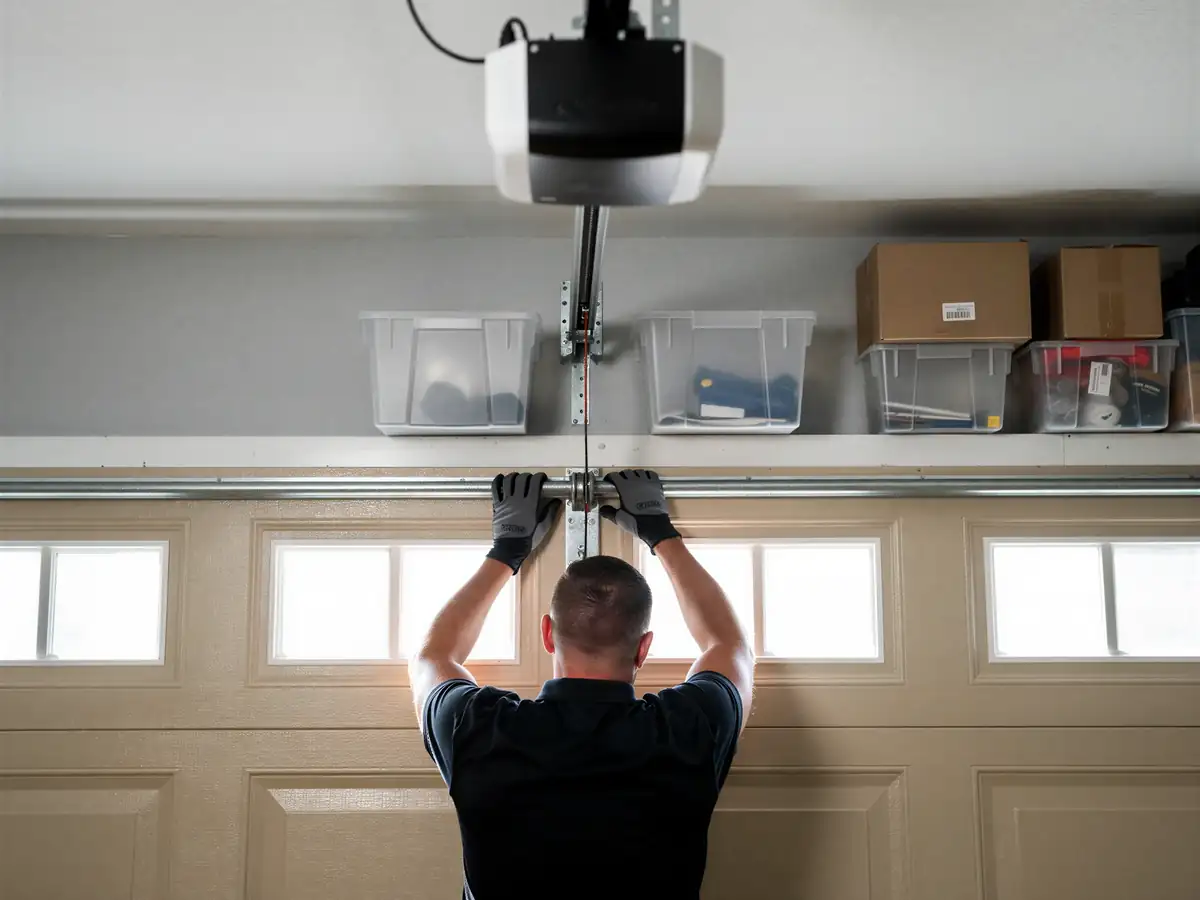
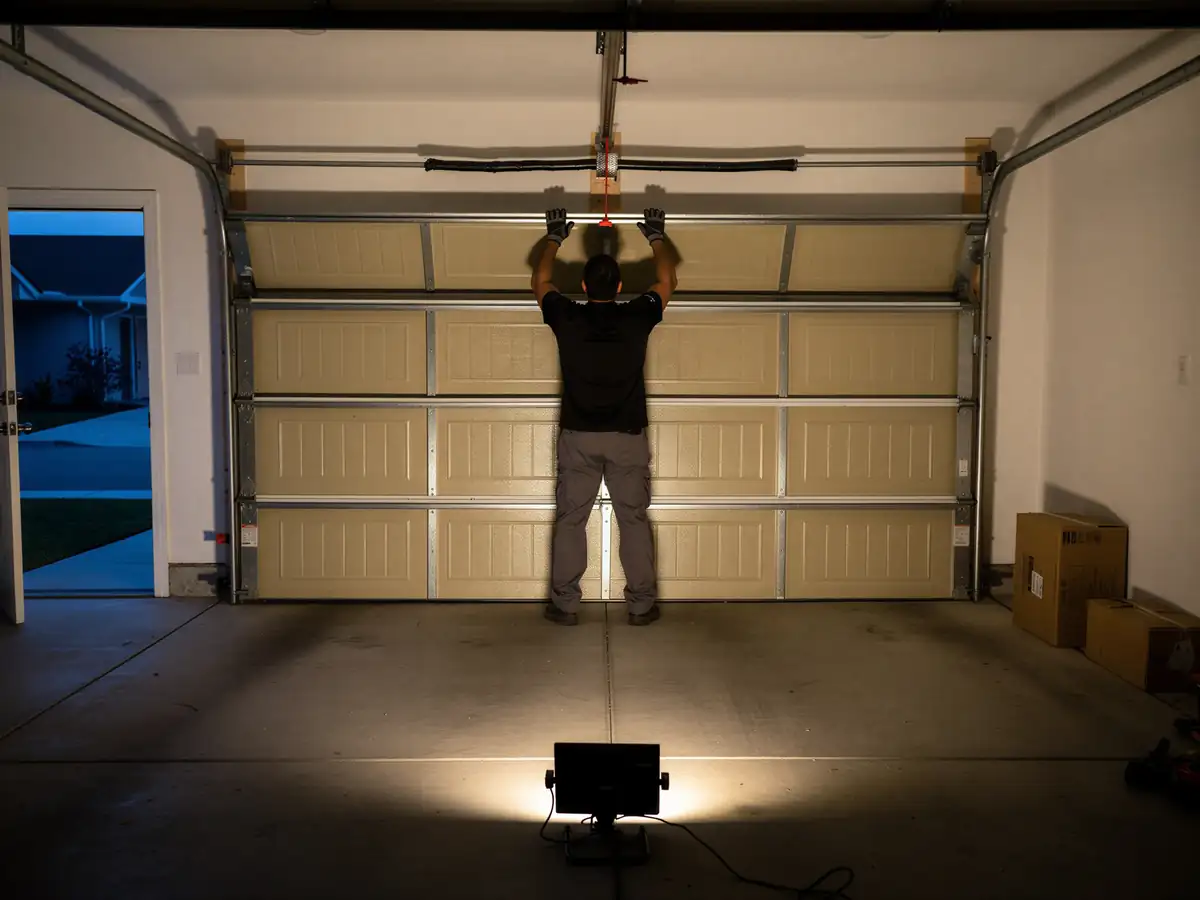
Indianapolis sits in a severe cold climate band, and that matters more for your opener than most homeowners think. Grease inside the drive unit thickens below freezing, which slows the carriage and makes the motor strain harder on every cycle. Metal contracts too - rail brackets, hinges, and the little steel arm that connects the trolley to the door can all shift just enough to throw off a sensor alignment that was fine in October.
The bigger issue is what happens when cold weather brings a power cut with it. A hard freeze that snaps a line, or an ice-loaded tree limb across a transformer, takes the opener's circuit board offline along with everything else in the house. Unlike a furnace, a garage door opener usually has no backup unless one was added on purpose. When the power comes back, some boards reset fine. Others - especially older ones - don't, and you're left with a door that won't respond to the wall button or the remote until someone resets or replaces the logic board.
This isn't a once-a-decade event here. Cold-snap power cuts are routine enough in a climate this severe that the opener's exposure to them should factor into when you replace it, not just whether it currently works.
The Problem
01
Most of the housing across Indianapolis's four main residential areas went up between 1997 and 2008
With 2000 as the midpoint. That means a large share of openers out there are original to the house - chain or belt drives from the early 2000s, built before battery backup was standard equipment and before boards had much tolerance for repeated power loss.
02
An opener from that era that's run fine for two decades isn't broken by age alone
What breaks it is the combination: twenty-some winters of cold-thickened grease plus every power blip that's hit the board since installation. Capacitors degrade. Contacts corrode slightly faster in an unheated garage. None of that shows up until the one week it's fifteen degrees out and the power drops for four hours - and then the opener that's been limping along finally won't restart.
03
We can't tell you your opener's exact birth year without seeing the model plate
And we won't pretend every 1997-2008 home has the same unit - some have been replaced already. But if your house falls in that build window and the opener has never been swapped, the odds that it's the original are high enough to plan around.
What to Look At First
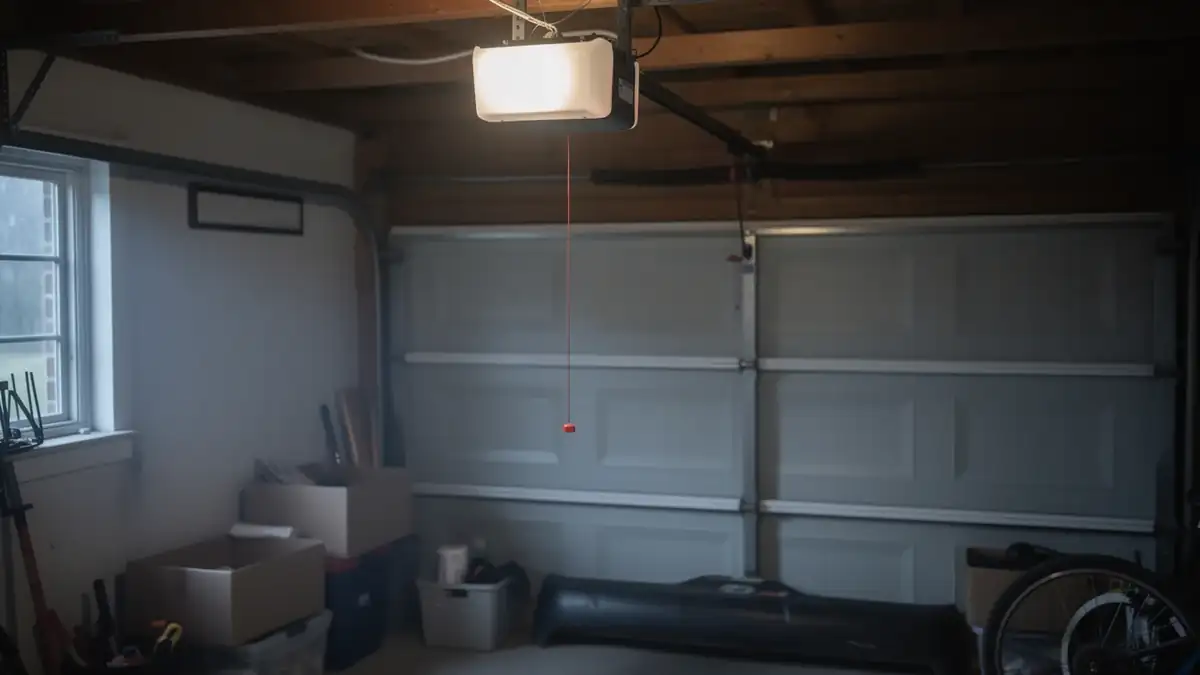
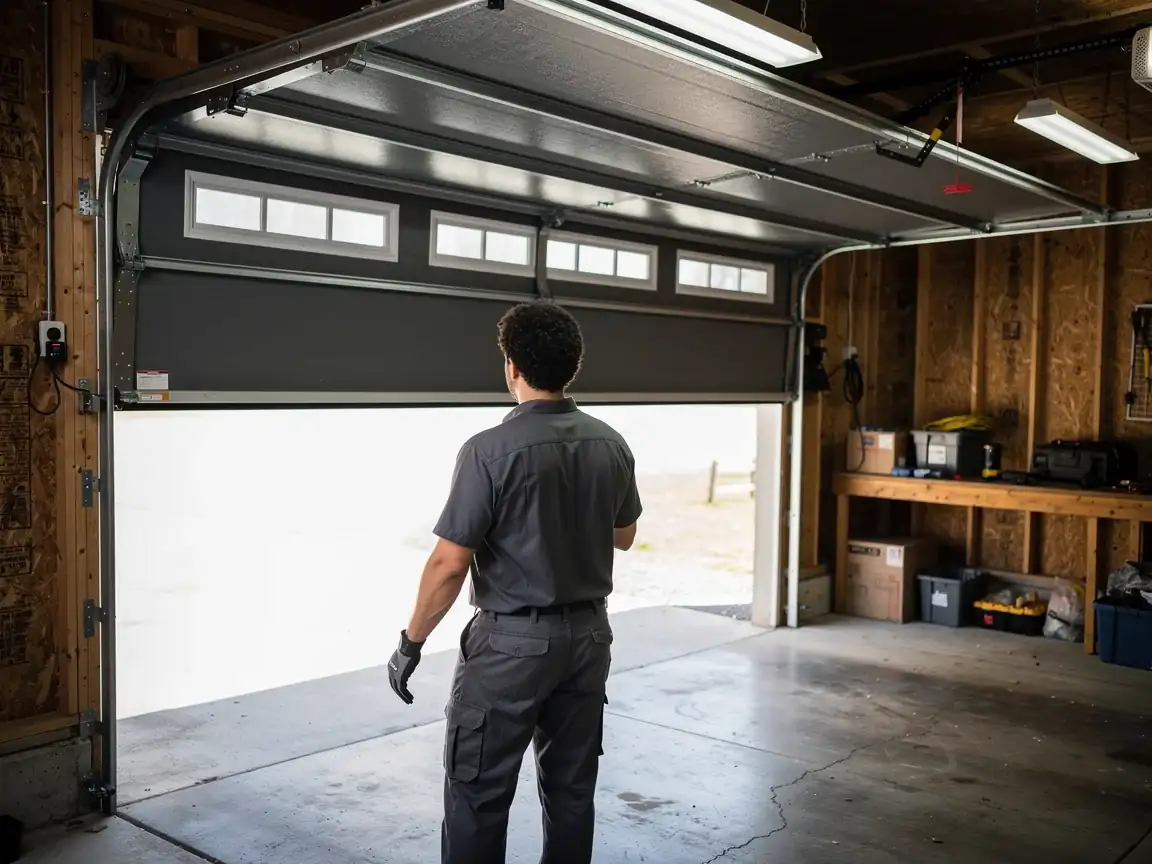
Start with the model plate on the opener housing, usually on the side of the motor unit. If the install date or model lines up with your home's original construction and nobody's mentioned replacing it, treat it as original equipment and inspect it a little more carefully before the next cold snap.
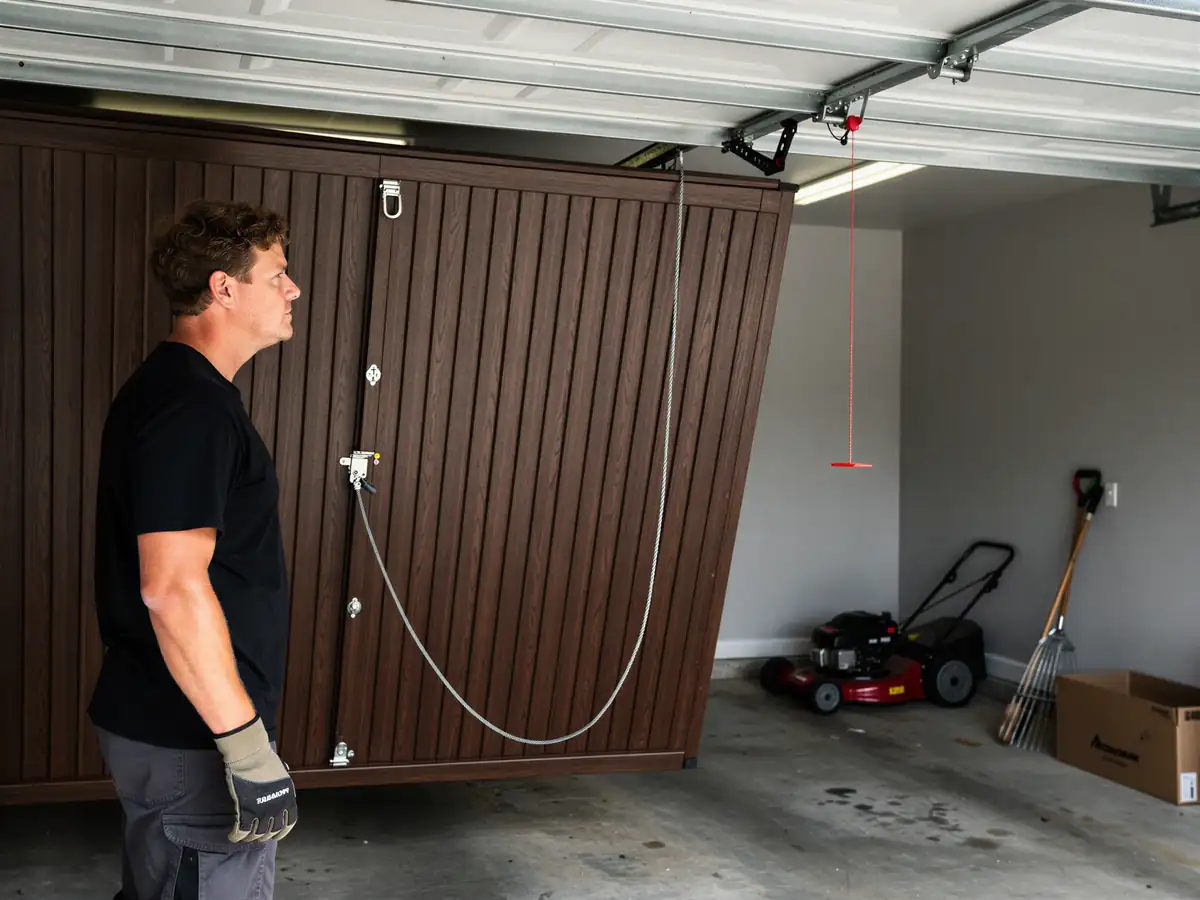
Check whether there's a battery backup unit - a small box, usually mounted near the opener head. If there isn't one, that's the single biggest point of failure when a winter storm cuts power: no backup means no way to open or close the door electrically until service is restored, and the manual release cord becomes your only option.
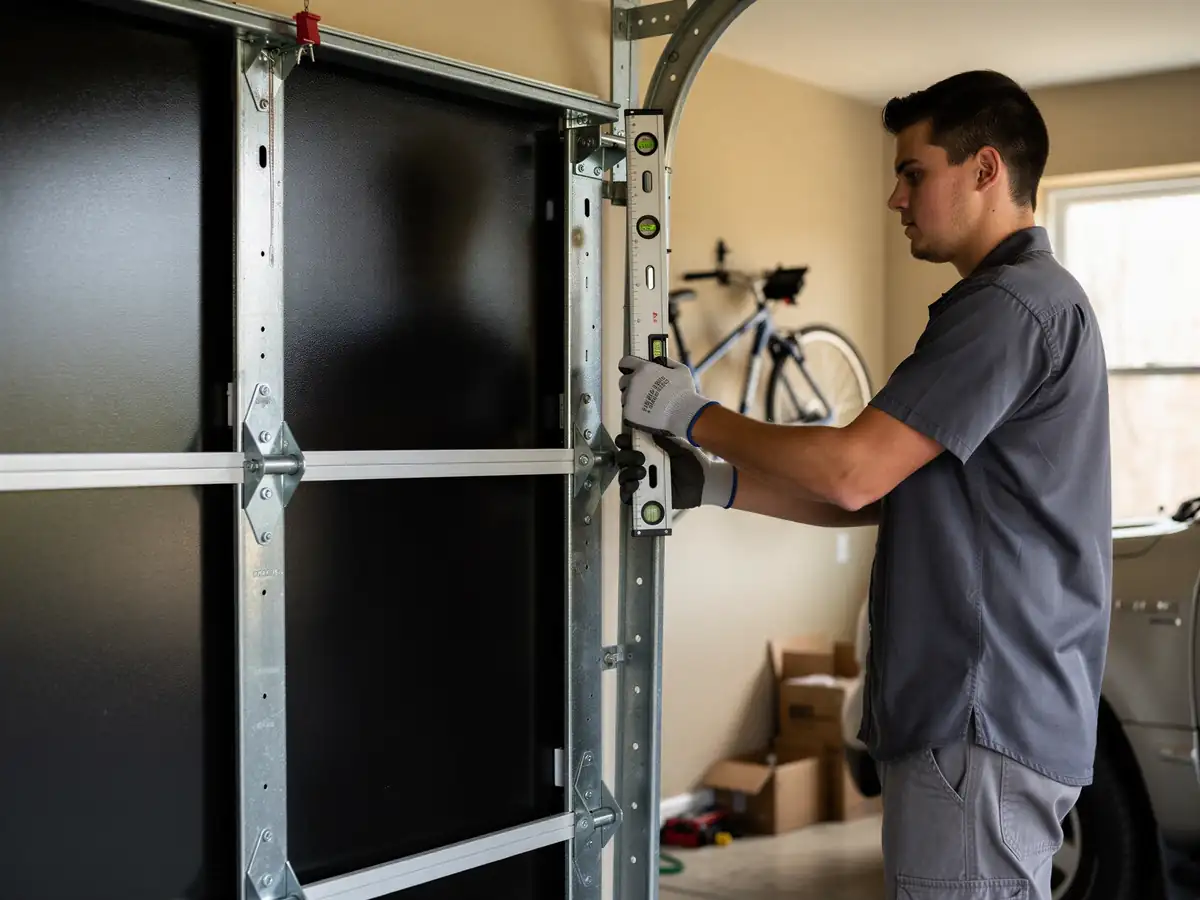
Look at the photo-eye sensors near the floor on each side of the track. Cold contraction can shift a bracket just enough to misalign them, which shows up as a door that reverses instead of closing. A quick visual check - are both LEDs lit steady, not blinking - tells you if that's your issue before you call anyone.
Finally, listen to the motor on a cold morning. A new, higher-pitched strain or a hesitation before it catches is the drivetrain telling you the grease hasn't caught up with the temperature, which is worth noting even if the door still closes.
When Waiting Is Fine
Not every cold-weather opener quirk needs a same-day call. If the door is slower than usual on a frigid morning but still closes and still seals, that's the grease, not a failure - it'll loosen up as temperatures climb through the day. There's no reason to pay for an emergency visit over a door that's simply sluggish at 6 a.m. in January.
Same goes for a reset board after a short power cut. If it comes back on its own once power is restored, let it run a few cycles before assuming something's wrong.
What shouldn't wait is a door stuck open after a power cut, especially overnight in a severe-cold stretch - that's a security and heat-loss problem, not a convenience one. And if the opener won't respond at all after the power's been back for more than a few hours, the board likely needs a look rather than another reset.
One honest limit: we don't carry every obsolete circuit board on the truck. If your opener is old enough that the manufacturer's stopped making its board, a repair visit can turn into an order-and-wait situation, and sometimes replacement is the faster, cheaper path than chasing a discontinued part.
Straight answers about garage door repair in Indianapolis. Still unsure? Ask us directly.
Why does my opener stop working every time the power goes out in winter?
Most openers in homes built in the late 1990s and 2000s around Indianapolis were installed before battery backup was standard. Without a backup unit, the opener simply has no power source once the line goes down, and some older boards don't reset cleanly when power returns, especially in a severe-cold climate band like ours.
Is it normal for the door to move slower in cold weather?
Yes. Grease inside the drive unit thickens in low temperatures, which slows the carriage and can make the motor sound like it's working harder. It's not usually a sign of failure on its own, but if it's paired with a power-cut history, it's worth having the opener looked at before it stops entirely.
My house was built around 2000 - should I assume the opener is original?
Not automatically, but it's common enough to check. Check the model plate on the opener housing for a date or model number. If it hasn't been replaced and the house falls in the 1997-2008 window common across this area, treat it as aging equipment and plan for eventual replacement rather than waiting for failure.
Do you stock parts for older opener boards?
Not for every model. Some circuit boards from original-equipment openers in this age range are discontinued, and a repair can mean ordering a part rather than a same-visit fix. In those cases, replacing the opener is often faster and about the same cost as waiting on an obsolete board.