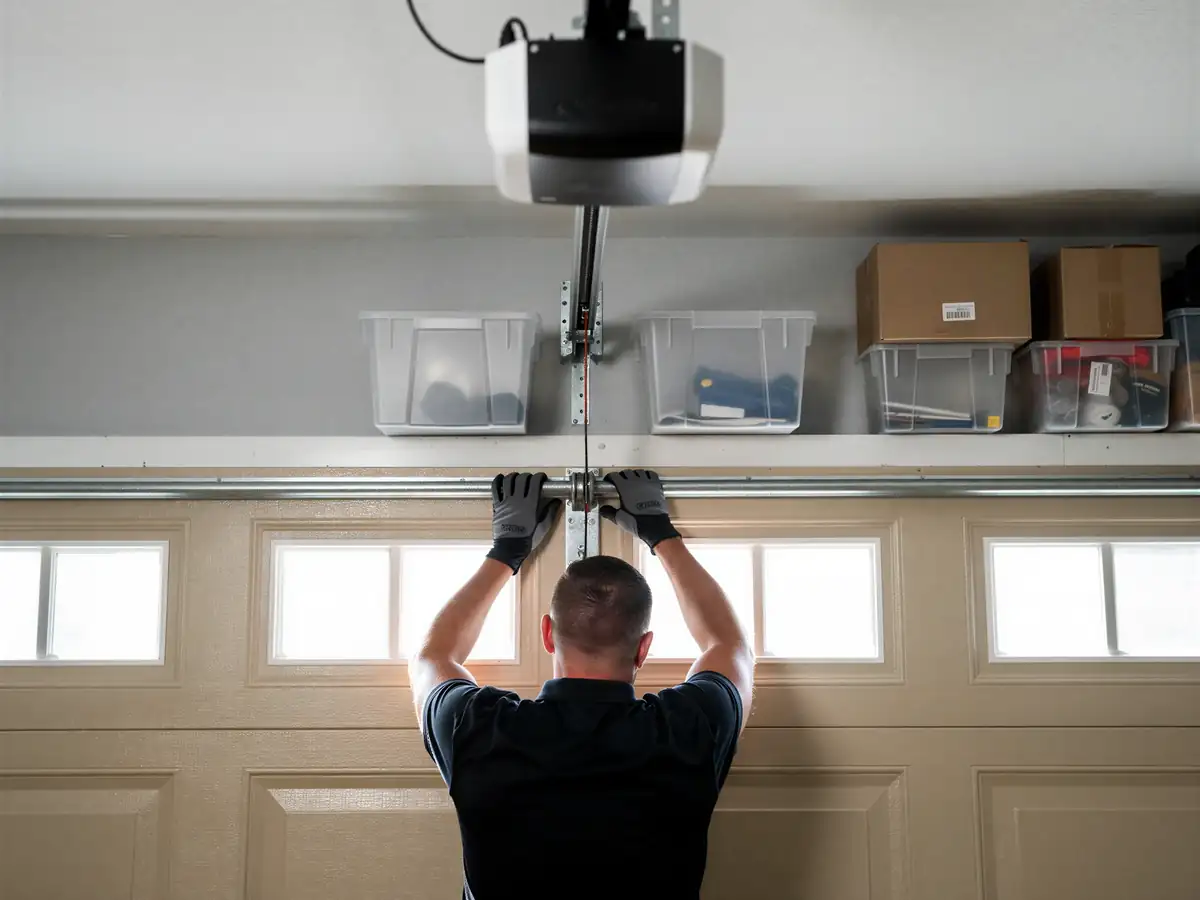
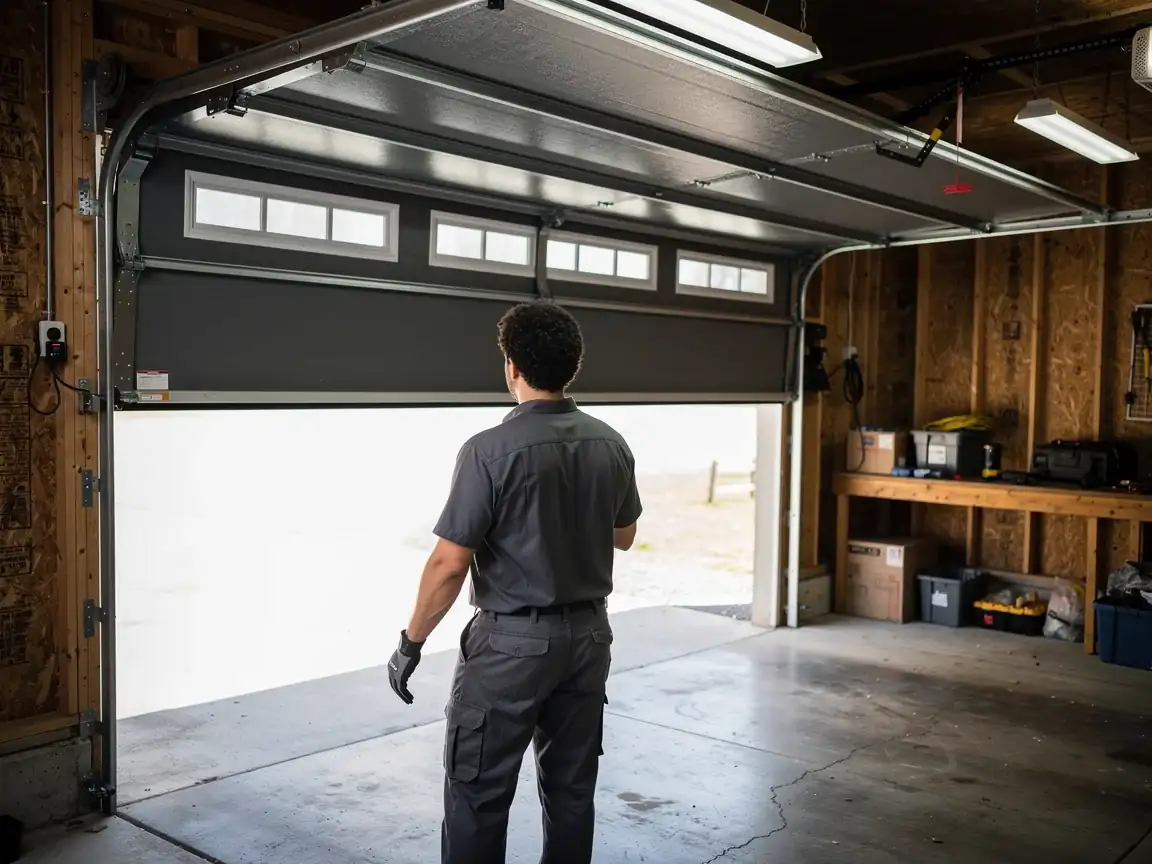
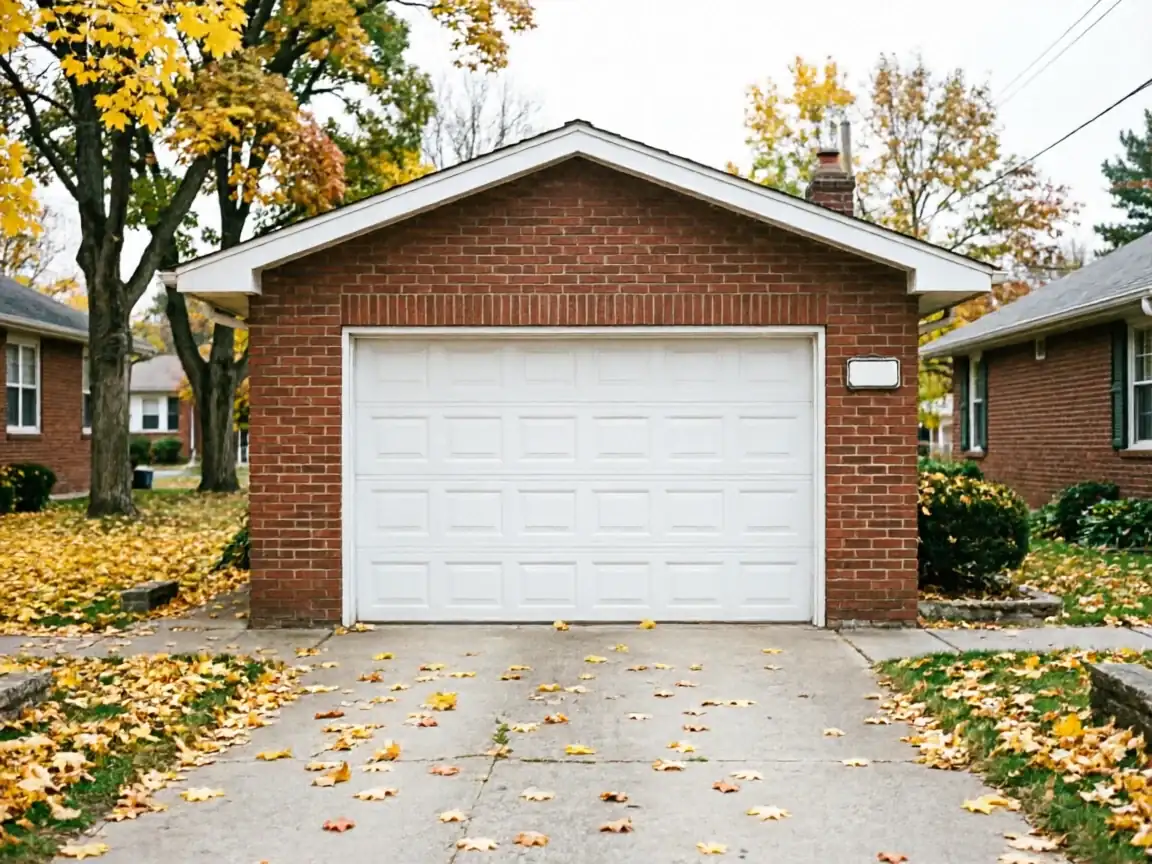
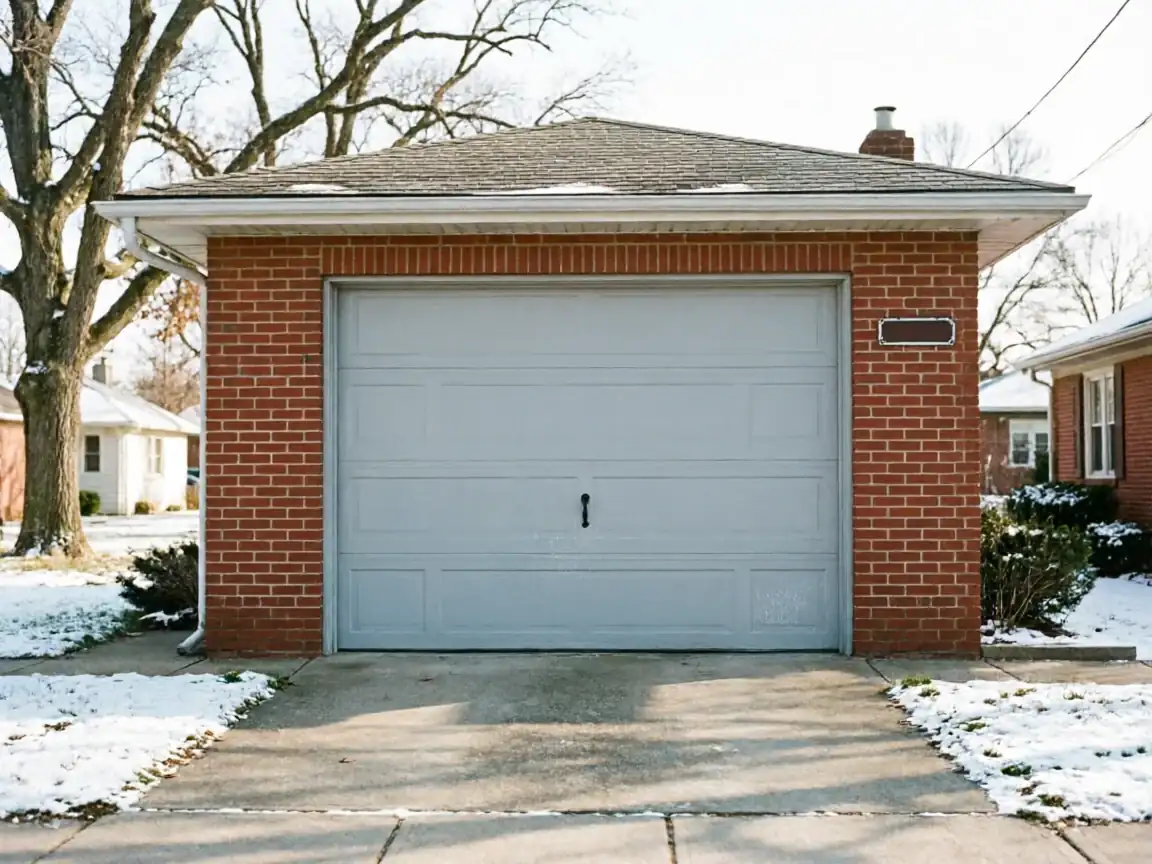
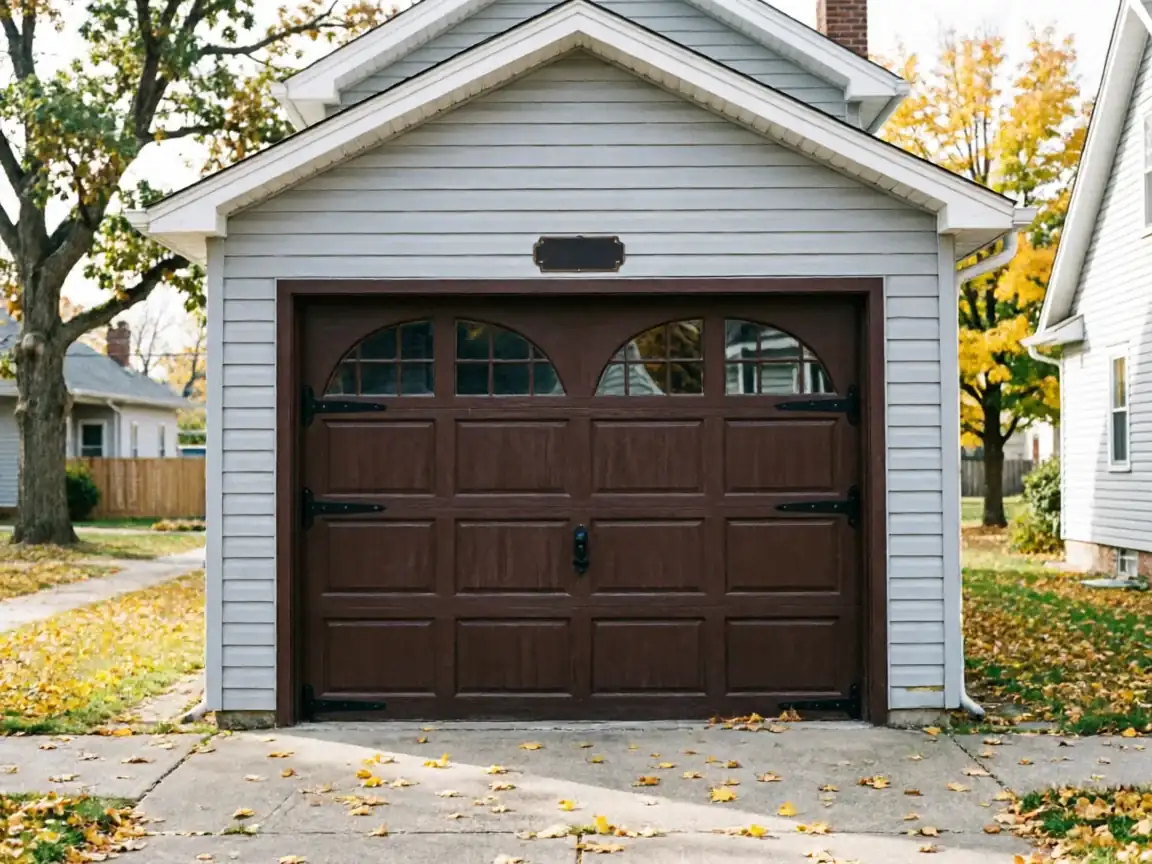
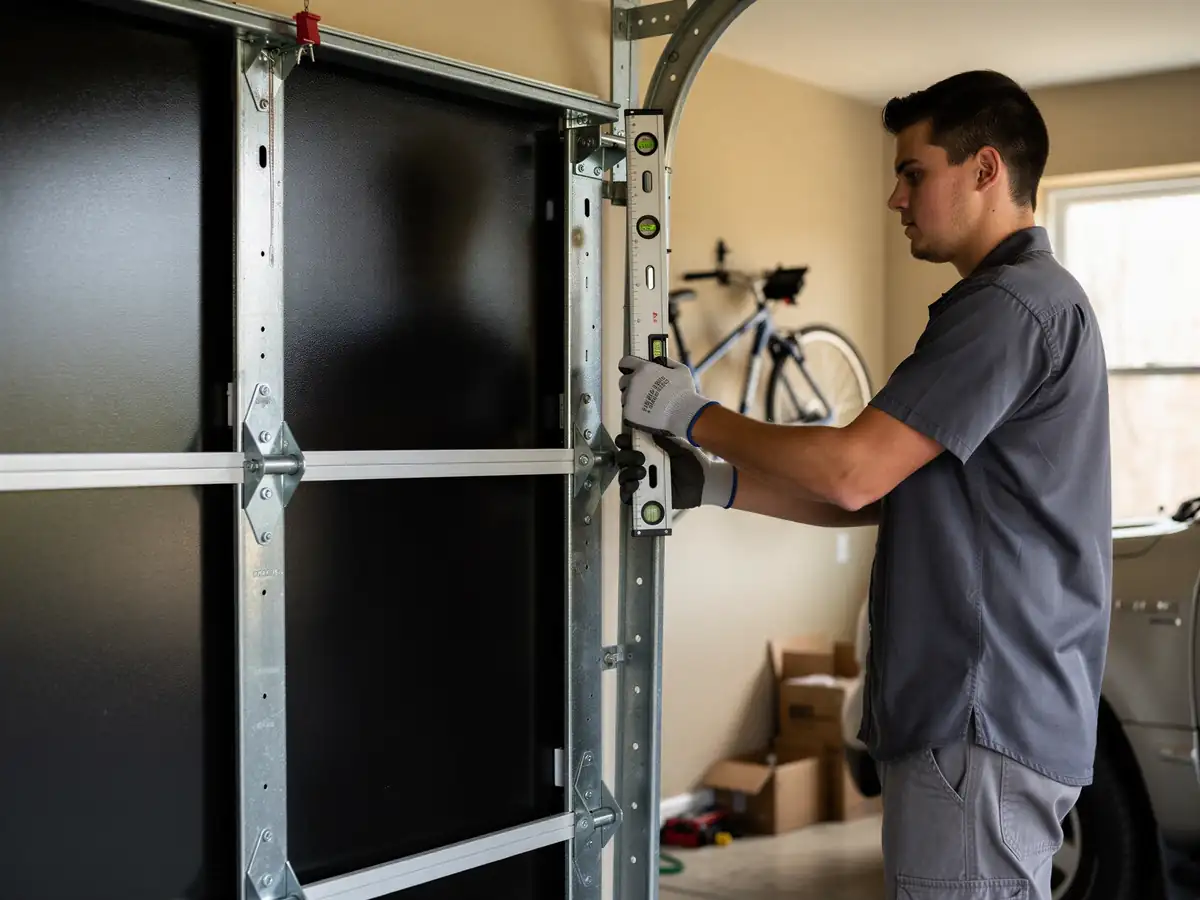
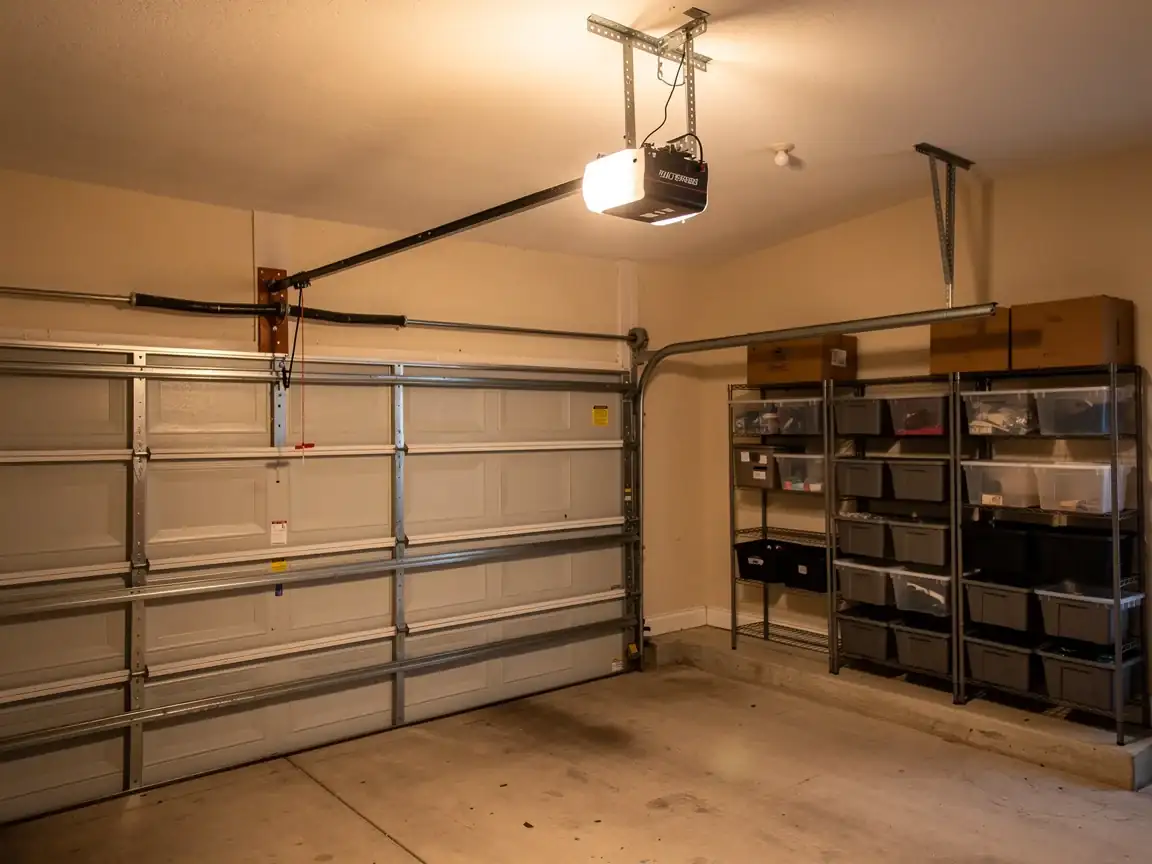
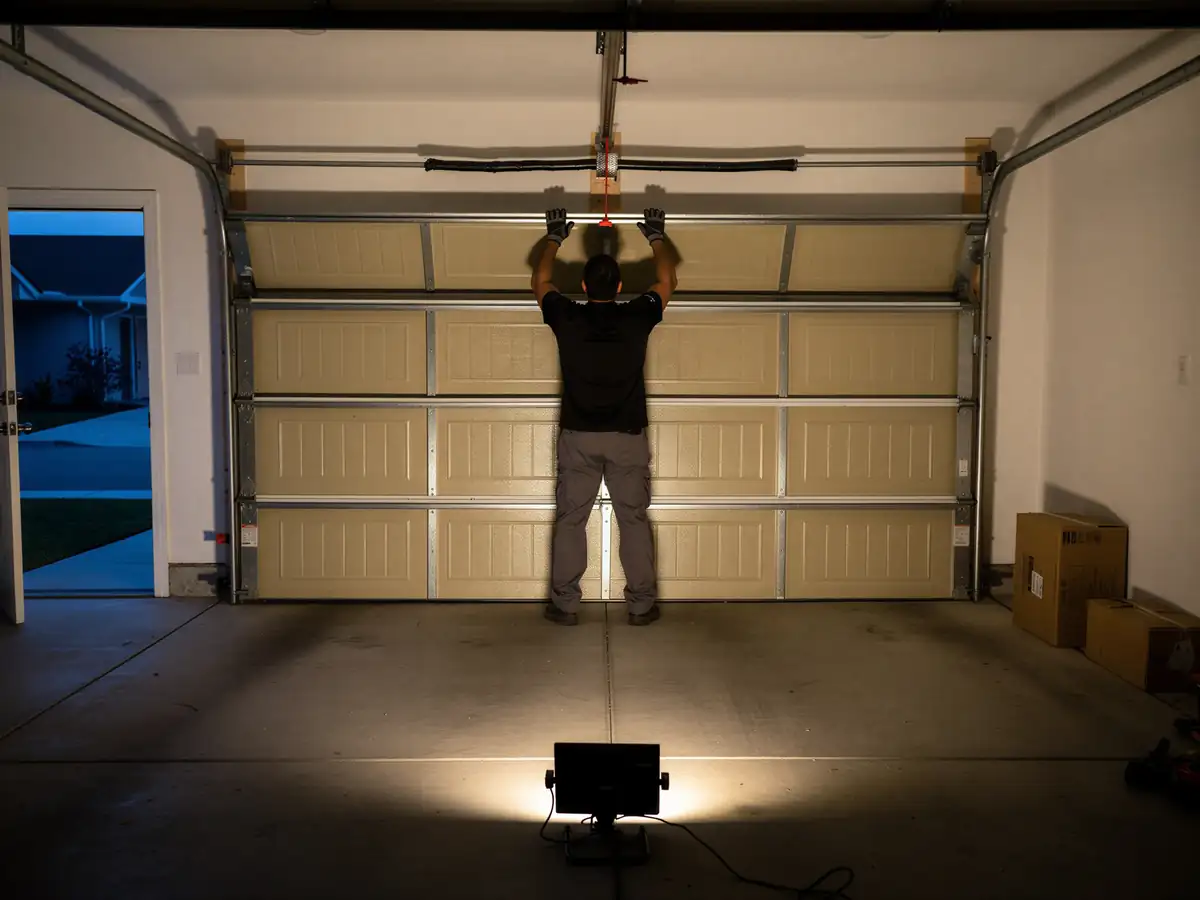
Opener installation for Indianapolis homes built mostly in the late 1990s and 2000s, sized for cold-climate wear on original chain-drive units nearing end of life.
What this job costs depends on three things: what drive you want (chain, belt, or direct-drive screw), whether you need battery backup for power outages, and whether your current rail and bracket can be reused or need to be swapped out too. We don't quote a number here because every house is different and we're not going to pretend otherwise - we price it after we see your opener, your ceiling height, and your door weight.
What we can tell you is that in a service area where most houses went up between 1997 and 2008, a lot of openers now going out are the original builder-grade units - typically half-horsepower chain drives that were adequate for the door at the time but are now pushing 20+ years old. If your opener is original to the house, replacing it is usually cheaper than another round of parts repairs on a motor that age, because the circuit boards and logic chips in units from that era are getting harder to source.
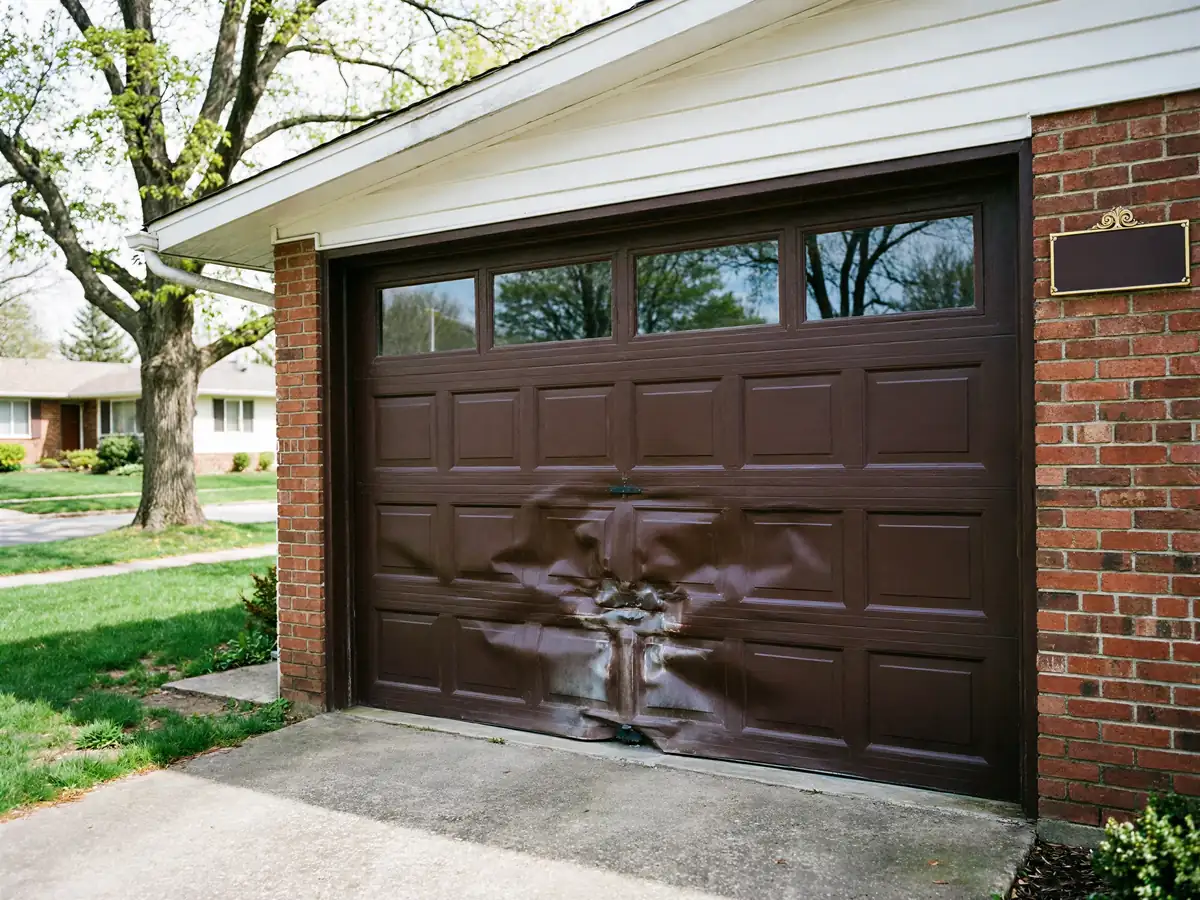
One honest limitation: we don't install openers on doors that are structurally shot. If your door panels are rusted through or the track is bent beyond adjustment, putting a new opener on it is money that should go toward the door first. We'll tell you that straight instead of selling you a motor that's fighting a bad door.
Getting It Booked In
01
Call or use the contact link on our site and tell us the age of your house if you know it
Along with whether your current opener is dead, intermittent, or just loud. That one detail - age of the house - tells us a lot before we even arrive, because of how uniform the opener generation is across this area's housing stock.
02
We serve the Indianapolis area including homes out toward Carmel, Fishers, Zionsville, and Westfield, and scheduling works the same way regardless of which of those you're closest to: we book a time window, show up with the opener models that fit the most common rail and header configurations in houses of this era, and install same visit in most cases
If your garage has an unusual header clearance or a jackshaft setup, we'll flag that on the call so we bring the right hardware the first time.
03
We don't do walk-in installs without a prior call
Not because we're precious about it, but because arriving without knowing your door weight and ceiling clearance means a wasted trip for both of us.
Why It Happens Here
This area's housing stock is heavily concentrated in builds from 1997 through 2008, with four named pockets across the service area sharing that same construction window. That matters for openers specifically because it means a huge share of the garages here are running the same generation of builder-installed, half-horsepower chain-drive unit - and that generation is now old enough that capacitors, logic boards, and drive gears are wearing out in a cluster rather than one at a time.
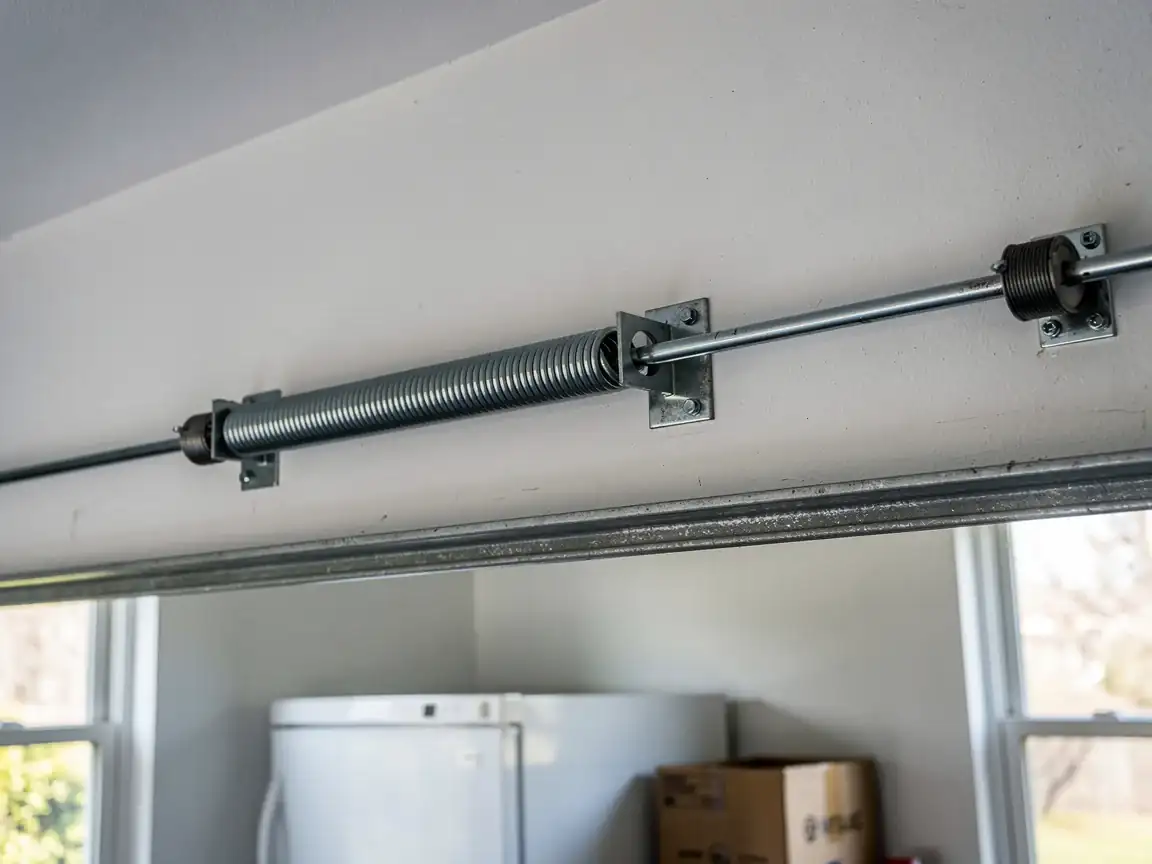
Layer on the climate. This region sits in a cold, severe-winter band, and openers take that two ways: the motor has to work harder lifting a door whose torsion springs have stiffened in low temperatures, and the nylon drive gear inside a chain-drive unit - the part that almost always fails first - gets brittle faster in repeated freeze-thaw cycles than it would in a milder climate. That's a mechanical reason, not a guess: the gear is plastic, cold makes plastic less forgiving, and the gear is doing the same lifting work every day regardless of temperature.
So what we see is a steady, predictable failure curve tied to build year plus winter wear, not random breakdowns. Houses from this same building wave tend to need opener replacement around the same stretch of years.
What You Are Seeing
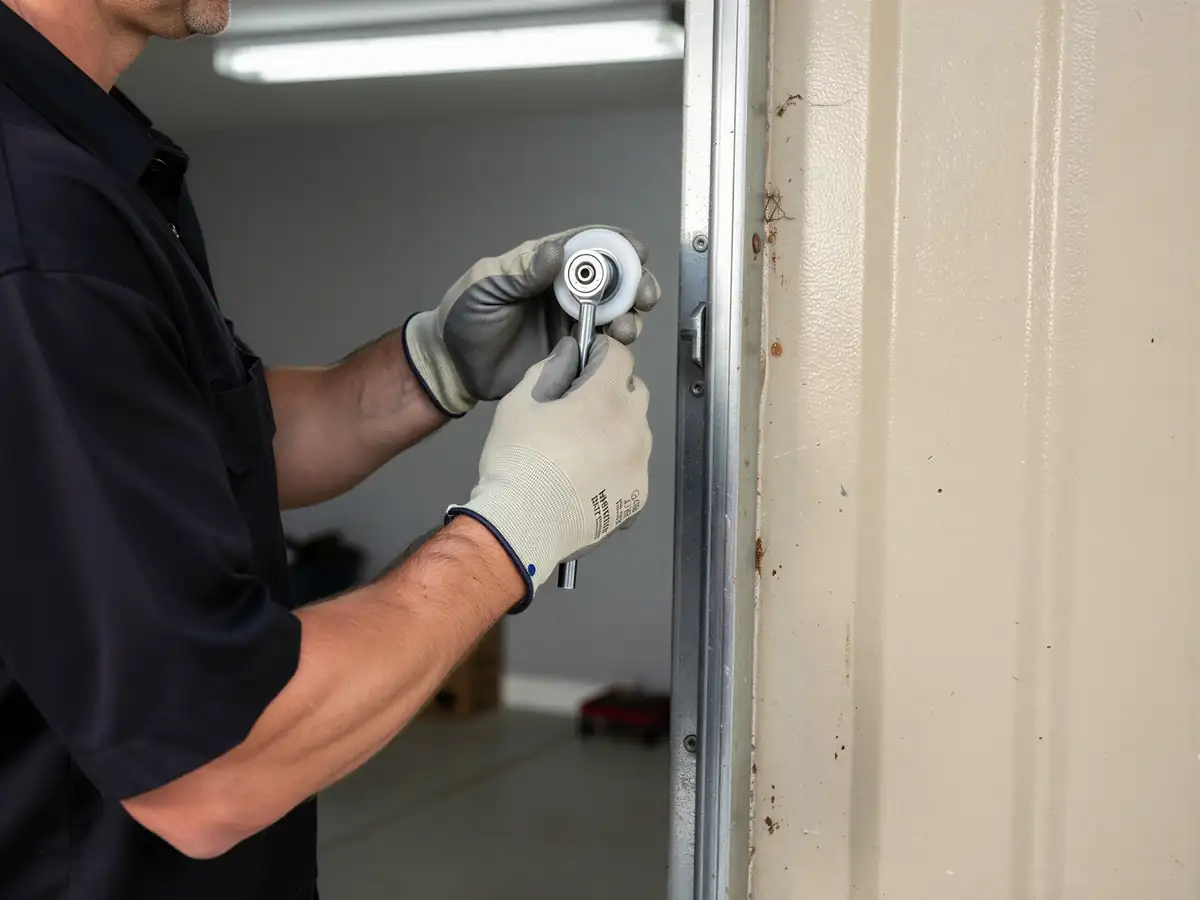
The opener groans, hesitates, or reverses partway up - that's usually the drive gear mentioned above, worn down enough that the chain or belt slips before it fully engages. If the motor runs but the door doesn't move at all, the gear has likely sheared through completely, which on a unit this old is a repair that costs close to a new install anyway.
A remote that works sometimes but not always, especially after a cold snap, often points to a logic board that's past its reliable operating range rather than a battery or remote problem. If your opener is original to a house built in the 1997-2008 window and you're seeing any of this, it's worth having it looked at before it fails on a morning you need the car out.
Less common but real: a door that opens fine but won't close without holding the wall button down usually means a safety sensor issue, not the opener motor itself - that's a different, smaller fix and we'll tell you if that's what we find instead of replacing a motor that doesn't need it.
How it works
From “it’s stuck” to “it’s fixed”
01
Tell us what’s wrong
Describe the symptom - won’t open, loud bang, opener runs but the door won’t move.
02
On-site diagnosis
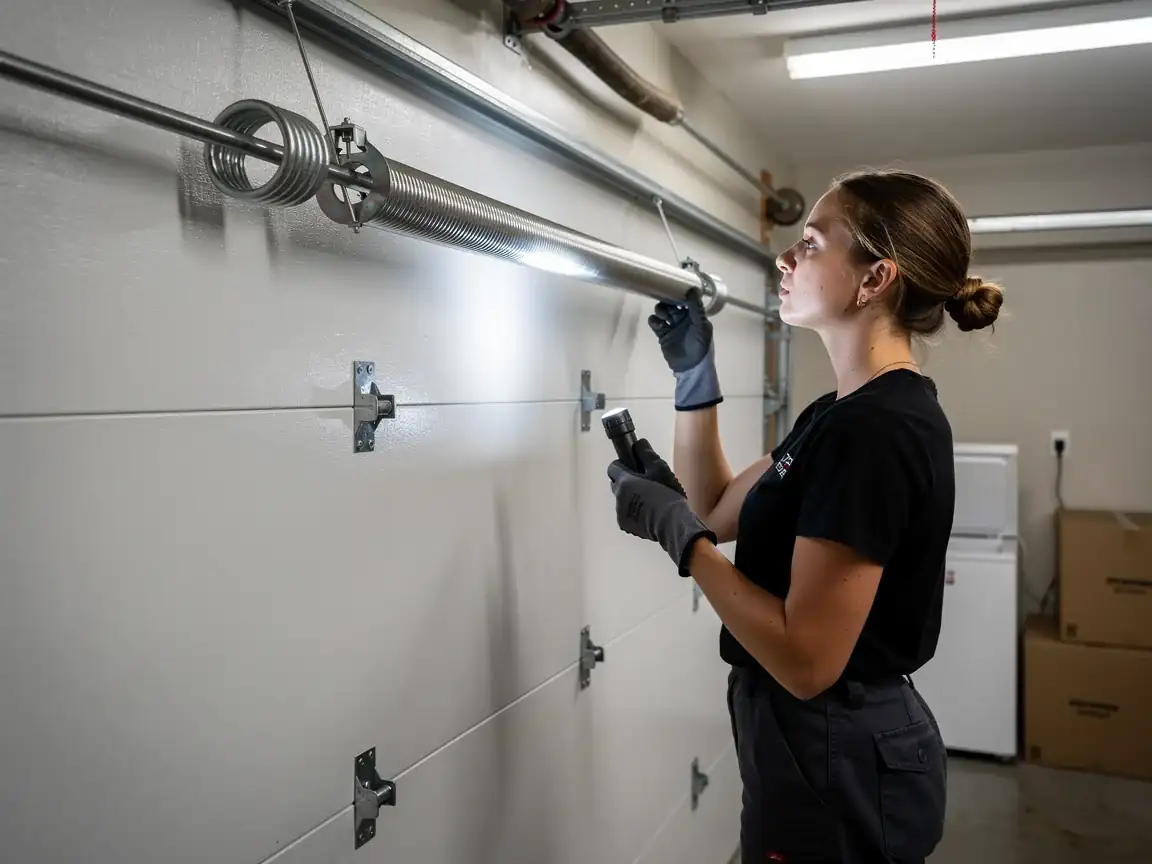
A technician tests the door under power and by hand and finds what actually failed.
03
Clear, up-front plan
You get the fix that’s needed and what drives the cost - before any work starts.
04
Repaired & tested
The repair is done, the door is set true and tested, and the work area left clean.
Not sure which repair your door needs in Indianapolis, IN? Describe what it’s doing - every job starts with a diagnosis.
Straight answers about garage door repair in Indianapolis. Still unsure? Ask us directly.
How old does my opener need to be before replacement makes more sense than repair?
If your opener is original to a house built in the late 1990s through the mid-2000s, it's likely 15 to 25+ years old. At that age, the drive gear and logic board are the common failure points, and parts for that generation are getting harder to source, so replacement is usually the better value once one of those fails.
Does cold weather really affect garage door openers?
Yes. In a cold-climate region like this one, the nylon drive gear inside chain-drive openers gets more brittle with repeated freeze-thaw cycles, and torsion springs stiffen in low temperatures, making the motor work harder. Both speed up wear on an opener that's already aging.
Do you install openers on doors you didn't sell?
Yes, opener installation is independent of who installed your door, as long as the door and track are in sound working condition. If the door itself has structural problems, we'll flag that before installing a new opener on it.
Can I get battery backup added to a new opener?
Yes, battery backup is available as part of opener installation. It's worth asking about when you call, especially if you want to be able to open the door during a power outage.