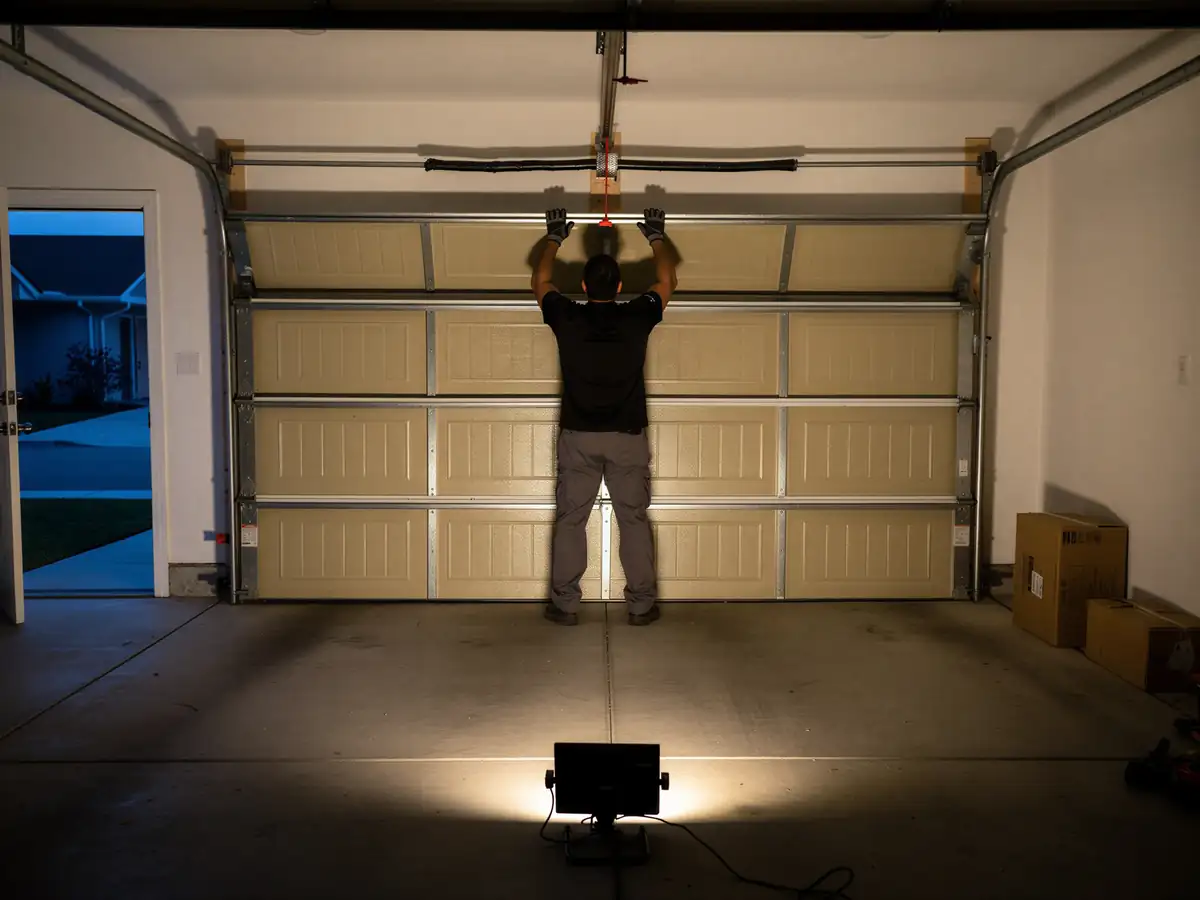
When a Spring Goes in Cold Weather, Here's What's Really Happening
Indianapolis homes built mostly in the late 1990s and 2000s see springs fail hard when deep cold hits. Here's what that means for your door and when to call.
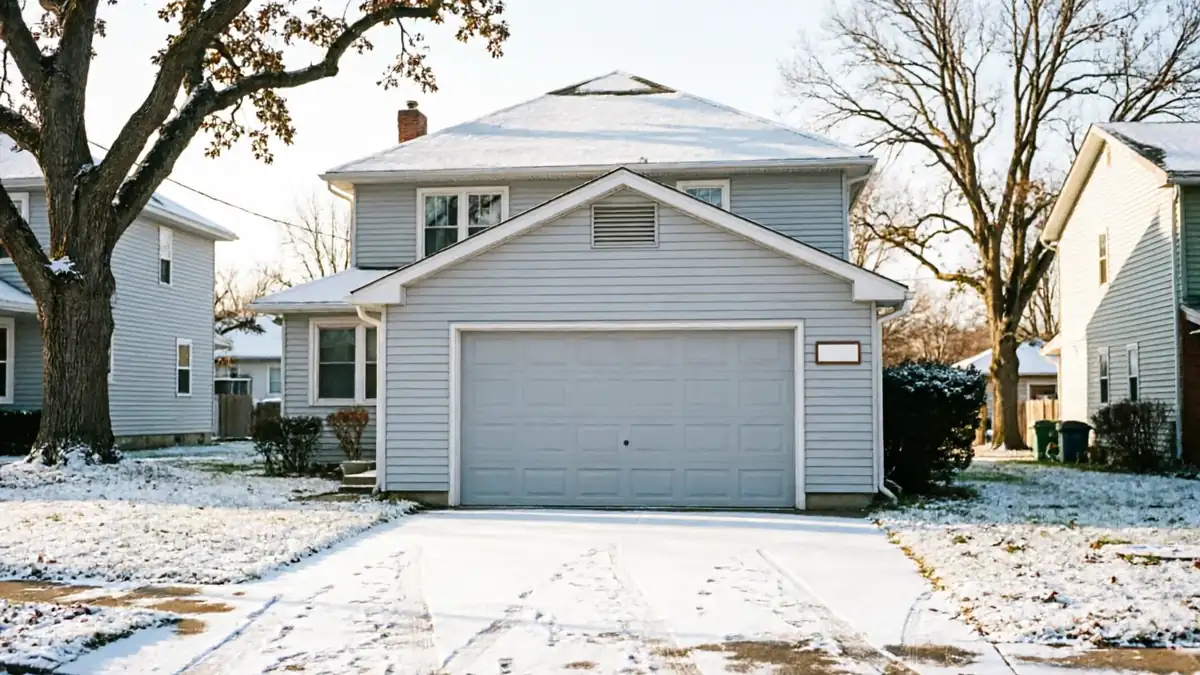
Indianapolis sits in a cold-severe climate band, and that matters more to a garage door spring than most people think. Steel contracts as it gets cold, and a torsion spring that's already near the end of its coil cycle loses a little flex right when the temperature drops hard. Most houses in this area went up between 1997 and 2008, with the bulk of that stock dating to right around 2000. That means a lot of springs out there are now old enough to be fatigued, and they're sitting in garages that see real swings between a mild fall day and a hard freeze. The spring doesn't care that it's cold on its own - it cares that cold plus metal fatigue plus 20-plus years of cycles is a bad combination. You'll usually hear it before you see it: a loud bang from the garage, then a door that won't lift or drops fast when you try. That's the spring letting go, not the opener failing. Across the four areas we work - Carmel, Fishers, Zionsville, and Westfield - this is the same pattern because the housing stock and the climate are shared, not because any one neighborhood built differently.
The Problem
A torsion spring is rated for a set number of open-close cycles, and once it's done that many, it's done - cold weather just tends to be the thing that finishes it off. On a door roughly 20 to 25 years old, which describes a large share of homes in this service area given the 1997-2008 build window, the spring has likely seen 15,000 to 20,000 cycles already. Add a cold morning where the steel is stiffer and the garage is doing double duty hauling cars in and out, and that's often the day it breaks. The bigger issue is that a broken spring doesn't just mean a noisy door - it means the door has no counterbalance at all. A double door without a working spring can weigh over 150 pounds, and the opener was never built to lift that on its own. People try to force it with the wall button a few times, and that's what burns out the opener motor on top of the spring failure. One spring breaking rarely stays a one-part repair if it gets ignored for even a week or two.
What to Look At First
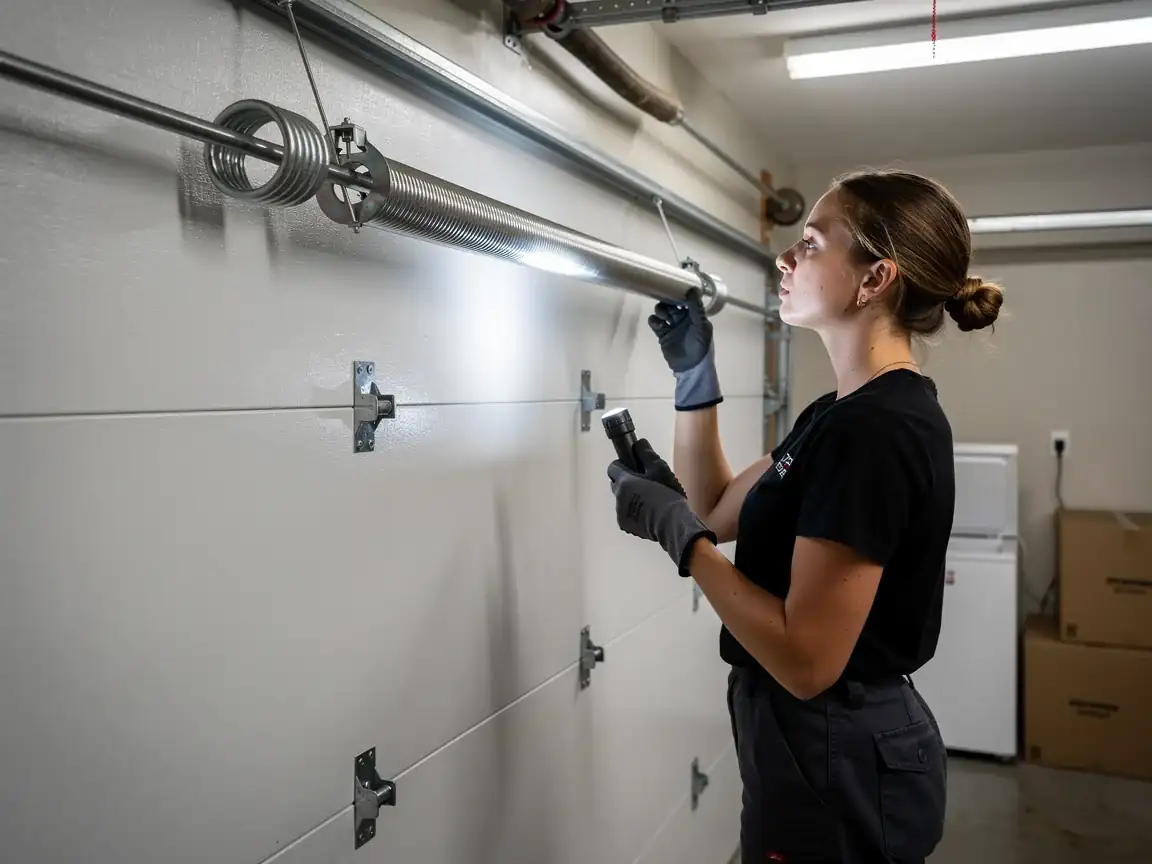
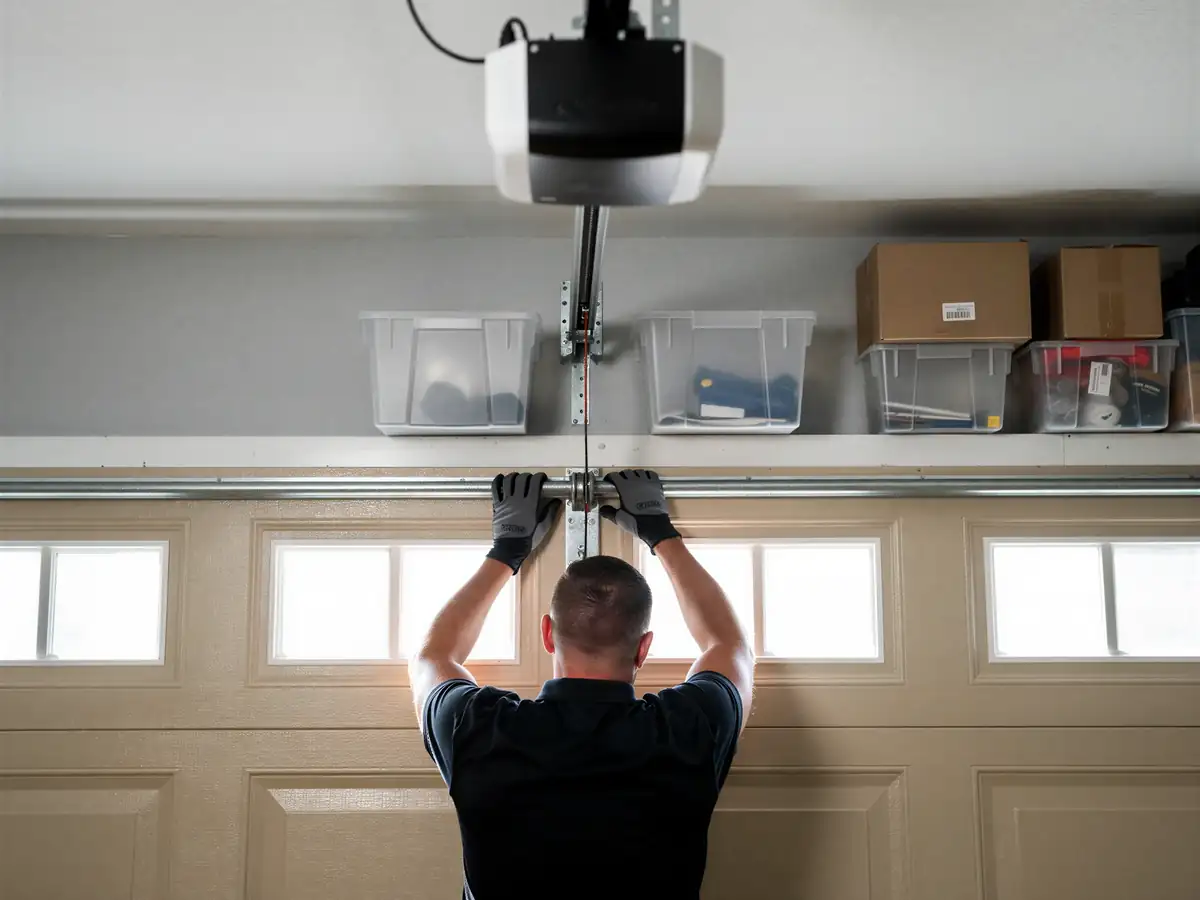
Before you assume it's just the spring, look at the coil itself - a broken torsion spring has an obvious gap in it, visible right above the door opening on the shaft. If the coil is intact but the door still won't move, check the cables on either side of the door for slack or fraying, since cold can make old cable sheathing brittle too. If your house falls in that 1997-2008 build range, it's also worth checking whether the spring has ever been replaced at all - a lot of original builder-grade springs in this area are still the first one ever installed. Don't pull the emergency release and try to lift the door by hand if you're not sure what's wrong; with a broken spring that door can drop fast and it's heavier than it looks. We don't do opener-only repairs when the real issue is the spring - fixing one without the other just sets up the same failure again in a year.
When Waiting Is Fine
Not every cold-weather symptom means a spring is about to go. If the door is just a little slower to open on a frigid morning but still lifts smoothly and the spring coil looks continuous with no gap, that's often just stiff lubricant in the rollers and hinges, not a structural problem. A door that groans a bit at 10 degrees but runs fine once the garage warms up isn't an emergency. Given the income and household numbers in this area, a lot of owners replace a door well before it strictly needs it - that's a choice, not a requirement. If your door is inside that 1997-2008 build window and has never had the spring swapped, you can wait for a weekday appointment rather than treat it as a middle-of-the-night call, as long as the door isn't stuck halfway or completely jammed shut. We'd rather schedule it right than rush a repair in your driveway in the cold.
How it works
From “it’s stuck” to “it’s fixed”
01
Tell us what’s wrong
Describe the symptom - won’t open, loud bang, opener runs but the door won’t move.
02
On-site diagnosis
A technician tests the door under power and by hand and finds what actually failed.
03
Clear, up-front plan
You get the fix that’s needed and what drives the cost - before any work starts.
04
Repaired & tested
The repair is done, the door is set true and tested, and the work area left clean.
Not sure which repair your door needs in Indianapolis, IN? Describe what it’s doing - every job starts with a diagnosis.
Straight answers about garage door repair in Indianapolis. Still unsure? Ask us directly.
Why did my spring break on the coldest morning of the year?
Cold steel is stiffer and has less give left in it, and if the spring was already near the end of its cycle life from age, a cold snap is often what finishes it off. It's less about the temperature alone and more about a fatigued spring meeting a stiffer, less forgiving metal on a hard-use morning.
My house was built in the early 2000s - does that matter?
Yes. Most homes in this area were built between 1997 and 2008, which means a large share of original torsion springs are now old enough to be at or past their rated cycle count. If your spring has never been replaced, it's a good candidate to fail on a cold day.
Is it safe to open the door manually after a spring breaks?
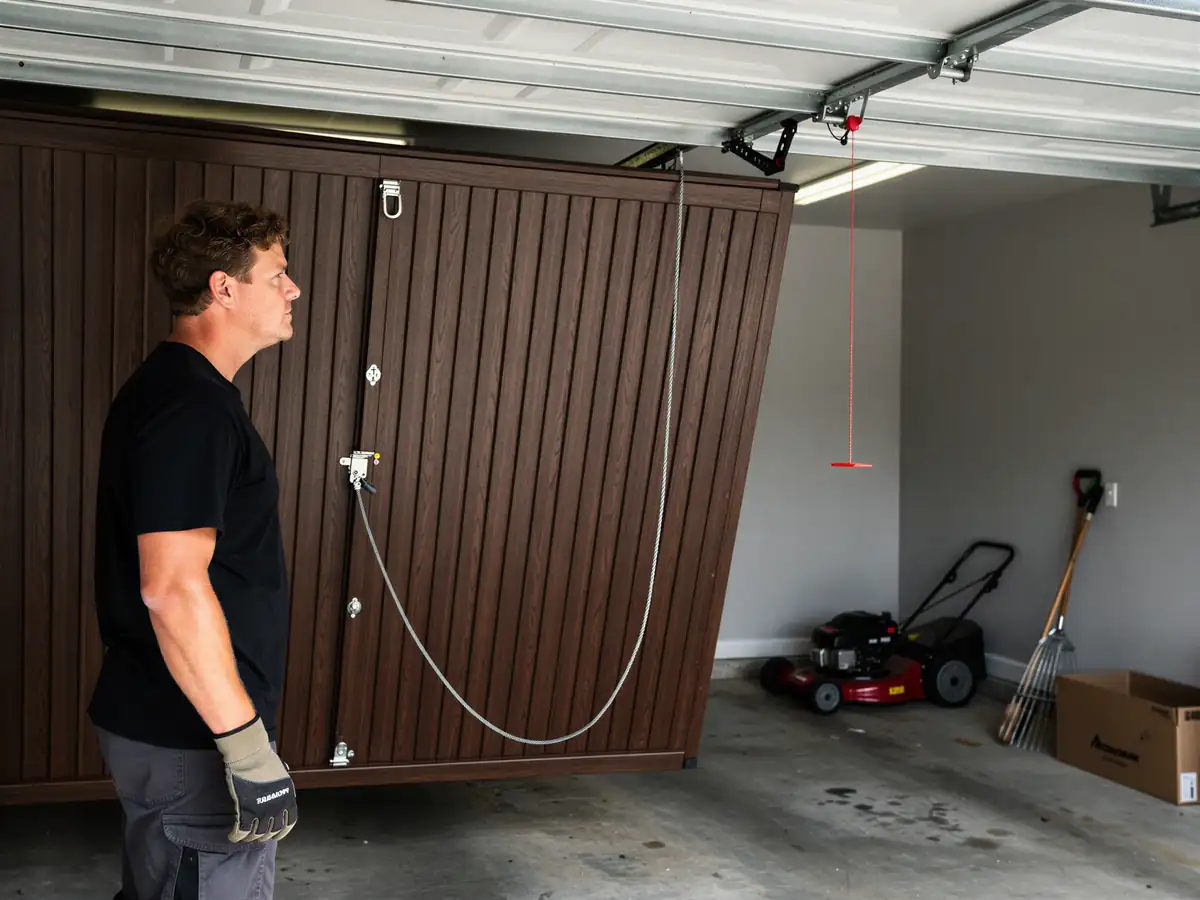
Not really recommended on your own. Without the spring's counterbalance, a double door can weigh well over 150 pounds and drop fast once released. If the spring's gone, leave the door where it is and get it looked at rather than forcing the opener or pulling the release cord.
Can I just replace the opener instead of the spring?
If the spring broke, the opener usually isn't the real problem, even if it's straining or burned out trying to lift a dead-weight door. Replacing the opener without fixing the spring just means the new opener fails the same way. The two need to be addressed together.