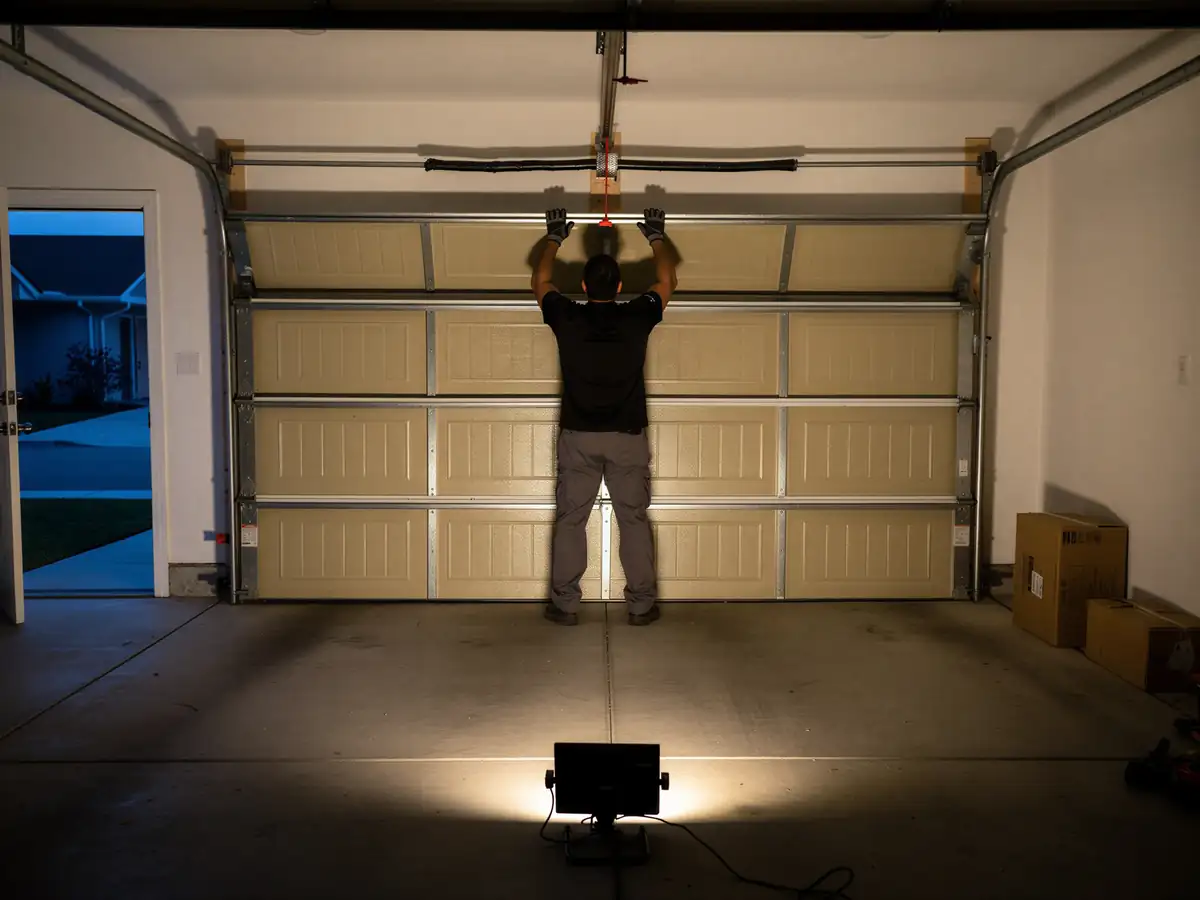
Indianapolis sits in a cold-severe climate band, and that matters more to a garage door than almost anything else about it. Every winter the door goes through repeated freeze-thaw cycles - cold enough overnight to stiffen the torsion spring and harden the rubber bottom seal, then a thaw that lets moisture work into the seams before it freezes again. That cycle doesn't skip a year here.
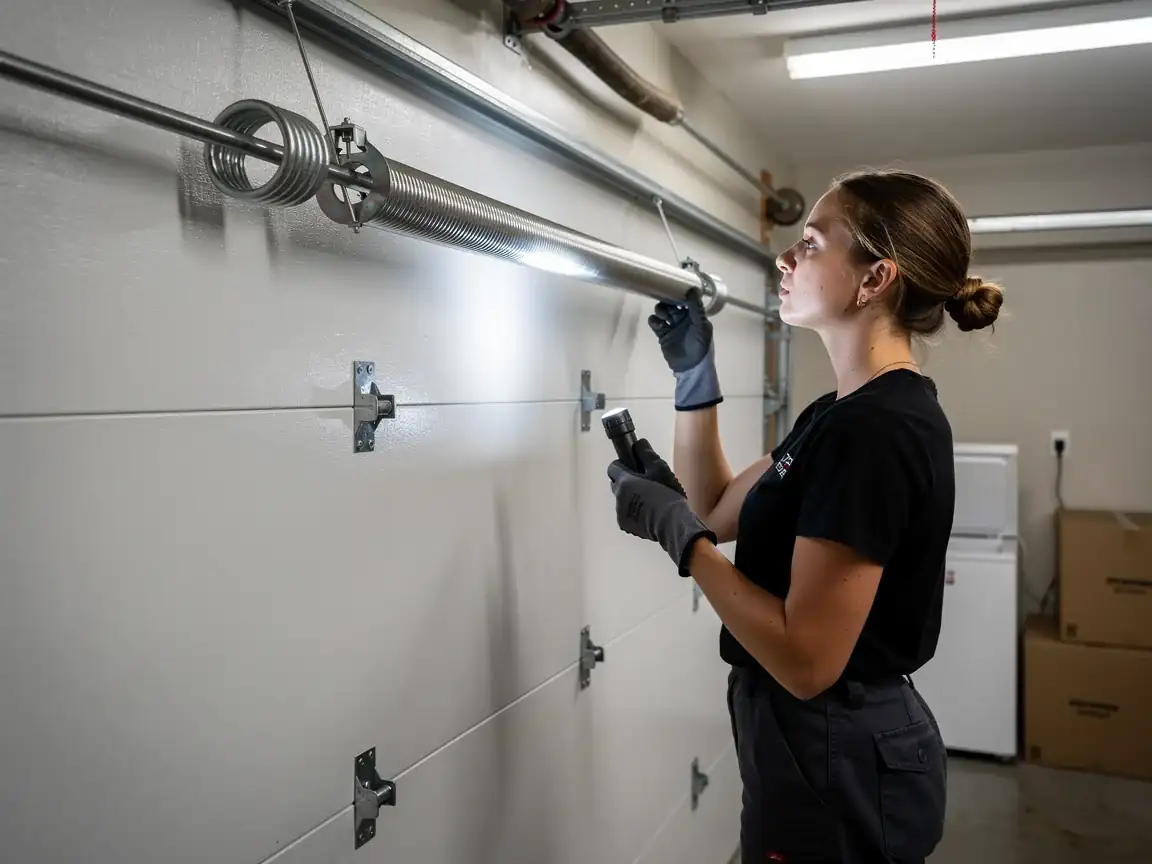
Most of the housing stock across this service area went up between 1997 and 2008, so a lot of the doors we're called out to are somewhere between seventeen and twenty-eight years old. That's old enough for the galvanized coating on the spring to start showing surface rust, for the roller stems to wear oval instead of round, and for the foam-core panels common in that era to lose some of their insulation value where the skin has separated from the foam. None of that happens overnight. It happens one cold winter at a time, which is why a door that worked fine three years ago can suddenly bind, shudder, or refuse to seal flush against the slab.
The Problem
01
Doors built during that 1997-2008 run across Indianapolis, Carmel, Fishers, Zionsville, and Westfield mostly came out of the same production era
With the same mid-grade torsion springs and the same steel sections. That's not a knock on the builders - it's just what standard spec looked like then. The springs were sized for an average lift cycle count, not for twenty-plus years of cold-climate stress.
02
The real problem shows up when one part fails and the owner assumes the whole door is done
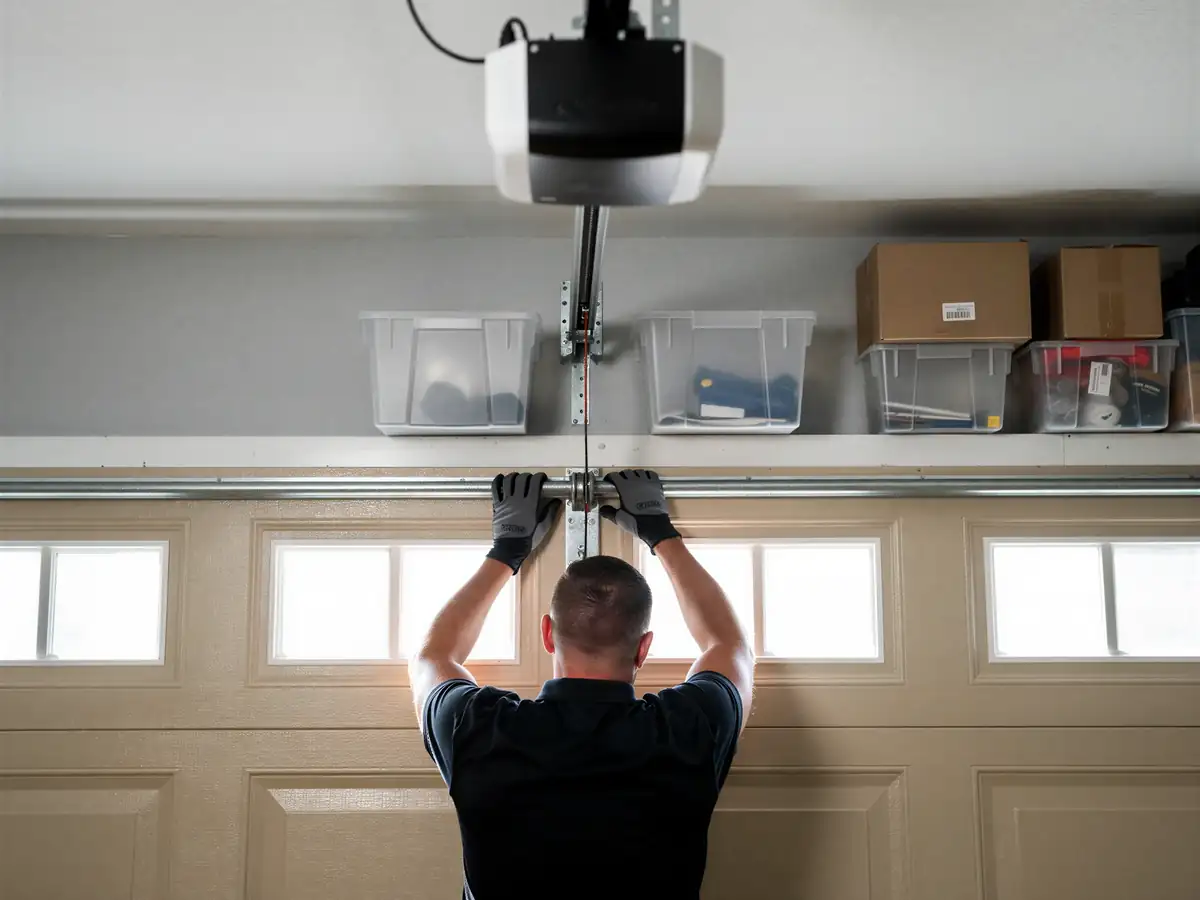
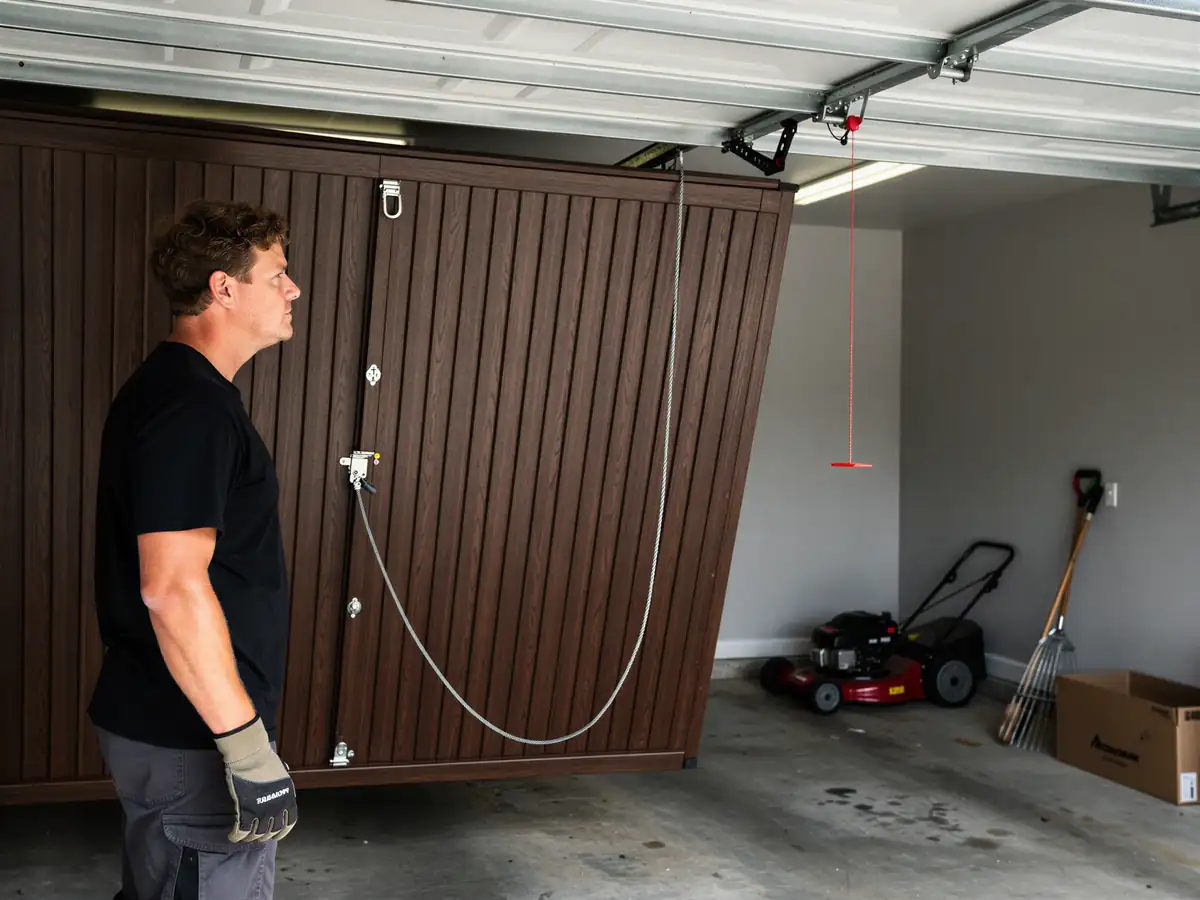
A broken spring on a door that's otherwise square, with tracks that are still straight and panels that haven't rusted through, is almost always a repair, not a replacement. The spring is a wear part. It's supposed to fail eventually, the same way brake pads are. What actually kills a door of this age is when the spring failure gets ignored and the opener keeps trying to lift against it, which stresses the drive gear and the top panel bracket until those go too.
What to Look At First
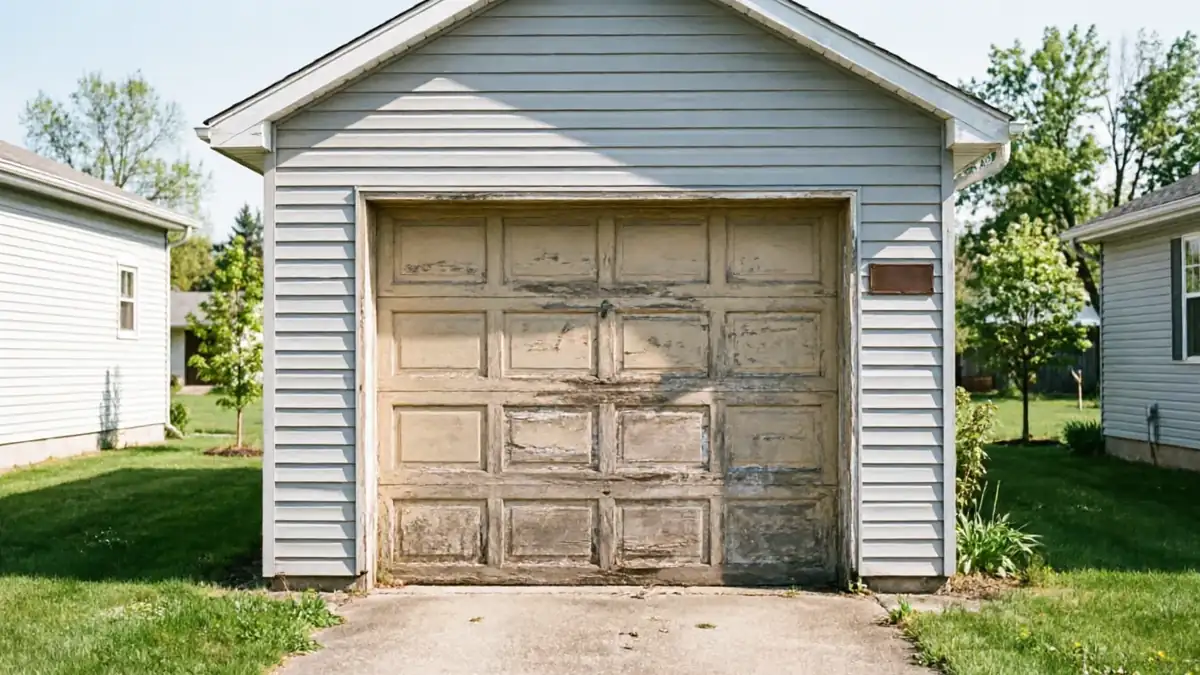
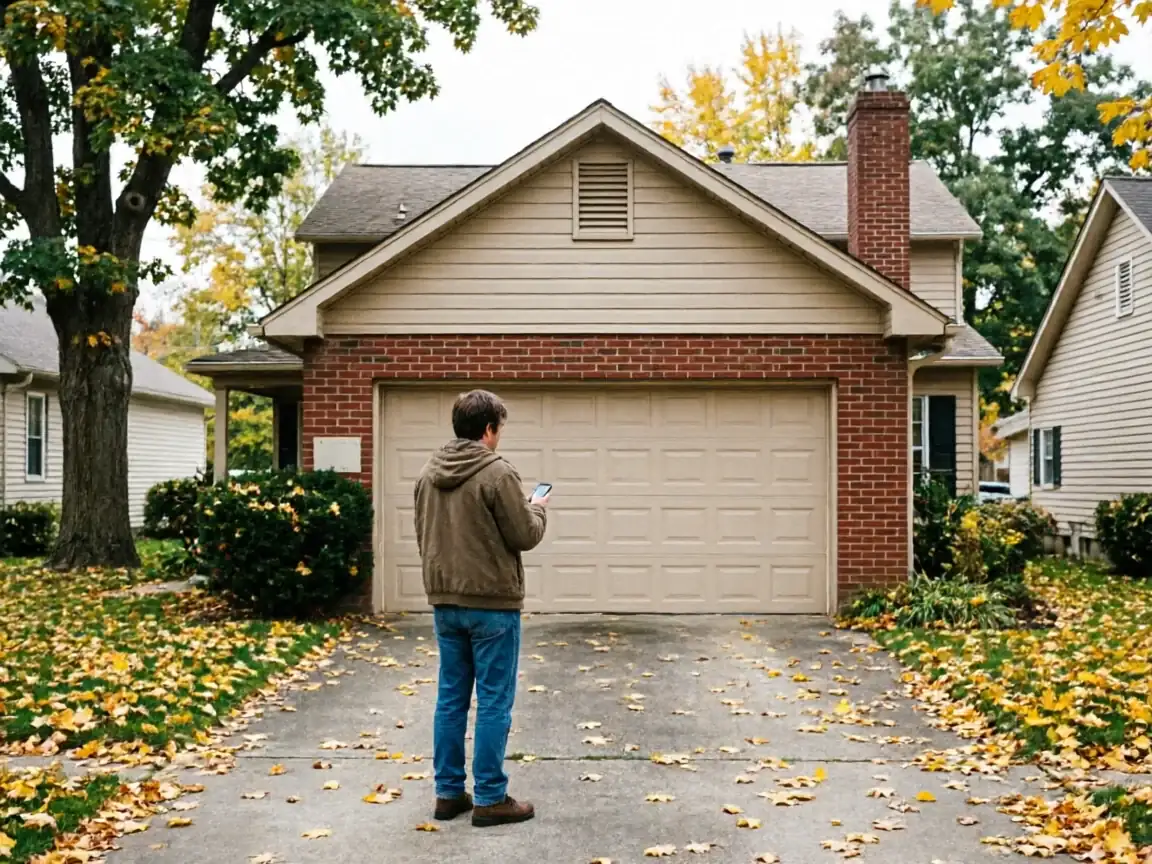
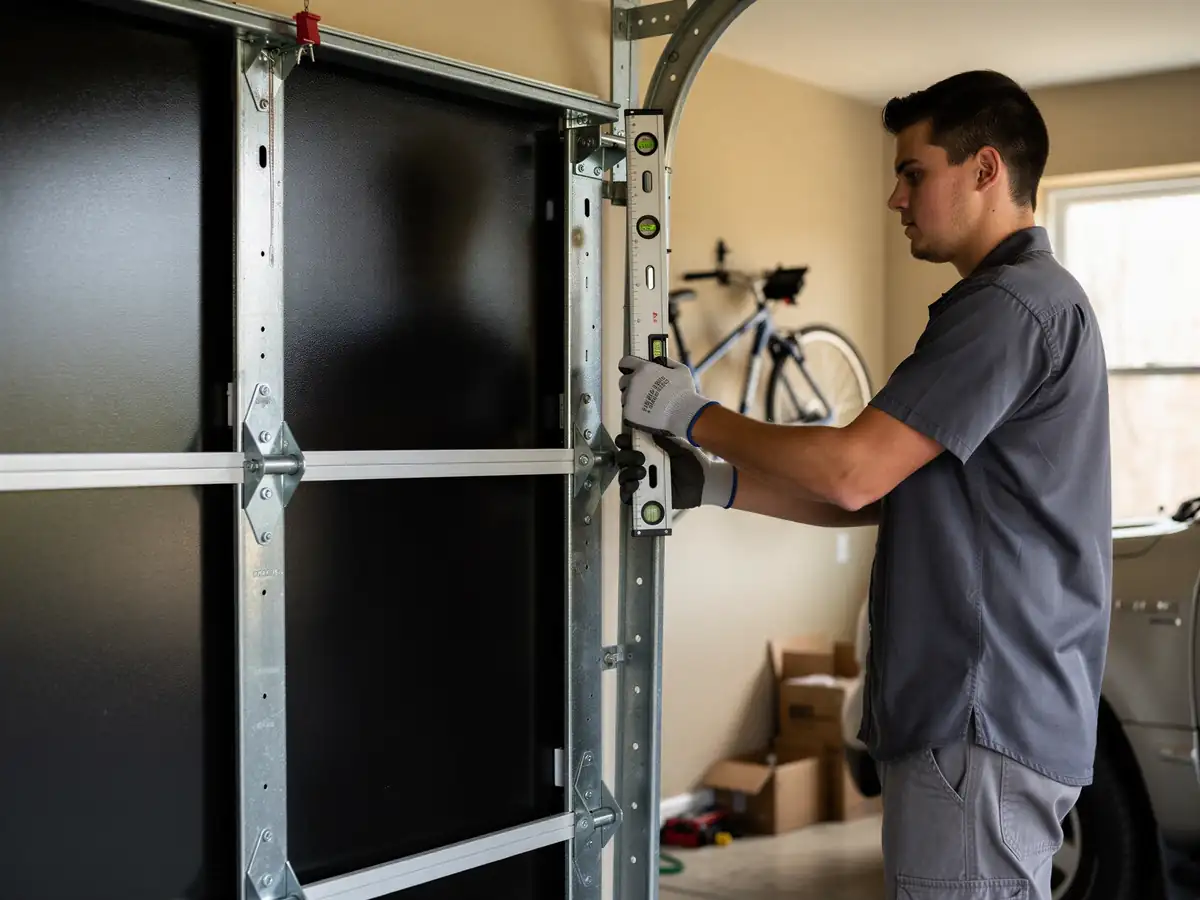
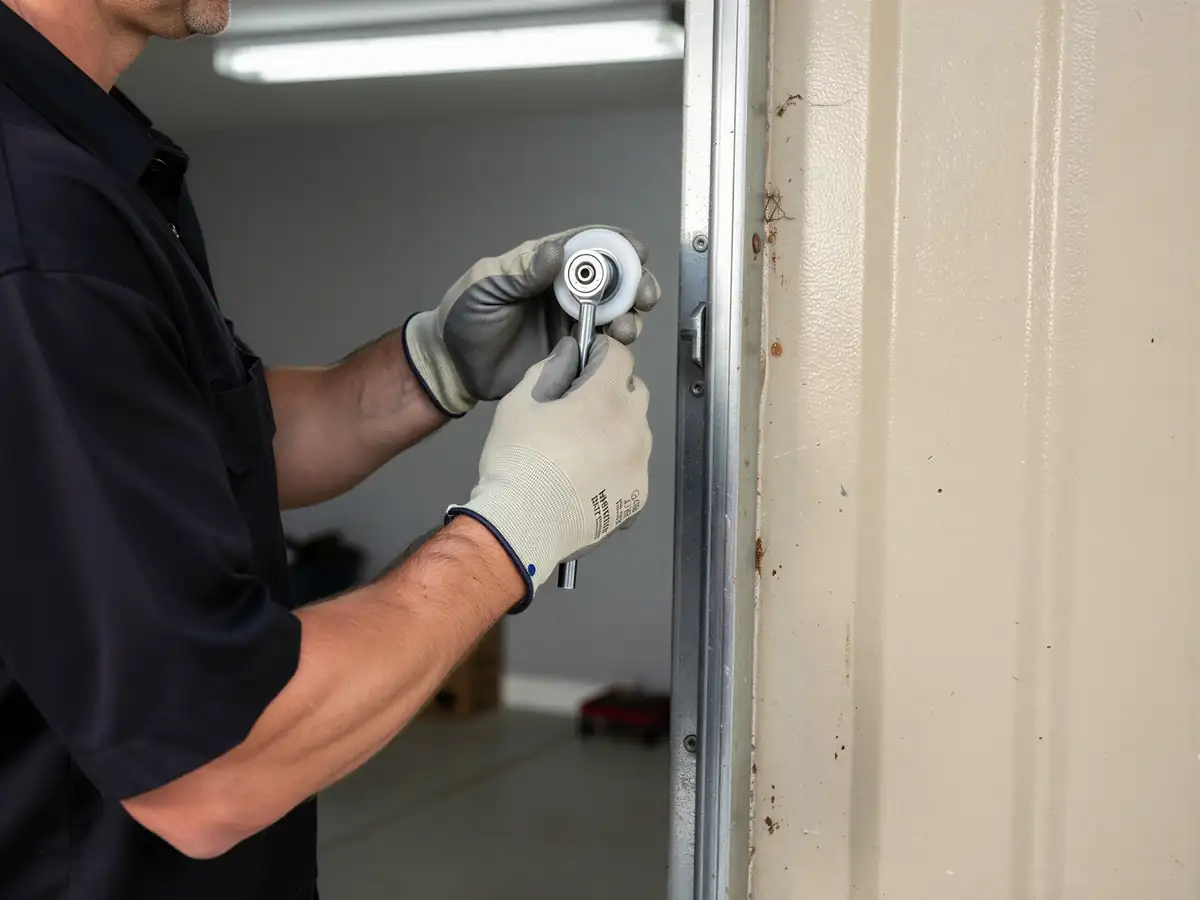
Before you decide a door from the late 90s or early 2000s is worth fixing, check three things. First, the track - stand at the side and sight down its length. If it's straight and the rollers sit flush in it, the structure is sound. Second, the bottom seal. In this climate it hardens and cracks faster than any other part, and a brittle seal lets cold air and water under the door, which then affects the panel foam above it. Third, the panel seams themselves - press on a few. If the steel flexes but springs back without a crack in the paint, the shell is still good.
With 79,903 owner-occupied houses among the 105,616 households in this service area, a large share of what we inspect is original equipment from that same construction wave. The spring, the seal, and the rollers are the parts that wear out first and the parts that are cheapest to replace. If those three checks come back clean, you're looking at a repair call, not a new door.
When Waiting Is Fine
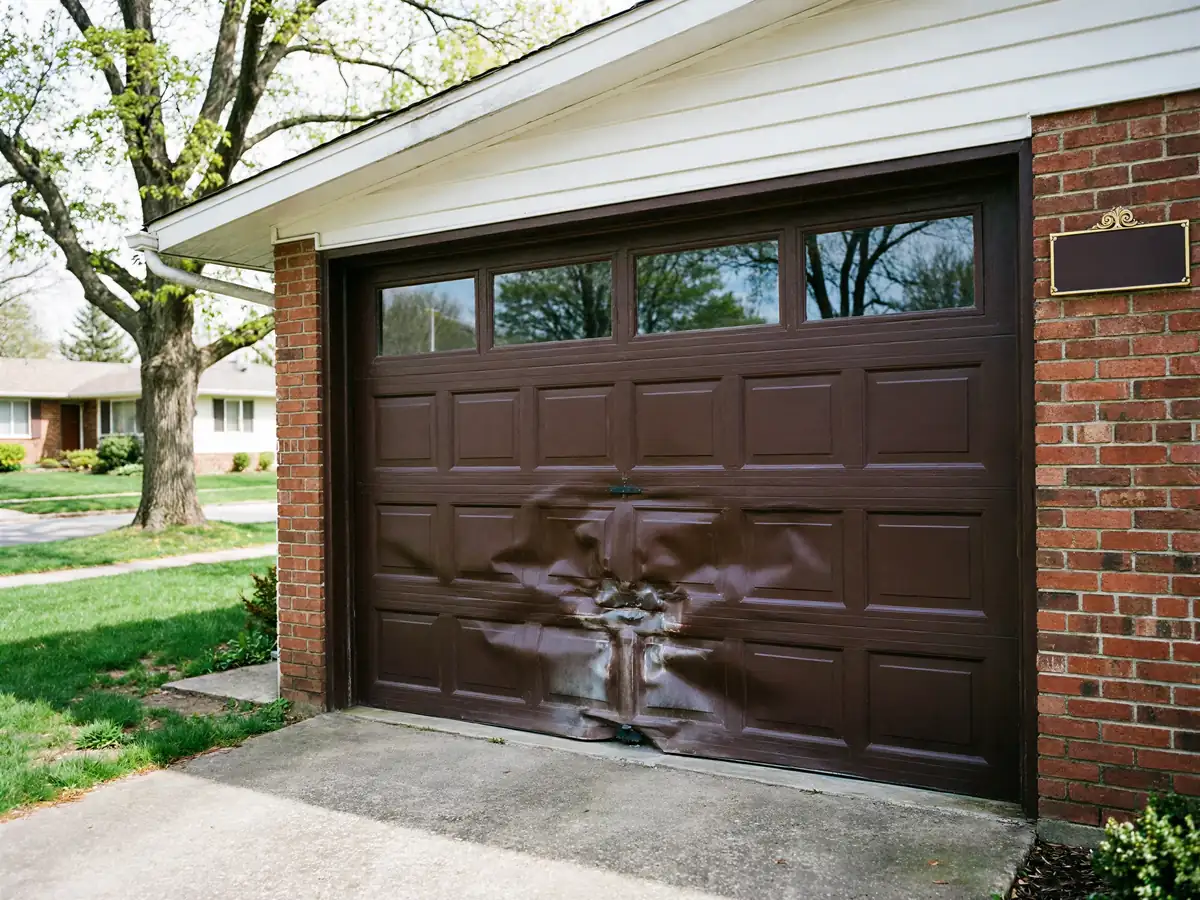
Not every dent, squeak, or stiff spot needs a same-week call. A cosmetic dent in a lower panel that doesn't affect the seal or the track alignment can wait. A door that's a little noisy on opening but still travels smoothly and closes flush is usually just due for lubrication, not a repair bill.
At a median household income of $131,371 across this area, most owners here could afford to replace a door on a whim, but that's rarely the right call for one from the 1997-2008 stock that's otherwise structurally sound. If the springs are original and haven't failed yet, there's no reason to swap them out early just because of their age - a torsion spring that's still balanced and quiet is doing its job. The honest limit here: we can't tell you exactly how many lift cycles are left on a spring just by looking at it, so if it's original to a house from that era and it hasn't broken, we'll tell you to keep an eye on it rather than replace it on a guess.
How it works
From “it’s stuck” to “it’s fixed”
01
Tell us what’s wrong
Describe the symptom - won’t open, loud bang, opener runs but the door won’t move.
02
On-site diagnosis
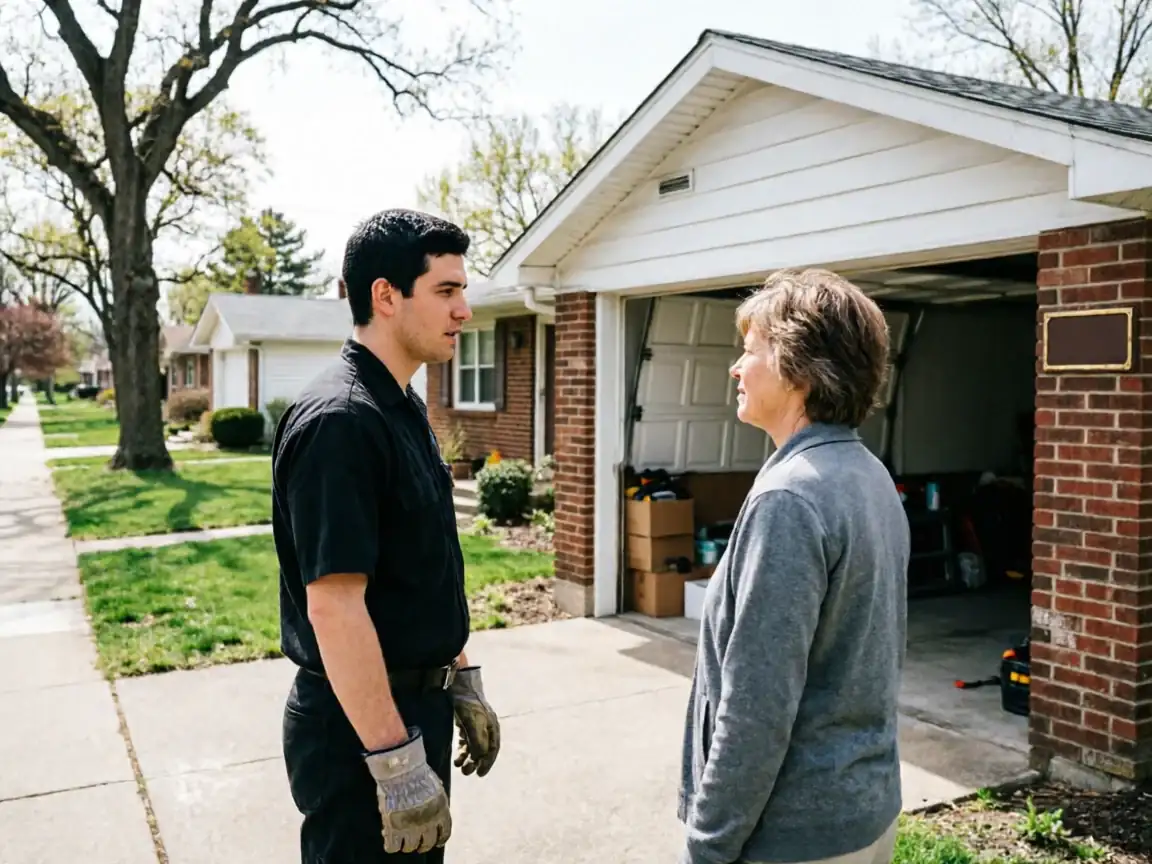
A technician tests the door under power and by hand and finds what actually failed.
03
Clear, up-front plan
You get the fix that’s needed and what drives the cost - before any work starts.
04
Repaired & tested
The repair is done, the door is set true and tested, and the work area left clean.
Not sure which repair your door needs in Indianapolis, IN? Describe what it’s doing - every job starts with a diagnosis.
Straight answers about garage door repair in Indianapolis. Still unsure? Ask us directly.
My house was built in the early 2000s - is the original door worth repairing?
Usually, yes. If the track is straight, the panel seams aren't cracked, and the only issue is a broken spring, worn rollers, or a hardened bottom seal, that's a standard repair. The structure of a door from that era is typically sound; it's the wear parts that give out first after two decades of Indianapolis winters.
Why do garage door springs seem to fail more in winter here?
Indianapolis sits in a cold-severe climate band, and torsion springs stiffen in low temperatures the same way any metal does. Combined with years of freeze-thaw cycling, the spring's steel fatigues faster than it would in a milder climate, which is why winter is when most of our spring calls come in.
How do I know if my door's insulation has failed?
Press on a panel section away from the seams. If you feel the steel skin flex separately from a soft layer behind it, or see a slight bubble in the surface, the foam core has likely separated from the skin. This is common in the foam-core panels used in homes built across this area in the late 90s and 2000s.
Is it ever better to replace instead of repair?
If the track is bent, multiple panels are cracked, or the door is sagging out of square, repair costs start stacking up fast and a new door often makes more sense. We don't have a set dollar threshold to share here, but if more than one major component has failed at once, that's usually the signal.