Garage Door Cable Repair for Carmel's 1997-Era Homes
Carmel homes built since 1997 mostly run factory torsion cables on steel drums. We travel from Indianapolis to replace frayed or snapped cables safely.
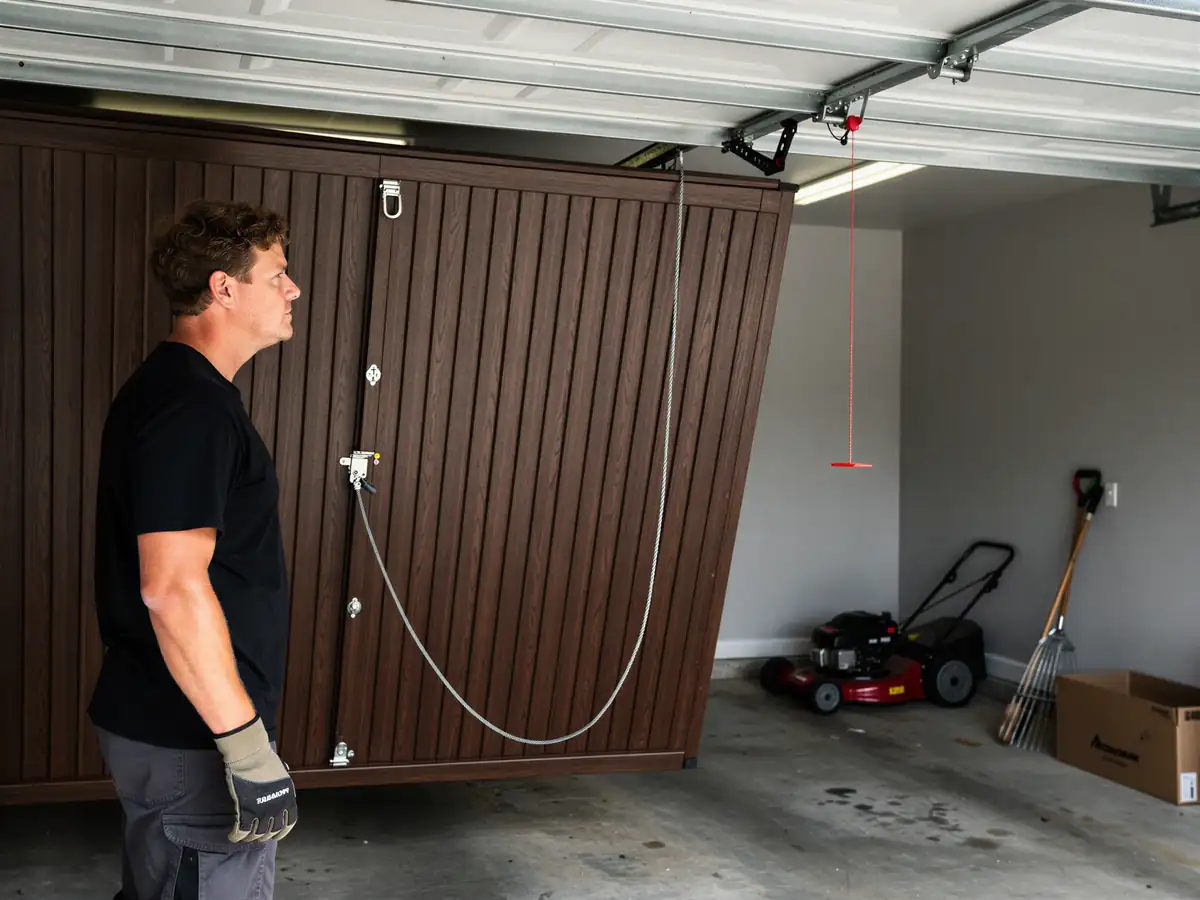
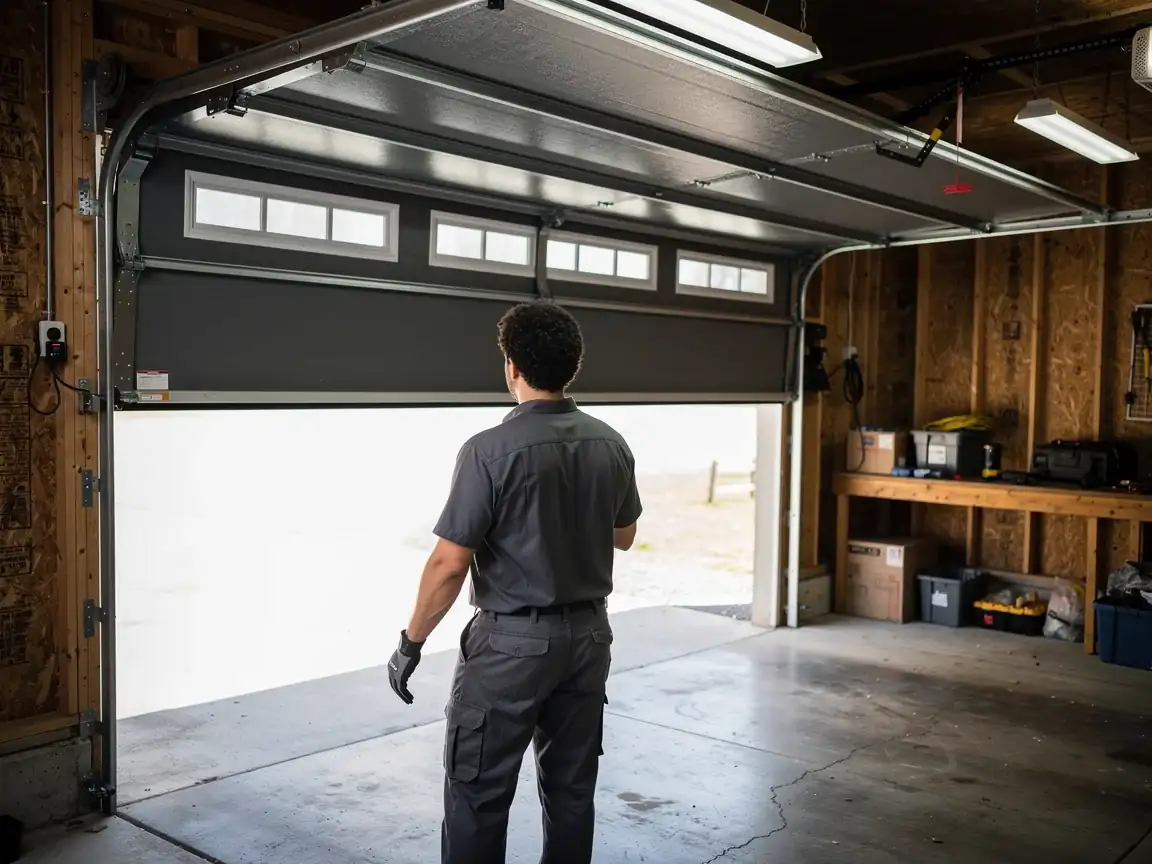
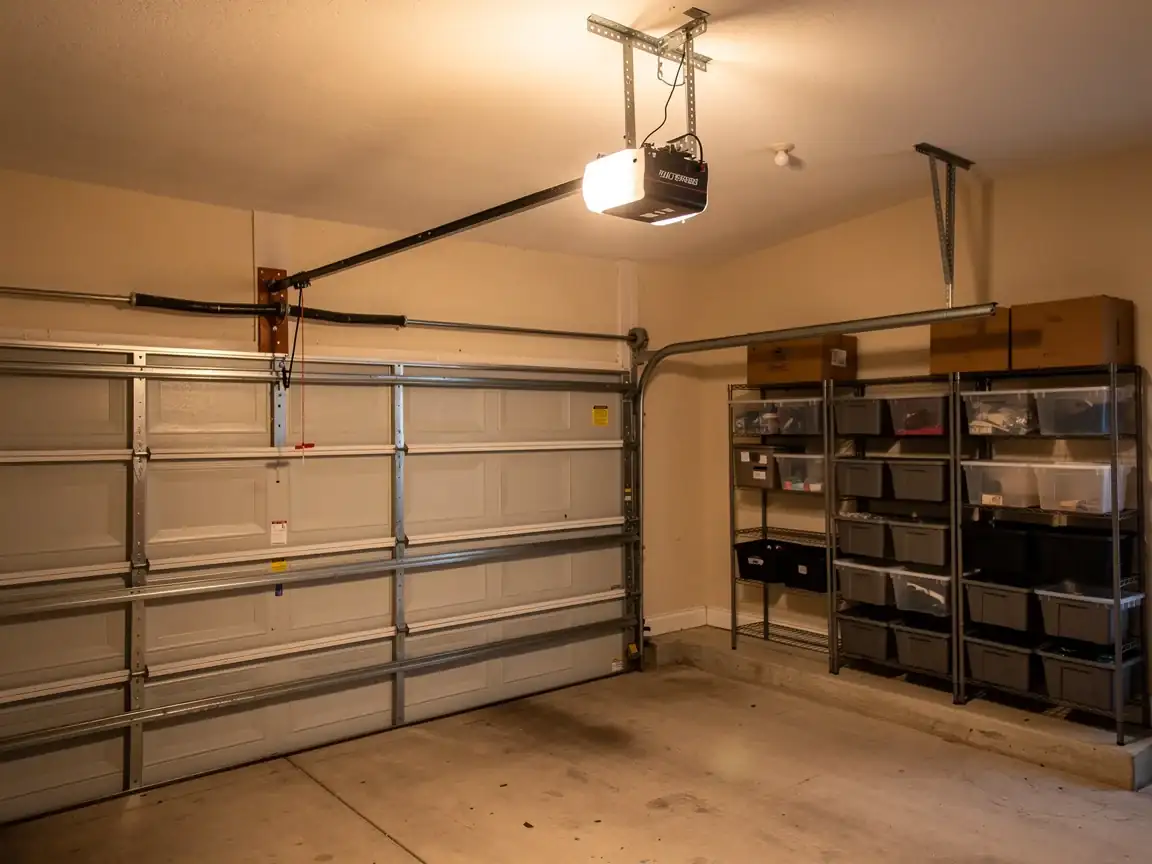
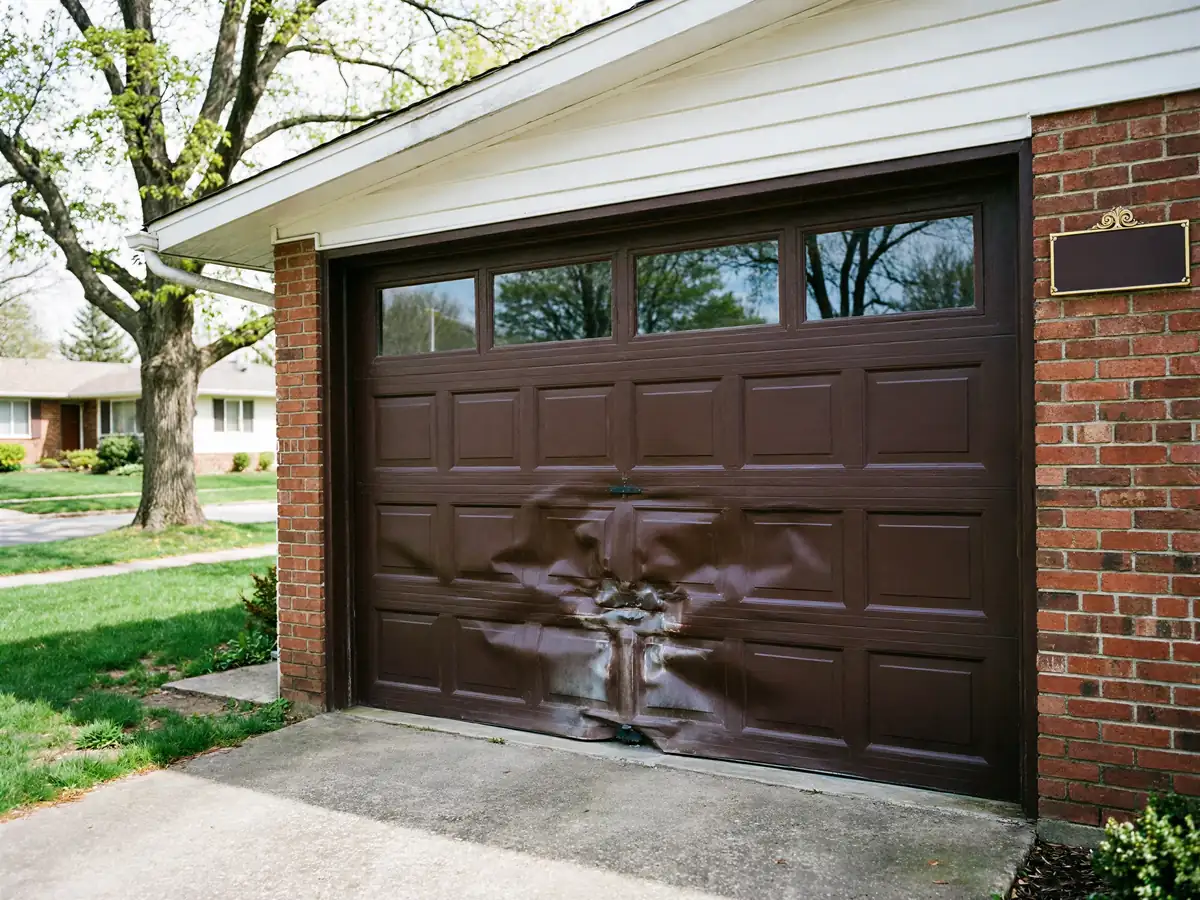
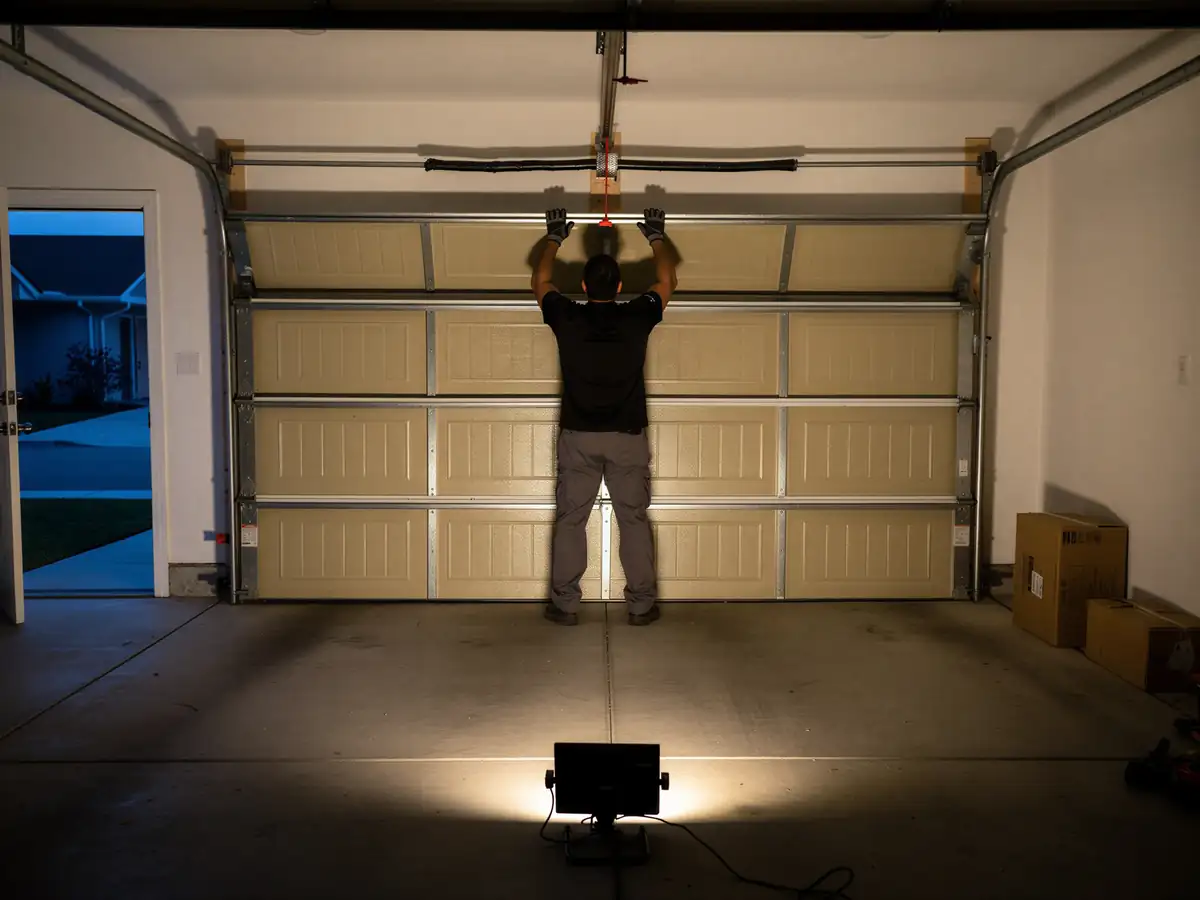
If your cable has let go, the door either won't move or it hangs crooked, tilted hard to one side with the bottom corner dropped toward the floor. On a double-wide door that's usually one cable off its drum rather than snapped clean through, because the cable itself is galvanized aircraft cable and it tends to fray and pop strands before it fully parts. You might see a loose coil of wire bunched near the bottom bracket, or hear a bang if it let go while the door was moving. Carmel's housing stock is overwhelmingly from 1997 on, and at that build year the standard setup was a torsion spring system with two lift cables running to cable drums at each end of the shaft - not the older side-mount extension spring style you'd find on houses from decades earlier. That matters because the failure point and the fix are specific to this hardware, not generic to 'garage doors.' Don't try to force the door up by hand once a cable has gone; the spring is still loaded and the opposite side can take the weight unevenly, which bends the track or racks the door in its frame.
Why It Happens Here
Carmel's housing stock centers on a median build year of 1997, which puts a lot of original hardware at somewhere around two and a half decades of cycles. Lift cables aren't rated to last forever - they're rated for a spring life, usually in the range of 10,000 open-close cycles, and a door that age has likely gone through that more than once if the spring itself was ever replaced without the cables getting swapped alongside it. The other piece is the cold. This area sits in a severe cold climate band, and repeated freeze-thaw on an unheated garage stiffens cable and drum lubrication, which speeds up fraying at the drum groove where the cable wraps and unwraps thousands of times a season. We see this combination a lot in Carmel specifically because so much of the stock lands in that same late-90s-to-2000s window - it's not a scattershot of eras, it's a fairly uniform band of houses hitting cable fatigue around the same age.
What the Fix Involves
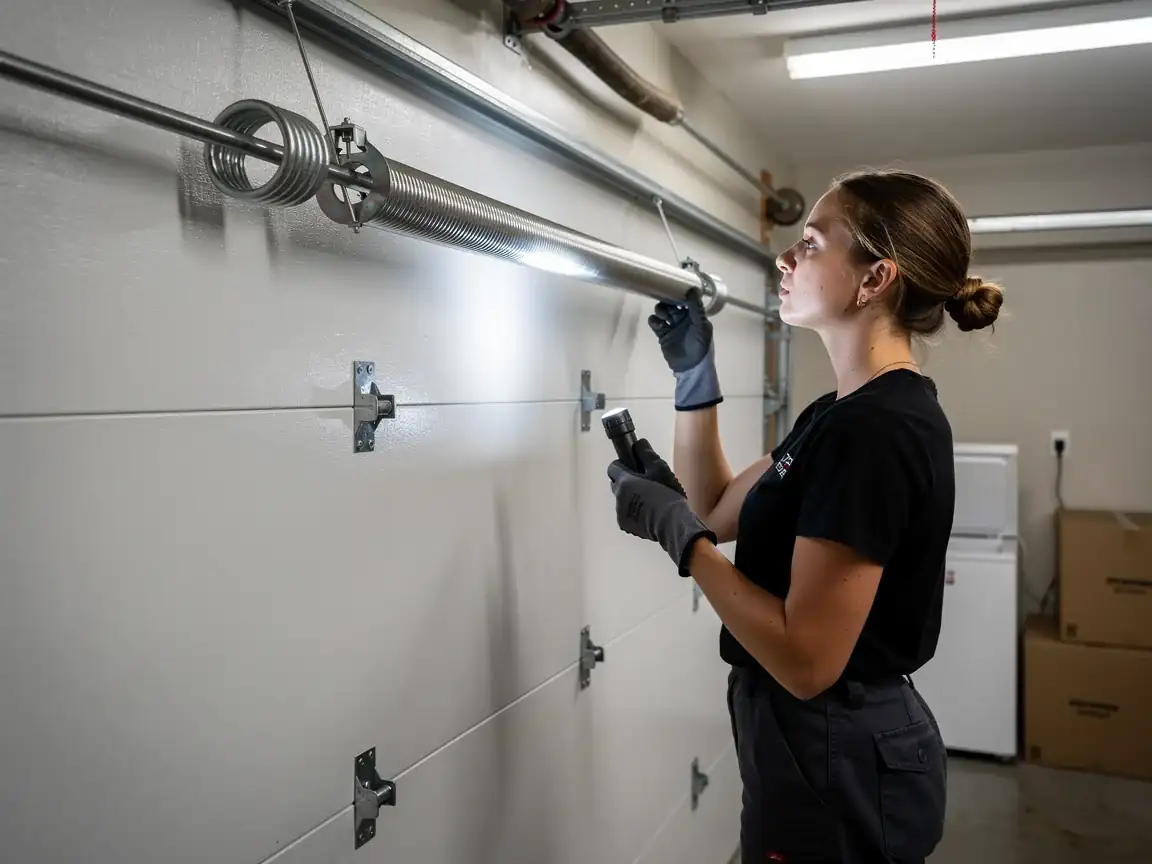
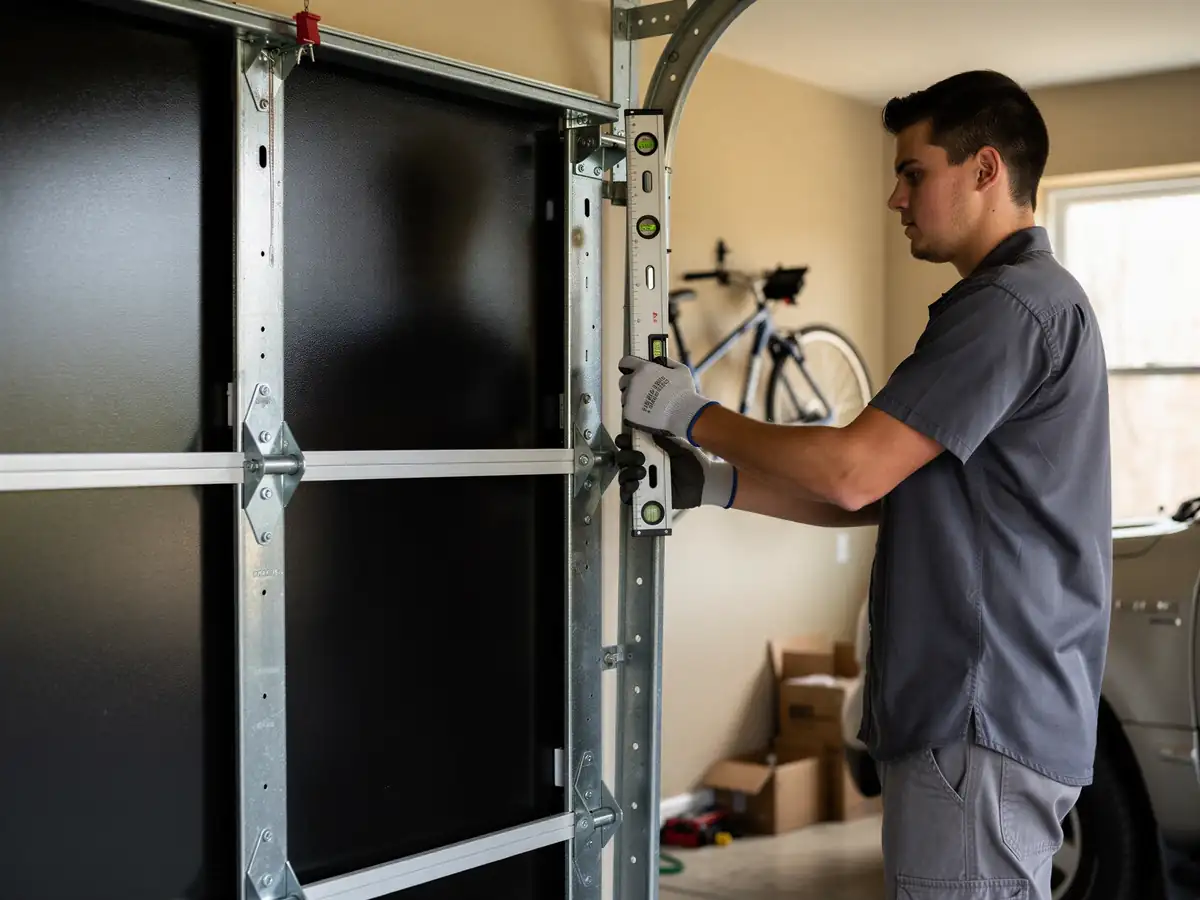
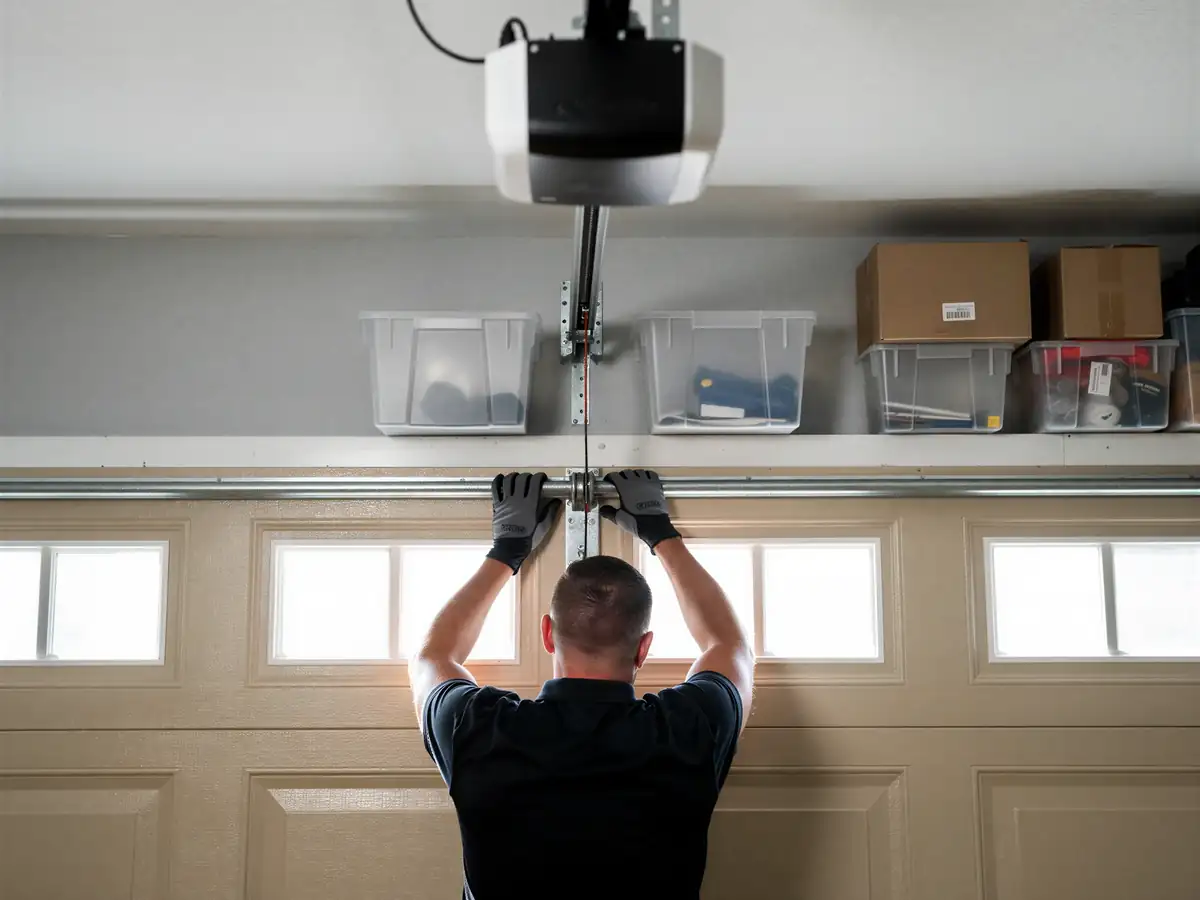
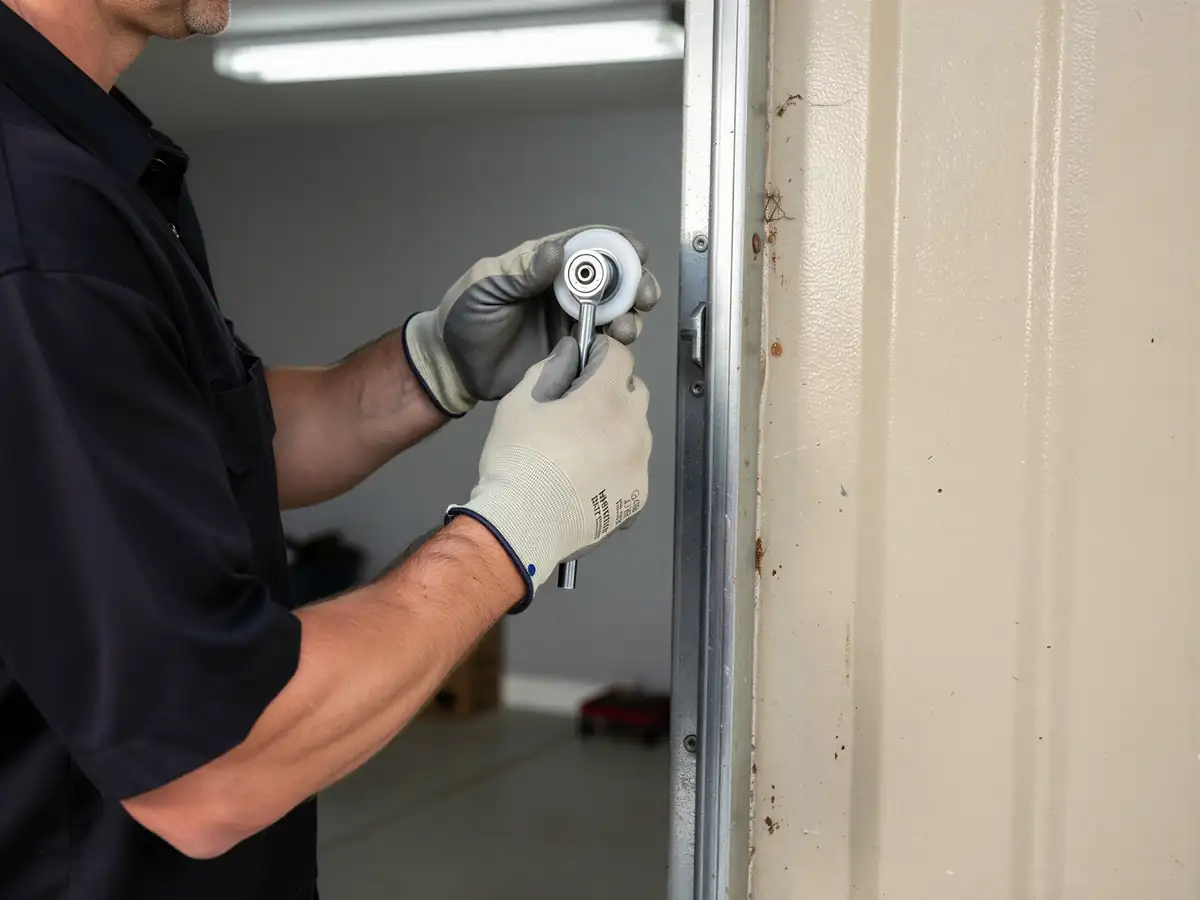
We replace both lift cables as a pair, even if only one has failed - the other is on the same age and cycle count, and replacing one without the other is a callback waiting to happen. On a 1997-and-later torsion setup, that means releasing tension on the spring safely, pulling the old cable off the drum, running the new cable through the bottom bracket, and re-tensioning before testing travel top to bottom. We also check the drums themselves for grooving or cracking; on steel drums that age it's common to find light wear but not replacement-grade damage. If the track is bent or the bottom bracket is torqued from the door dropping unevenly, that gets straightened or swapped at the same visit rather than left for later - a crooked track will just chew through the next set of cables faster. One honest limitation: if a drum is cracked or the shaft is bent, that's a parts order, not a same-visit fix, and we'll tell you that up front rather than force a patch job.
Getting It Booked In
We're based out of Indianapolis and cover Carmel as part of our regular service area, about 14 miles out along with Fishers, Zionsville, and Westfield. There's no local branch or depot here - the truck comes from Indianapolis for every call, so when you book, tell us it's a cable issue specifically (not just 'door won't open') so the right stock is on the truck before we leave. Cable sizing and drum style vary enough by door model that guessing on-site wastes a trip for everyone. If you can, note whether it's a single or double door and whether one side or both look affected; that's the difference between a quick swap and a job that also needs a track straightened.
How Long It Takes
A straight cable-pair replacement on a torsion system, once we're on site with the right stock, is a same-visit job - it doesn't require curing time or a second trip for the cable itself. What extends the visit is what the cable damage caused on the way out: a bent track, a racked panel, or a drum that needs replacing rather than just the cable. Those get diagnosed on arrival, and if parts beyond the cable are needed, we'll say so before starting rather than mid-job. Given how uniform Carmel's housing age is, we're usually dealing with the same drum and cable configuration house to house, which keeps the stock question simple even if the travel distance from Indianapolis is the fixed part of the visit.
How it works
From “it’s stuck” to “it’s fixed”
01
Tell us what’s wrong
Describe the symptom - won’t open, loud bang, opener runs but the door won’t move.
02
On-site diagnosis
A technician tests the door under power and by hand and finds what actually failed.
03
Clear, up-front plan
You get the fix that’s needed and what drives the cost - before any work starts.
04
Repaired & tested
The repair is done, the door is set true and tested, and the work area left clean.
Not sure which repair your door needs in Indianapolis, IN? Describe what it’s doing - every job starts with a diagnosis.
Straight answers about garage door repair in Indianapolis. Still unsure? Ask us directly.
Why did my cable snap and not just the spring?
Cables and springs wear on different timelines even though they share the load. The spring absorbs most of the lifting force, but the cable takes constant friction at the drum groove every cycle. On houses built since 1997, that groove wear is often what lets go first, especially after repeated cold-season stiffening of the drum lubrication.
Do you carry cable stock on the truck for Carmel calls specifically?
We stock common sizes used on torsion systems typical of 1997-and-later builds, which covers most of what we see in Carmel. Telling us it's a cable issue (not just 'door won't move') when you book helps make sure the right size is loaded before the truck leaves Indianapolis.
Is it ever cheaper to replace the whole door instead of the cables?
Rarely for cable damage alone - a cable pair is a contained repair. It becomes a door-replacement conversation only if the cable failure caused enough track or panel damage that the door itself is compromised, which we'd flag honestly on site rather than push a repair that won't hold.
How far out is Carmel from your base, and does that affect scheduling?
We travel to Carmel from Indianapolis, about 14 miles, along with Fishers, Zionsville, and Westfield. There's no separate local crew, so scheduling runs through the same dispatch as the rest of the service area - it doesn't change how the repair itself is done.