Panel Replacement for Fishers' 2000s-Era Garage Doors
Fishers homes mostly went up around 2002, which means factory steel sectional doors with foam-core panels. Here's what panel replacement looks like on that stock.
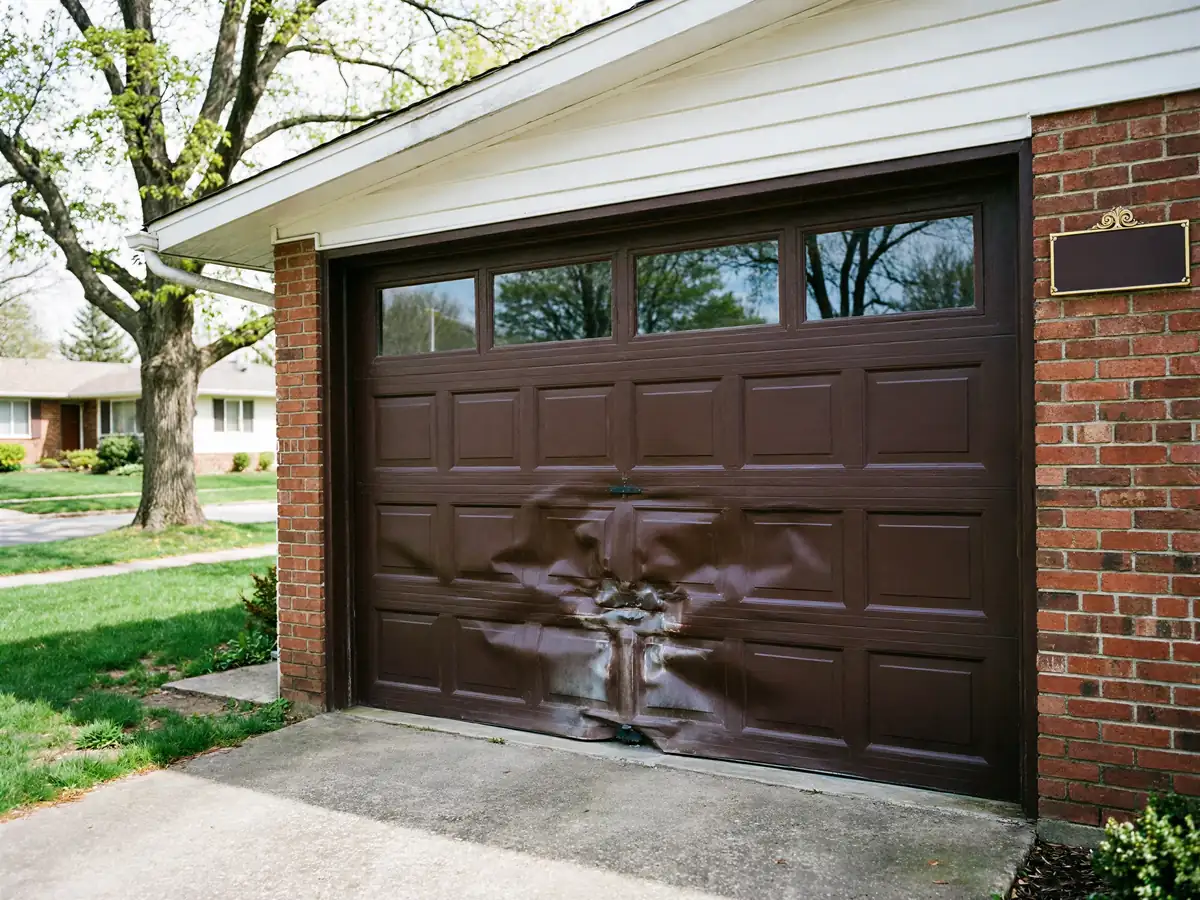
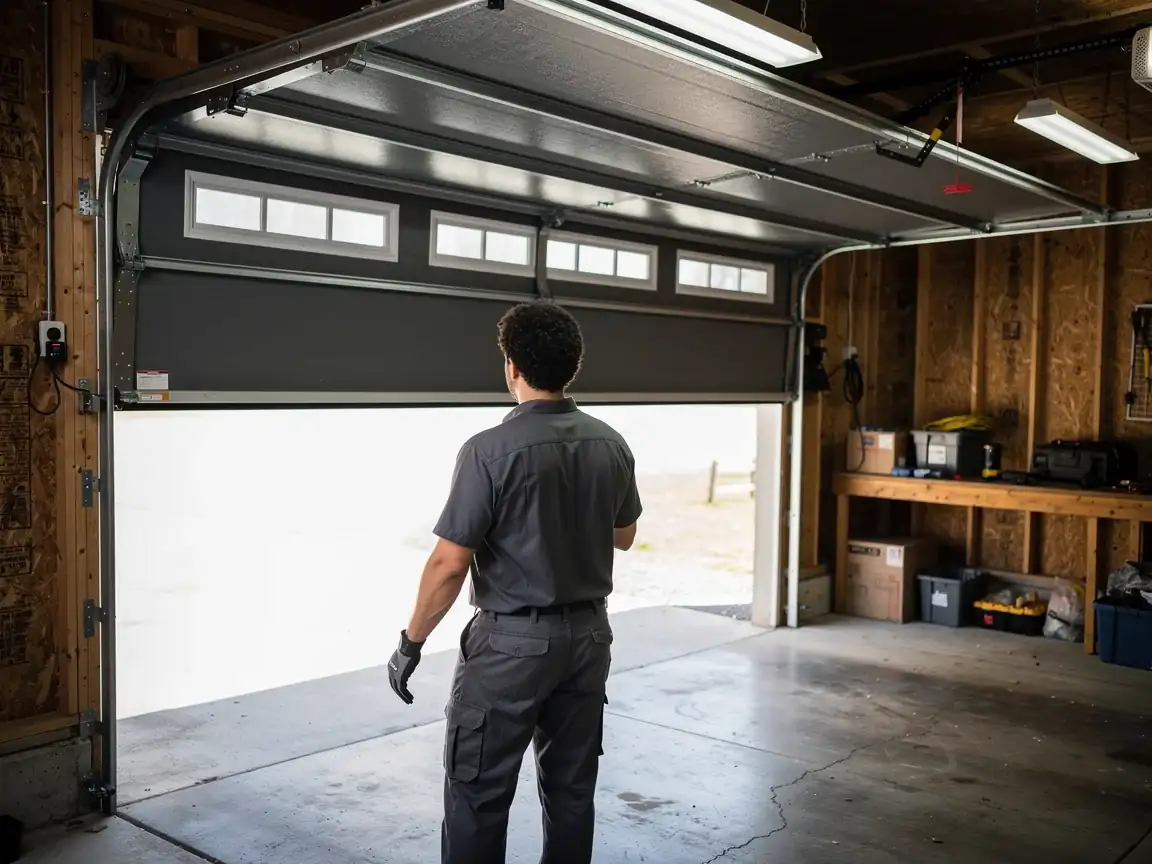
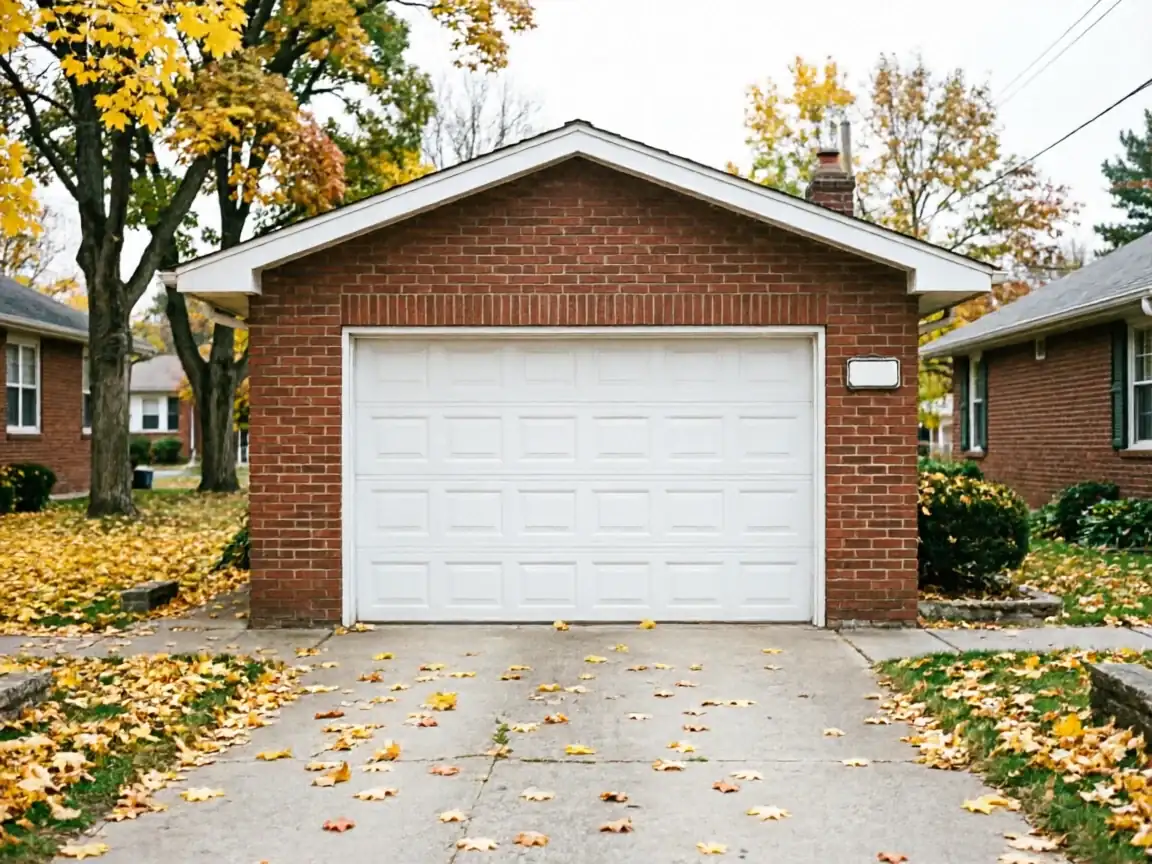
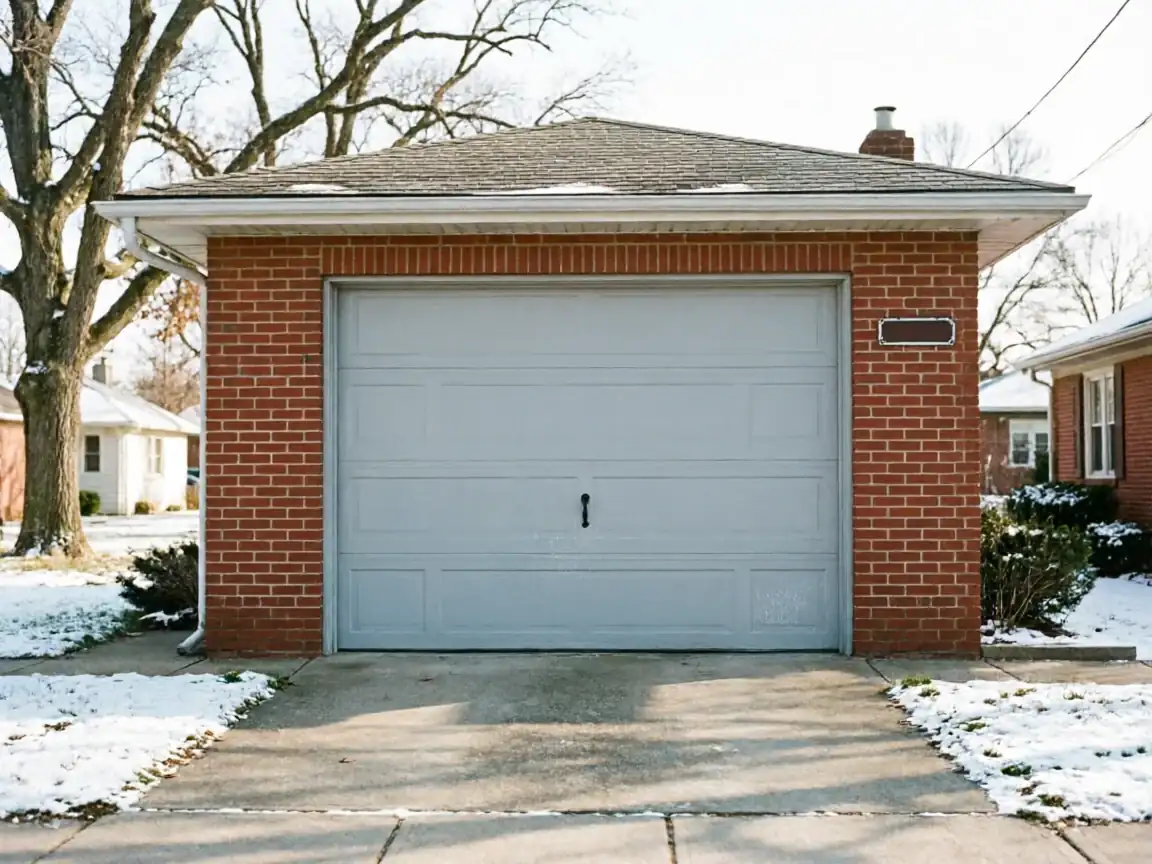
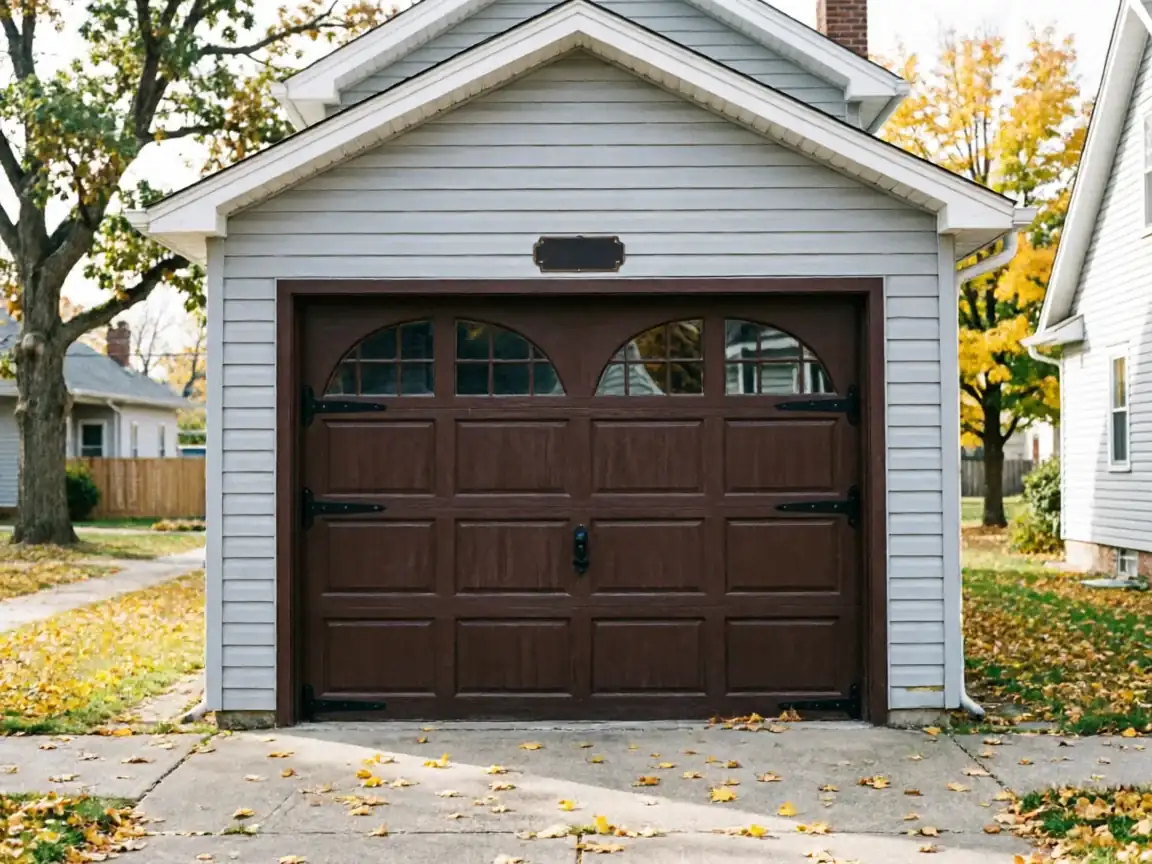
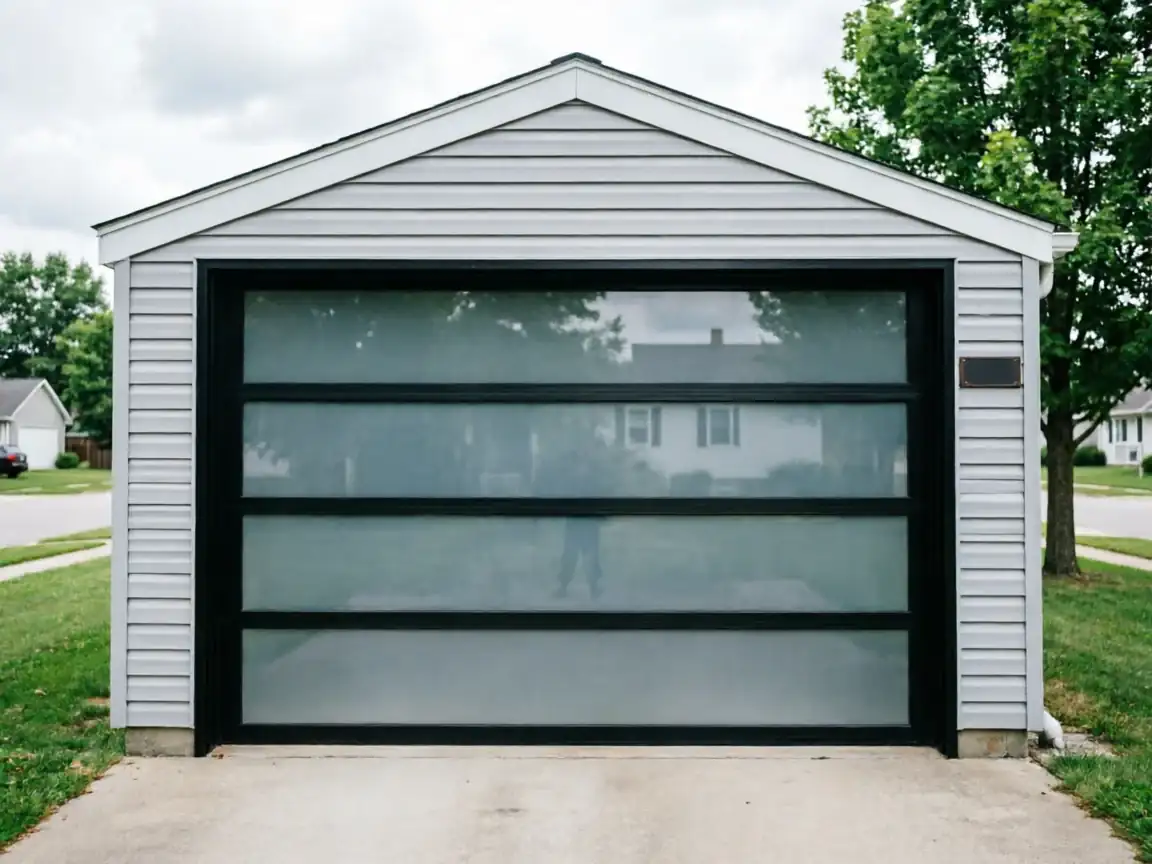
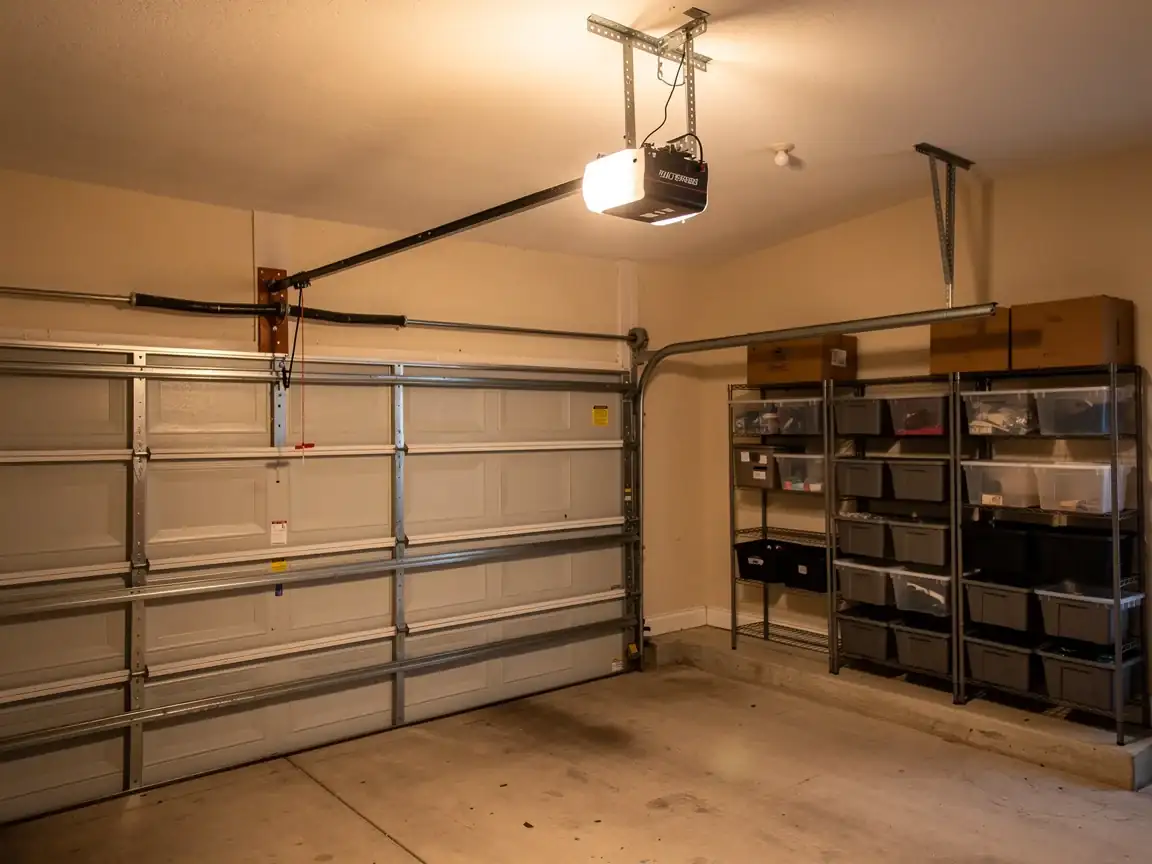
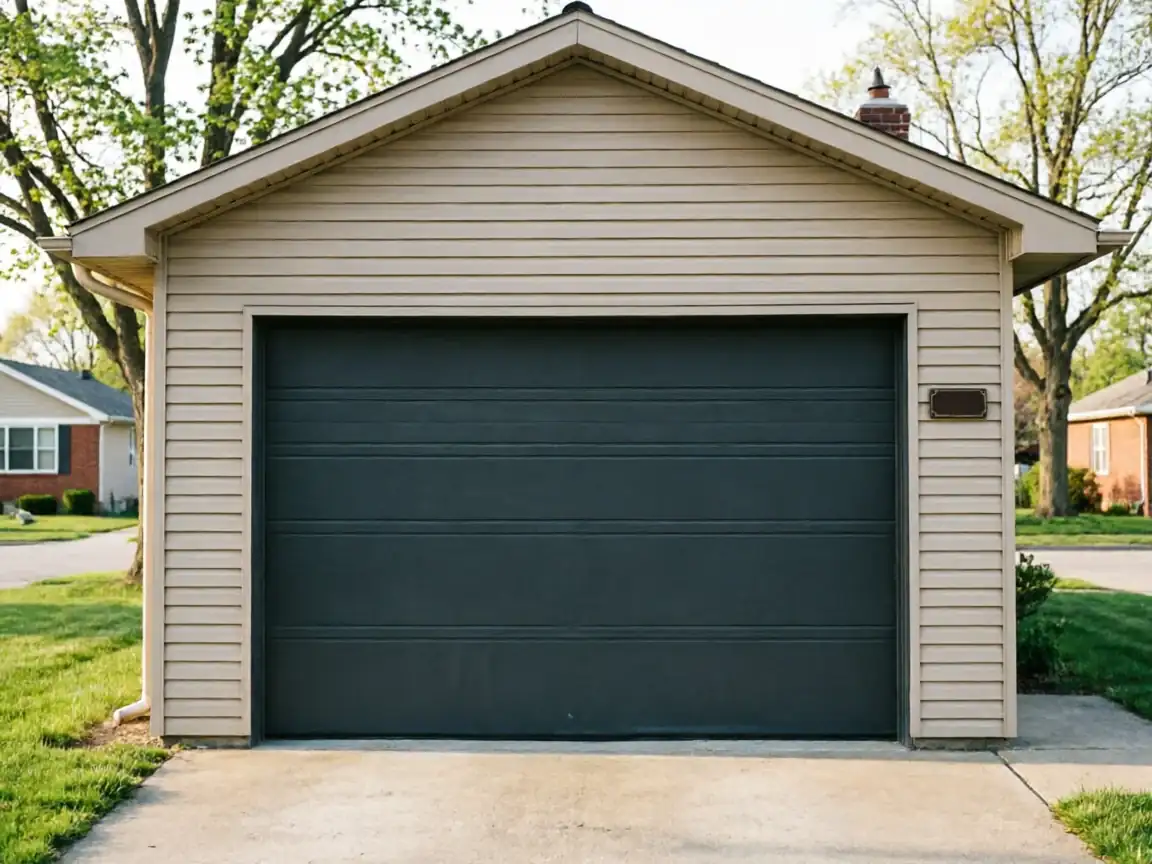
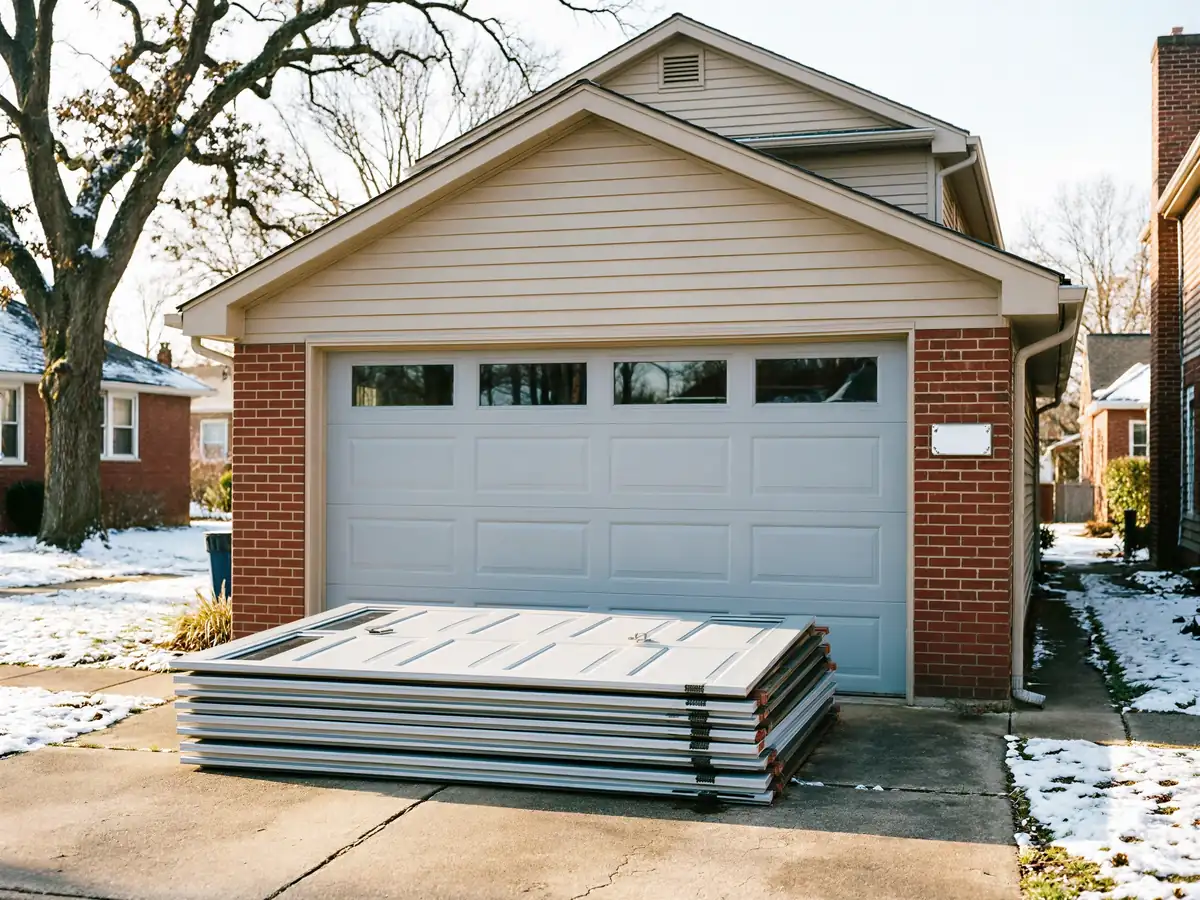
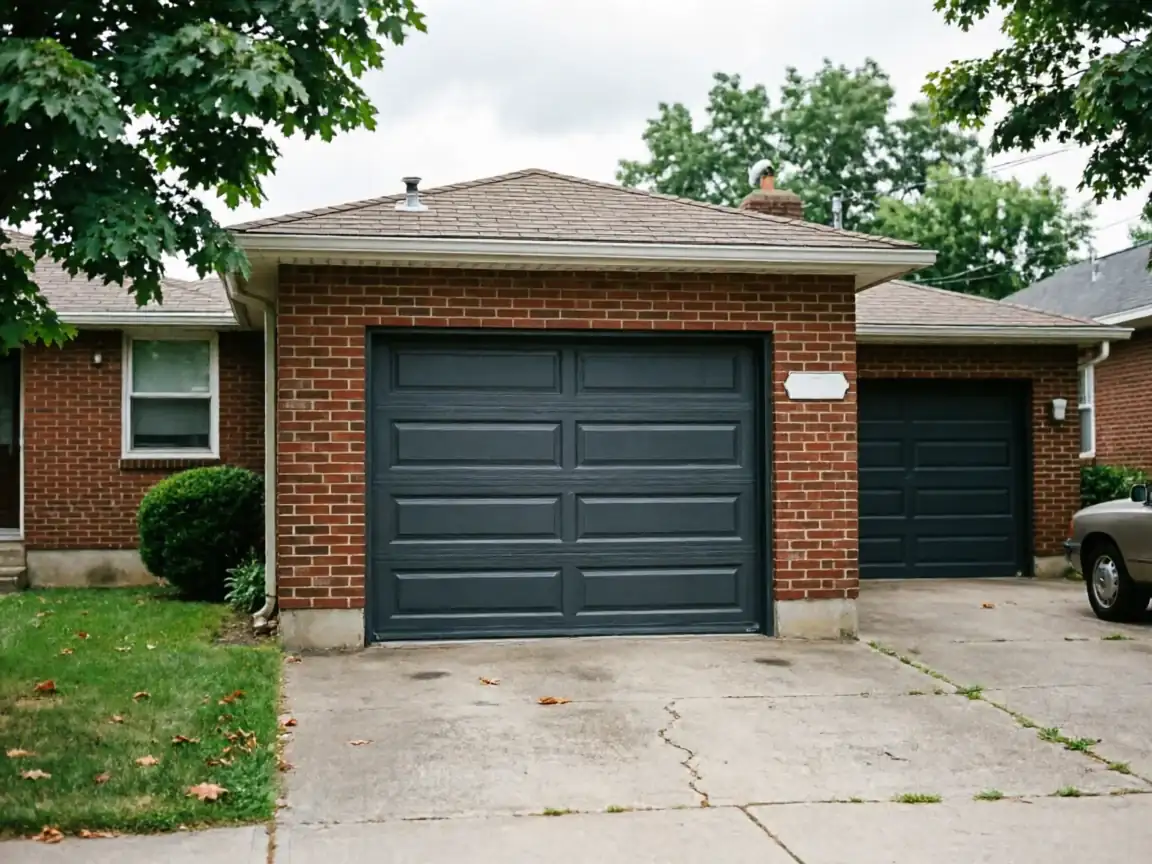
Most houses in Fishers were built around 2002, part of a broader wave across the service area that ran from 1997 to 2008. That means the garage door bolted to your house almost certainly isn't a custom door - it's a builder-grade steel sectional door, installed by the production crew that put up the house, with embossed panel faces and a thin foam core sandwiched between two sheets of steel. Sizes run standard: an 8-by-7 or 9-by-7 single, a 16-by-7 double. Nothing exotic. When one of those steel panels gets dented - a trailer hitch backing in wrong, a basketball, hail - you're not dealing with a one-off custom design. You're dealing with a mass-produced panel profile that a lot of other houses on the same cul-de-sac share, which is both good and bad news, and we'll get to both.
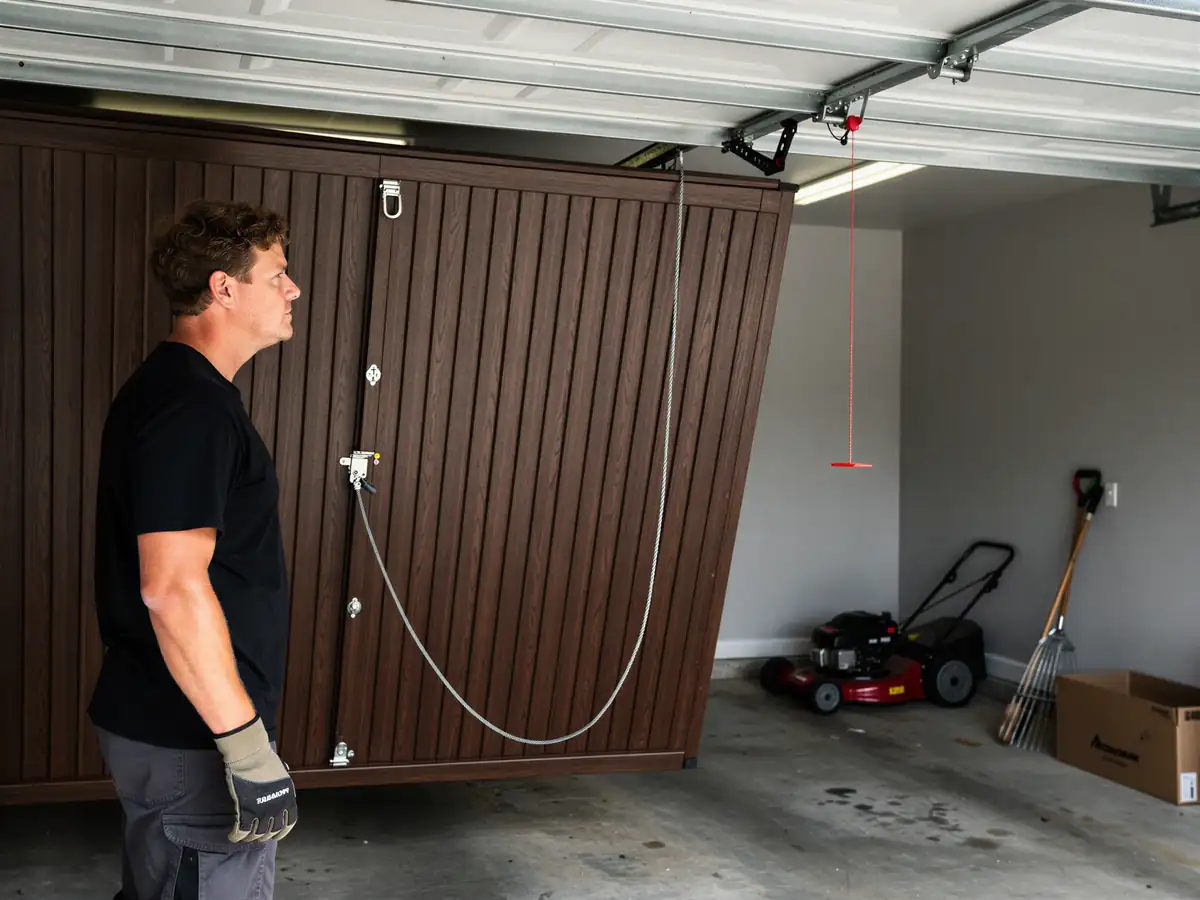
The bad news first: that foam core doesn't flex back. Once a panel's dented past a certain point, the steel skin stays bent and the insulation inside is crushed, even if the door still rolls up and down fine. It looks worse than it performs, at first. Then the track alignment starts drifting because the panel's no longer square, and it stops being cosmetic.
Getting It Booked In
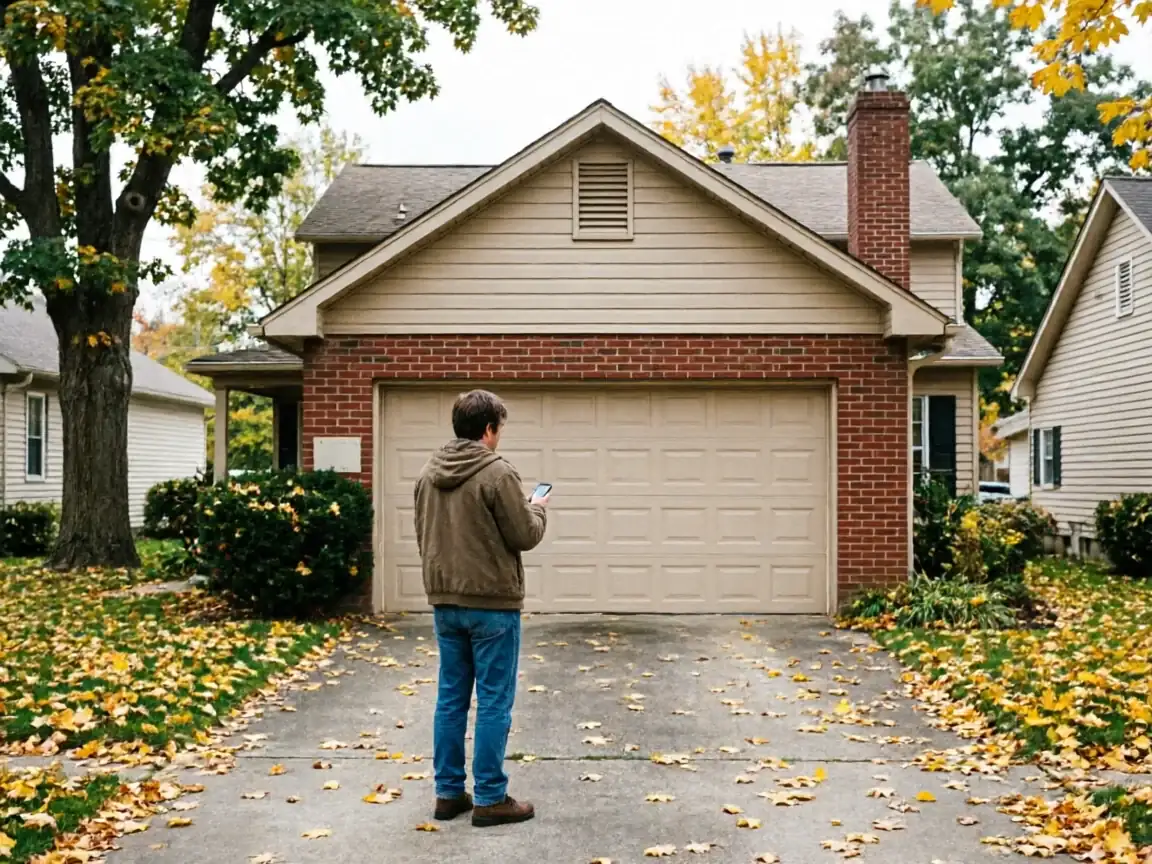
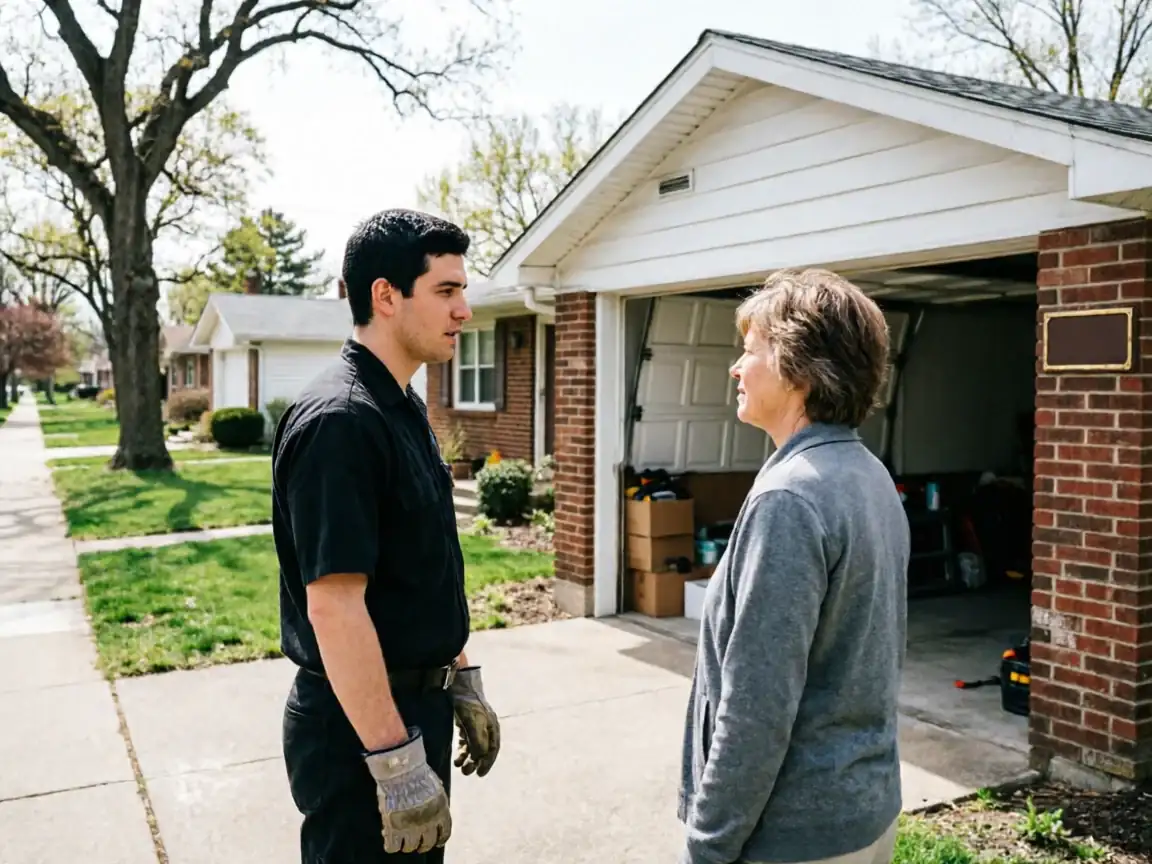
We run out of Indianapolis, about 17 miles from Fishers, so there's no local branch to swing by - we travel out for the job. That doesn't change how the work gets done, but it does mean we schedule the visit rather than drop in same-day on a whim. We'll ask for the door's brand, the panel section number if it's visible on the edge, and a measurement of the opening before we load the truck, because builder-grade doors from this era come in a narrower band of standard sizes than custom doors, and knowing the exact model up front means we're not guessing at the panel profile when we arrive.
The Complications
The main complication with 2000s-built housing stock is that the specific panel profile your door was made with may no longer be in production. Manufacturers change embossing patterns and panel heights every few years, so a door installed in 2002 doesn't automatically match what's on the shelf in 2024. Sometimes the replacement panel is a close enough match that nobody but you will notice the seam. Sometimes it isn't, and the honest move is to tell you that before we order anything, not after.
The other complication is winter. This area sits in a cold-climate zone with real seasonal severity, and steel contracts in the cold - a panel that was a tight, square fit in August can sit slightly differently in January. We check reveal and alignment at install regardless of season, but a mid-winter job sometimes needs a second look once temperatures swing back up.
How Long It Takes
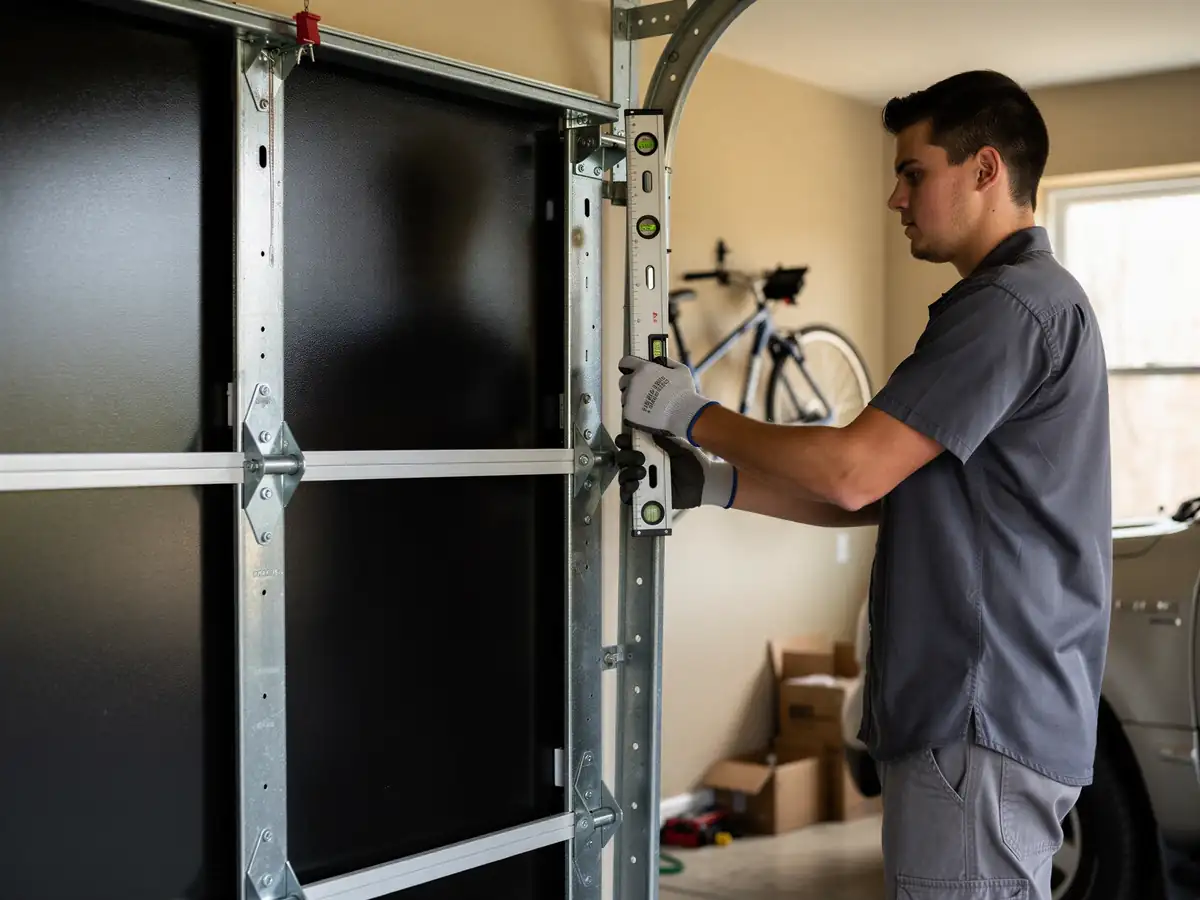
A straightforward single-panel swap, once the part is in hand, doesn't take long - it's bolt-out, bolt-in, and a track alignment check. What takes time is sourcing the right panel section if your door's specific profile isn't a common stock item. We won't quote a turnaround until we've confirmed we can get a matching or close-matching panel, because guessing on that front just sets up a broken promise.
The DIY Question
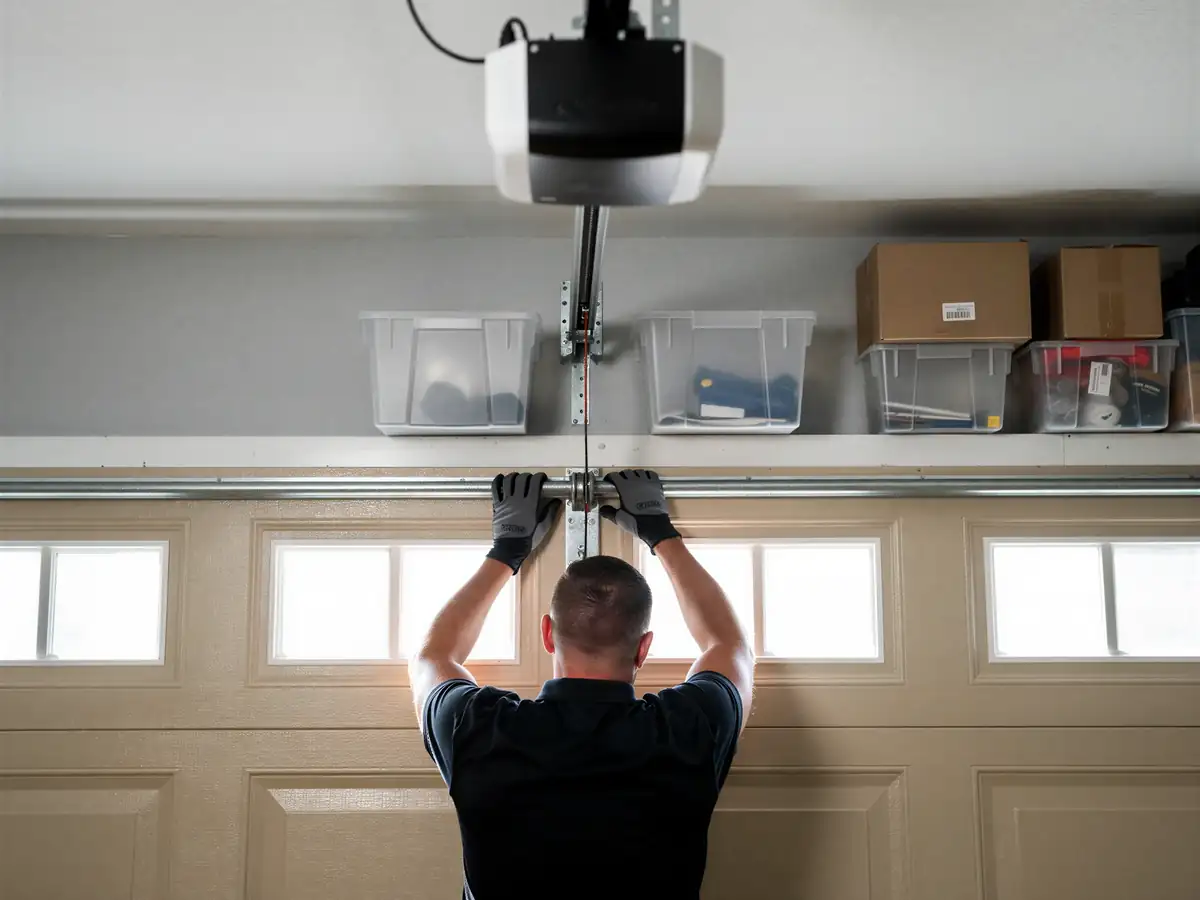
Swapping a single garage door panel is mechanically within reach for someone comfortable with a socket set and willing to support the door's weight while the hinges come apart - it's not spring work. But matching the panel is the part that trips people up: order the wrong width or the wrong embossing pattern off a general retail site, and you've got a door with one section that doesn't sit flush, which throws off the roller track alignment on that side. If your door's section number is stamped on the end stile, write it down before you order anything. If it isn't, we don't recommend guessing - a mismatched panel usually costs more to fix than the original dent did.
The Cost of This Job
We don't have a posted price for panel replacement here - it depends on which brand and profile your door is, and whether the section is a current stock item or something we have to track down. What we can tell you is that households in this area report a median income noticeably above the wider service area's figure, and the housing stock here skews newer and more uniform than older parts of the metro, which generally means more doors sharing a common panel profile - a small point in your favor when it comes to sourcing a match.
How it works
From “it’s stuck” to “it’s fixed”
01
Tell us what’s wrong
Describe the symptom - won’t open, loud bang, opener runs but the door won’t move.
02
On-site diagnosis
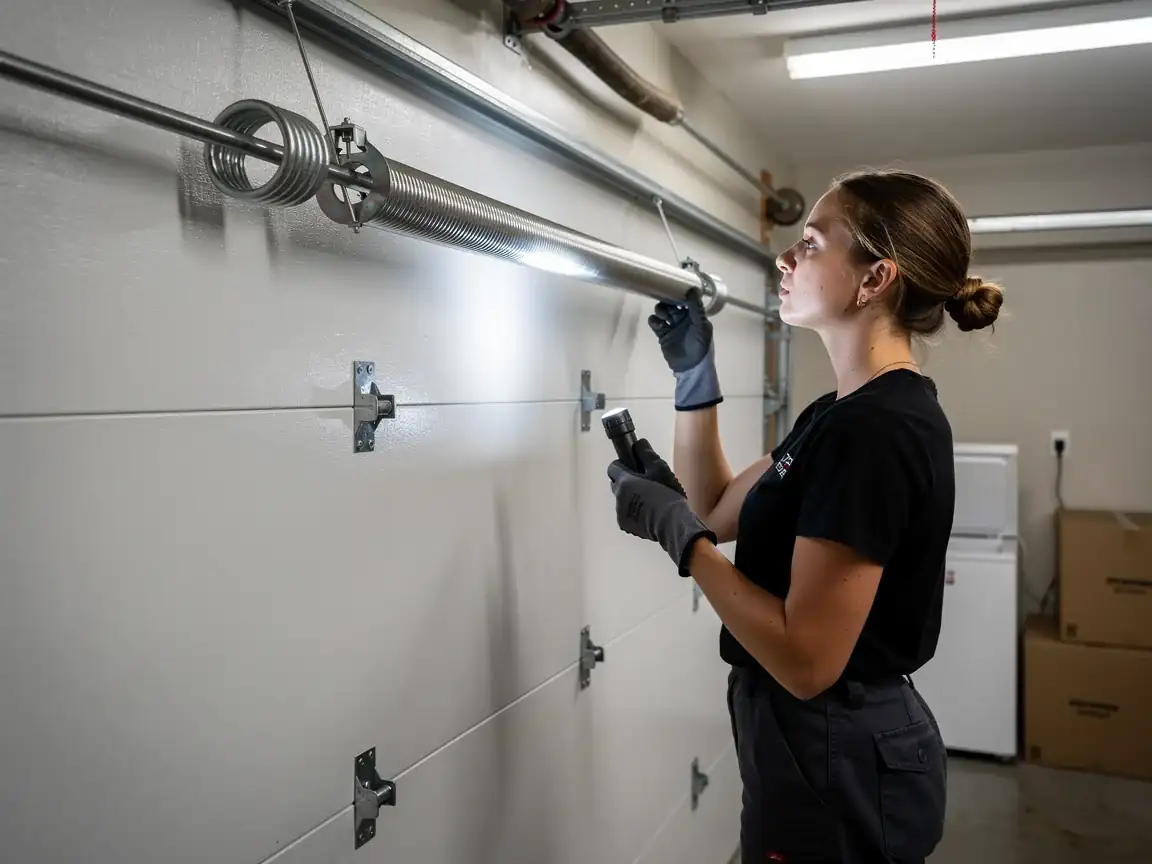
A technician tests the door under power and by hand and finds what actually failed.
03
Clear, up-front plan
You get the fix that’s needed and what drives the cost - before any work starts.
04
Repaired & tested
The repair is done, the door is set true and tested, and the work area left clean.
Not sure which repair your door needs in Indianapolis, IN? Describe what it’s doing - every job starts with a diagnosis.
Straight answers about garage door repair in Indianapolis. Still unsure? Ask us directly.
Is my garage door panel still being made?
It depends on the brand and when your house was built. Houses in this area mostly went up around 2002, and manufacturers have cycled through several embossing patterns since then. We check the section number on your door against current stock before quoting anything, rather than assuming a match.
Can you fix a dented panel instead of replacing it?
On a steel sectional door with a foam core, a dent usually crushes the insulation inside the panel even if the steel can be pushed back out somewhat. It'll often look better but won't be structurally the same, and the dent tends to show again over time. Replacement is usually the straighter answer.
Do you have a shop in Fishers?
No - we're based out of Indianapolis, about 17 miles away, and travel out for jobs in Fishers. We schedule the visit rather than offer same-day walk-ins, since there's no local branch to dispatch from.
Will a new panel match the rest of my door exactly?
Sometimes closely, sometimes not. Panel profiles change over the years even within the same manufacturer, and a door installed when most of this area's houses were built may use a discontinued pattern. We'll tell you honestly before ordering whether the match will be close or visibly different.